
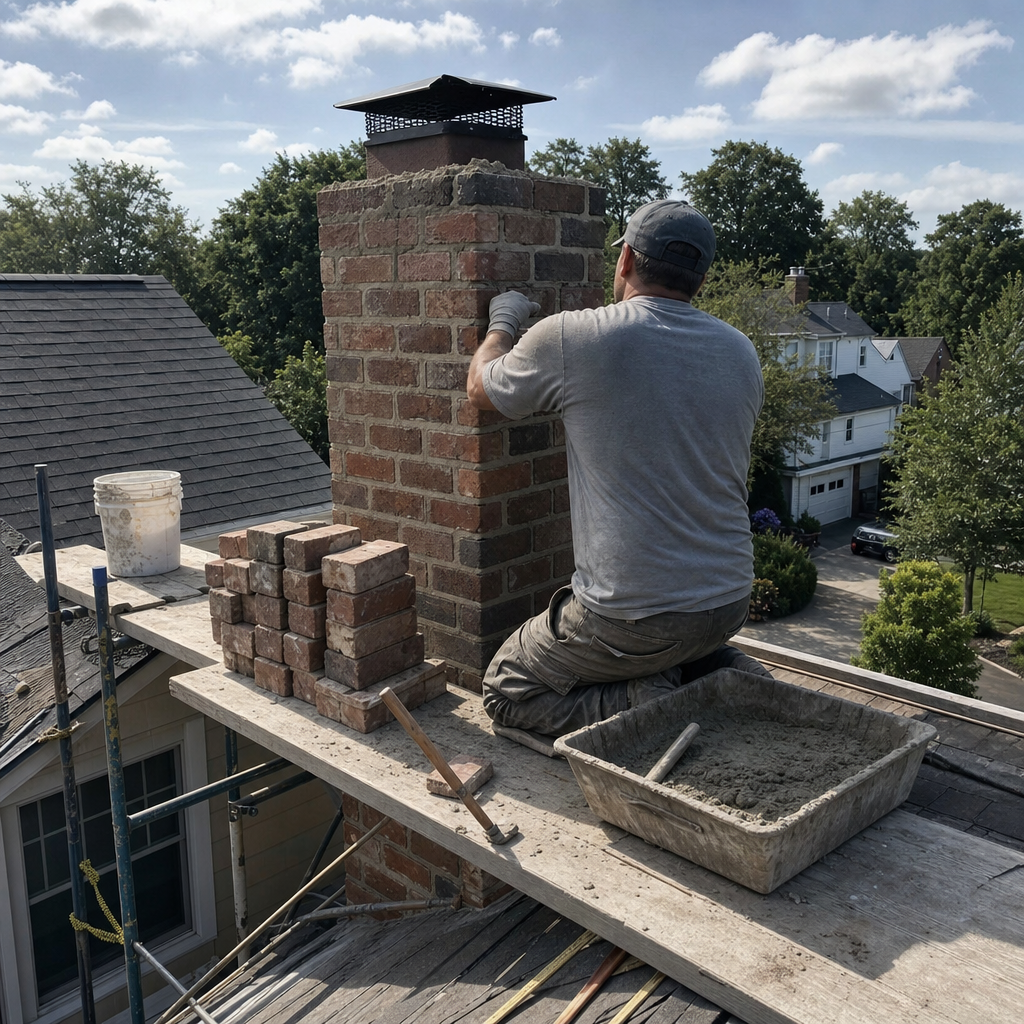
Fast, Reliable Chimney Liner & Rebuild Across Queens Village
Chimney liner repair and rebuild work in Queens Village typically runs $1,800–$4,500 depending on whether we’re sealing a single flue or rebuilding a paired masonry chase, and most jobs are completed in one to three days. If your 1920s–1950s semi-detached home still has its original clay tile liner—or worse, an abandoned oil flue left open after a gas conversion—you’re sitting on a failure pattern we see weekly in the 11427, 11428, and 11429 ZIP codes. Call (866) 884-9512 for a free inspection and exact quote.
We’ve been driving to Queens Village from our New York City base for 17 years, and we know these streets: the dense blocks of brick Tudors along Jamaica Avenue, the Cape Cods tucked behind Hillside Avenue, the colonial-revival rows near Springfield Boulevard. Robert Garcia, our owner and lead technician, handles the work himself—not a subcontractor, not a rotating crew. That matters when you’re trusting someone to climb a 70-year-old chimney stack and diagnose what’s happening inside the flue.
Queens Village sits inland in eastern Queens, without the temperature moderation that Jamaica Bay or Long Island Sound provides to coastal neighborhoods. Those slightly sharper freeze-thaw swings—25 to 35 cycles each winter—attack exposed brick crowns and parging faster here than in Bayside or Rockaway. Combine that with housing stock built during the outer-borough boom, nearly all with original clay tile liners sized for #2 fuel oil boilers, and you’ve got a recipe for the specific failure modes our Chimney Liner & Rebuild team encounters on every other call.
Why Apex Chimney Cleaning Greater New York Is Queens Village’s Preferred Chimney Liner & Rebuild Company
Our reputation in Queens Village was built one chimney at a time. We’ve got 1,096 verified customer reviews averaging 4.7 stars, and a significant share of those come from repeat clients in eastern Queens who started with a routine sweep and called us back when the inspection revealed liner damage. They’re the same homeowners who tell their neighbors, “Robert actually showed up himself,” because that’s how we operate.
Response time to Queens Village is typically same-day or next-day for standard calls, and we prioritize emergency situations—water actively leaking into a fireplace, visible chimney tilt, or CO detector alerts tied to flue failure. We’re familiar with the local building patterns: the paired flue chases common to semi-detached construction, the shared walls between units that complicate access, the narrow side yards on 88th Avenue or 210th Street that require specific ladder positioning. That local knowledge saves time and prevents the “we’ll have to come back with different equipment” delay that frustrates Queens Village residents.
We also understand the regulatory landscape. NYC Department of Buildings rules require disclosure of liner damage found during any chimney service, and we’ve handled the permit process for liner replacements and rebuilds throughout Queens enough times to move it efficiently. You’re not getting a technician who’s learning Queens Village on your dime.
Our Chimney Liner & Rebuild Services in Queens Village
Stainless Steel Liner Installation
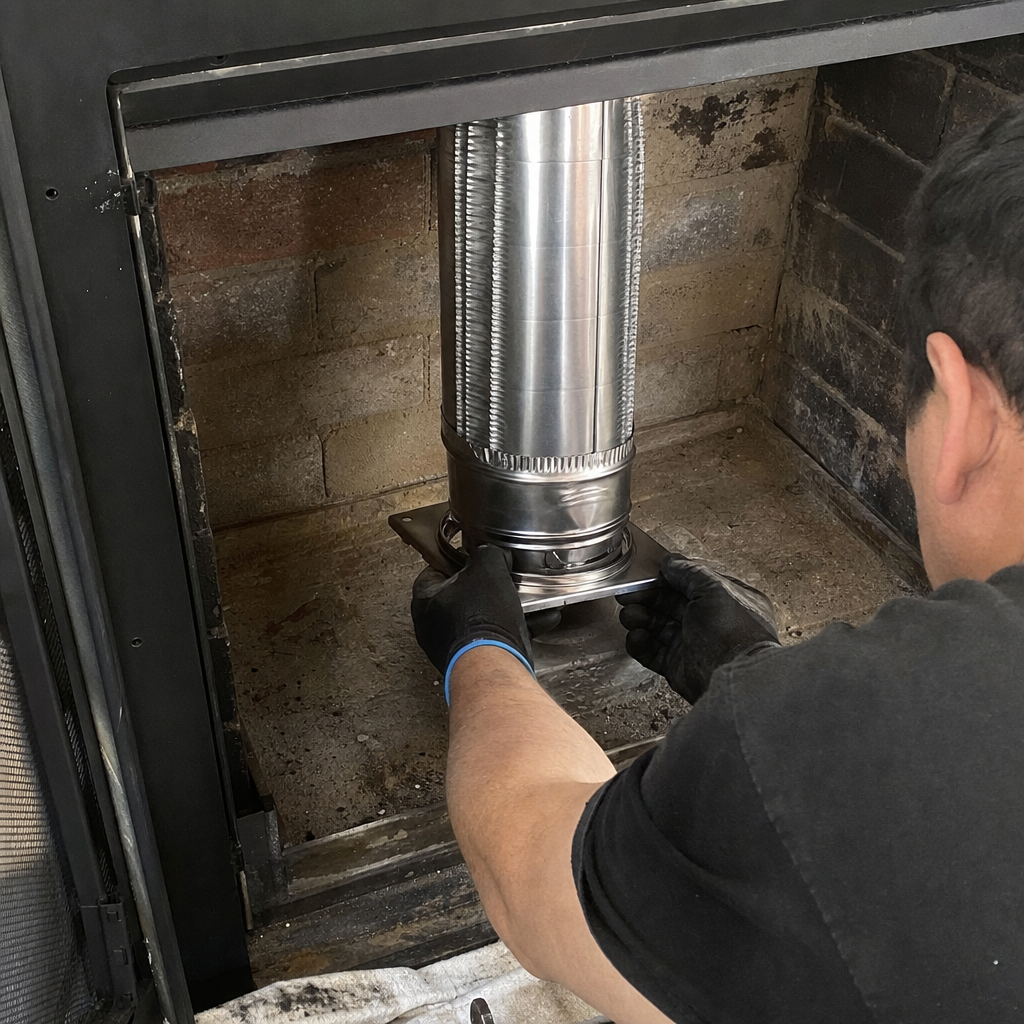
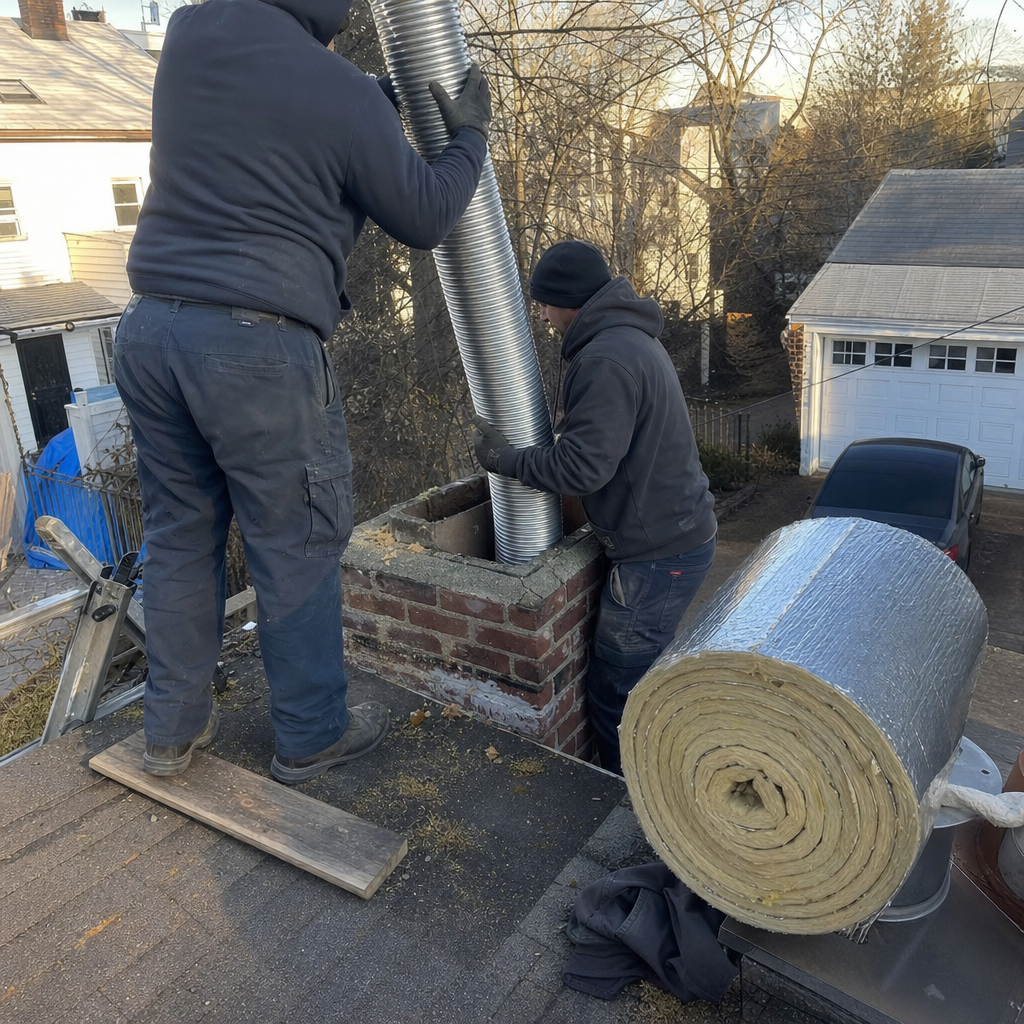
For most Queens Village homes converting from oil to gas—or needing to restore a failed clay tile system—we install custom-cut stainless steel liners, typically DuraFlex or Olympia Chimney products rated for the specific appliance and fuel type. These liners handle the acidic condensation produced by high-efficiency gas equipment far better than original clay, and they’re essential in the oversized flues common to pre-1960 Queens Village construction. A flue sized for a #2 oil boiler is often double the diameter needed for a modern gas furnace; without a properly sized liner, that extra volume fills with acidic condensate that dissolves mortar joints in as little as two heating seasons.
Flexible Liner Systems
Some Queens Village chimneys have offsets—shifts in the flue path—that make rigid stainless steel impossible to feed through. For these, we use flexible alloy liners that navigate bends while maintaining proper draft. We’ve installed flexible systems in the tighter chimney chases of Cape Cods near Hillside Avenue where the flue path dog-legs between floors. The key is matching the flex liner to the appliance BTU output and ensuring the connection at the appliance collar is sealed to manufacturer spec.

Liner Replacement & Liner Repair
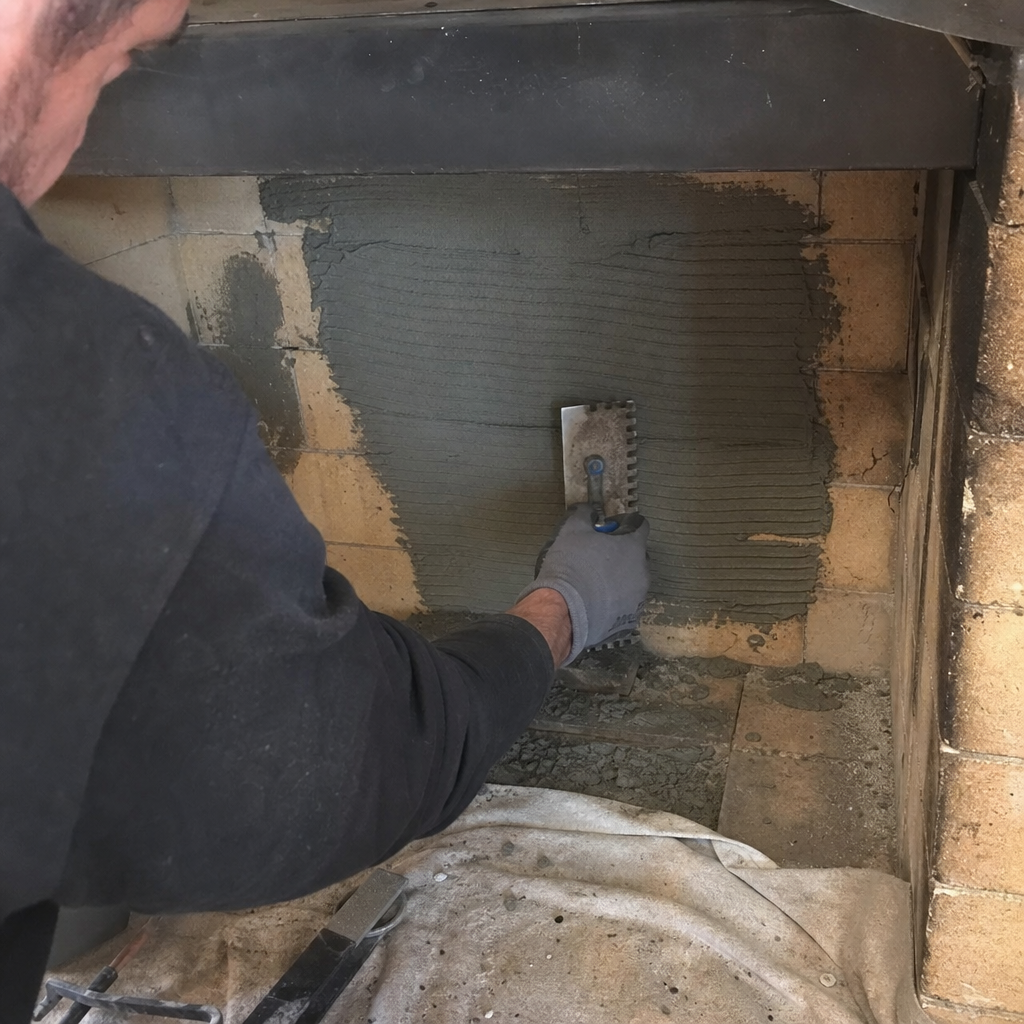
Not every damaged liner needs full replacement. In Queens Village, we often encounter localized failures—cracked tiles at the top third of the flue where freeze-thaw exposure is worst, or mortar joint erosion concentrated at the smoke shelf. When the damage is contained, we can perform targeted liner repair using HeatShield cerfractory sealant or sectional tile replacement. But we’re direct about when repair isn’t enough: if multiple tiles are spalled or the flue is out of round from years of condensation damage, replacement protects you from the cycle of repeated service calls. We recently relined a paired chimney chase on a 1930s Tudor on 88th Avenue in the 11427 ZIP: the homeowner had converted to gas heat but left the old #2 oil flue open; moisture had rotted the shared brick divider and was staining the fireplace flue. We installed a custom DuraFlex stainless steel liner and sealed the abandoned flue with a Gelco plate to stop the migration. The job took two days and brought the chimney back to safe operation under NYC DOB standards.
Partial Rebuild & Full Chimney Rebuild
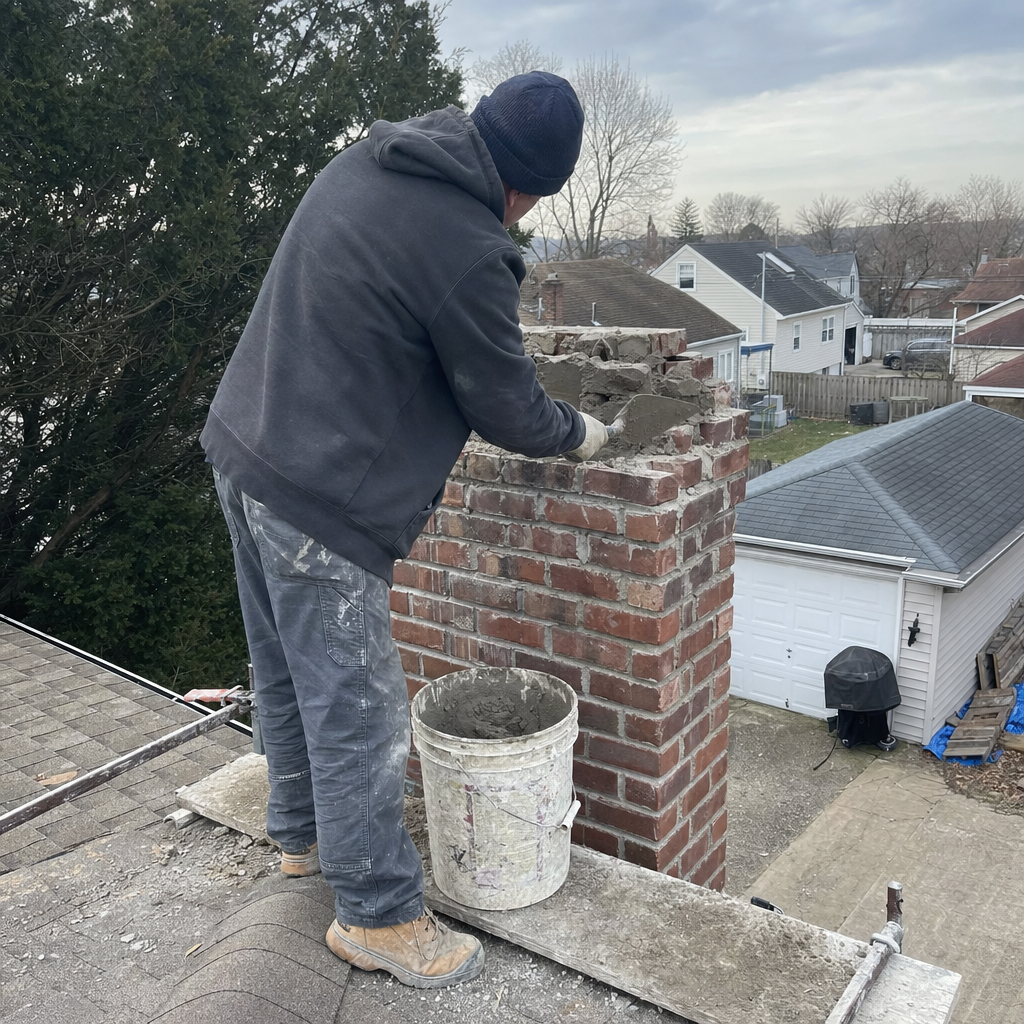
When the masonry itself has failed—spalled brick, compromised crowns, or the hidden rot we find in paired chases—liner work alone won’t solve the problem. Partial rebuilds address the crown, upper courses, and interior parging while preserving sound lower structure. Full rebuilds are rare but necessary when the chimney has tilted or the foundation footing has failed, something we’ve seen in Queens Village homes where decades of water intrusion from an abandoned flue undermined the base. Robert Garcia assesses every rebuild personally; we don’t delegate structural decisions to less-experienced crew.
What happens when you call
- 1
A real person answersNo phone trees — you reach a local pro.
- 2
You get an upfront price rangeHonest numbers before anyone is dispatched.
- 3
A background-checked tech heads outLicensed & insured, dispatched right away.
- 4
You approve before work beginsNothing starts until you say go.
Trusted Brands We Service in Queens Village
We install professional-grade materials from the same lines commercial chimney contractors use: DuraFlex and Olympia Chimney for stainless and flexible liners, Gelco for termination plates and caps, Famco for custom flashing and hardware, and Copperfield for specialty repair components. We keep common liner diameters and connection fittings stocked for Queens Village’s typical appliance configurations—4″ to 6″ gas venting, 8″ fireplace flues—so we’re not ordering parts while your chimney sits open. That inventory discipline means most Queens Village liner installations start and finish without the multi-day delays that come with special orders.
Common Chimney Liner & Rebuild Problems We See in Queens Village Homes
- Condensation destroying oversized oil-era flues. The clay tile liners in Queens Village’s 1920s–1950s homes were engineered for #2 fuel oil boilers running at 400–600°F stack temperatures. Modern gas furnaces and high-efficiency systems exit at 250–350°F, and the resulting acidic condensate pools in the oversized flue, dissolving mortar joints and eroding tile surfaces from the inside out. We find this on nearly every inspection of a post-conversion home in the 11427–11429 corridor.
- Abandoned flues becoming water highways. Many Queens Village semi-detached homes have a single masonry chase housing two flues—furnace and fireplace. When the furnace flue is abandoned after gas conversion and left unsealed, water migrates freely down the void, rotting the shared interior brick divider and eventually breaching the active fireplace flue next to it. Standard visual inspections from the top miss this until the fireplace flue shows staining or the hearth smells musty.
- Freeze-thaw wrecking exposed crowns and parging. Queens Village’s inland position means slightly more severe temperature swings than coastal Queens neighborhoods. Those 25–35 annual freeze-thaw cycles force moisture trapped in crown mortar to expand and contract, cracking the protective cap and allowing water into the flue system. By spring, we’re scheduling crown rebuilds and upper-course repointing throughout the 11428 and 11429 blocks.
- Hidden structural compromise in paired chases. The shared-wall construction common to Queens Village semi-detached homes means chimney damage in one unit often affects the neighboring flue. We’ve opened chases where decades of water intrusion from an unsealed abandoned flue had reduced the interior wythe to loose rubble, with only the exterior brick shell maintaining the appearance of integrity. These require partial or full rebuild, not just liner replacement.
Pricing for Chimney Liner & Rebuild in Queens Village, NY
Here’s what Queens Village homeowners can expect for chimney liner and rebuild work in 2025:
| Service | Typical Range in Queens Village |
|---|---|
| Stainless steel liner installation (single flue, standard gas appliance) | $1,800 – $2,800 |
| Flexible liner with offsets (gas furnace or insert) | $2,200 – $3,400 |
| Liner replacement with partial crown rebuild | $2,800 – $4,200 |
| Partial chimney rebuild (crown, upper courses, interior parging) | $3,500 – $6,000 |
| Full chimney rebuild (structural failure, tilt, or footing compromise) | $8,000 – $14,000 |
| Targeted liner repair (HeatShield, sectional tile, seal abandoned flue) | $900 – $1,800 |
These ranges reflect Queens Village’s specific conditions: the paired chase configurations that add labor, the age of masonry that often requires more prep work, and the access challenges of dense semi-detached lots. Factors that push costs higher include multiple flues, significant offset navigation, extensive mortar joint repointing, and NYC DOB permit requirements for full rebuilds. We provide itemized written estimates before any work begins—call (866) 884-9512 to schedule your free inspection.
We Also Serve Cities Near Queens Village
Our chimney liner and rebuild crews work throughout eastern Queens and adjacent Nassau County communities. If you’re in Bellaire, Hollis, Terrace Heights, or Cambria Heights, the same response times and local expertise apply—many of these neighborhoods share Queens Village’s housing stock and failure patterns. We route our technicians efficiently across the 114xx ZIP cluster to keep appointment windows tight.
Serving Queens Village, NY — Our Local Coverage Area
We’re based in the Queens Village area and know this community well. Use the map below to see our service coverage — if you’re nearby, we can almost certainly help.
FAQs — Chimney Liner & Rebuild in Queens Village
Water enters the unlined abandoned flue, migrates down the masonry, and rots the shared interior structure—eventually breaching your active fireplace flue or compromising the chimney’s structural integrity. We’ve found this pattern constantly in the 11428 and 11429 blocks. Call (866) 884-9512 and we’ll inspect the chase with a video scan to confirm whether moisture has already caused hidden damage.
We use a video inspection camera fed through the flue to document cracked tiles, missing mortar joints, spalled surfaces, and out-of-round conditions—NYC DOB requires this documentation for liner replacement permits. The camera reveals what a flashlight from the top cannot, especially in the lower flue sections where condensation damage concentrates. We’ll show you the footage and explain exactly what we’re seeing.
Yes—liner replacement and any structural chimney work in New York City requires a Department of Buildings permit, and the work must be performed by a qualified contractor who can document compliance. We handle the permit application as part of our project workflow; you won’t need to visit the DOB office yourself. Most Queens Village liner permits are approved within 5–10 business days.
The combination of original clay tile liners sized for oil heat, paired flue chases that mask water intrusion, and 70–100 years of freeze-thaw exposure creates a failure rate higher than in newer construction or single-flue designs. The shared chase configuration is particularly vulnerable because damage in one flue often spreads to the other before visible symptoms appear. Regular video inspection catches these issues before they require full rebuilds.
Queens Village isn’t directly on the coast, but we still specify 316Ti stainless steel or higher alloys from DuraFlex or Olympia Chimney for maximum acid resistance—especially important given the acidic condensation from gas appliances in oversized flues. The alloy specification matters more than brand alone; we’ll match the liner grade to your specific appliance, fuel type, and flue configuration. Call (866) 884-9512 for a material recommendation based on your chimney’s condition.
Ready to fix your chimney? Call (866) 884-9512 for a free estimate on liner installation, repair, or rebuild work in Queens Village. Robert Garcia handles the inspection himself, and we’ll have a written quote to you within 24 hours.
Written by Robert Garcia, Owner at Apex Chimney Cleaning Greater New York, serving Queens Village and New York City since 2008.