
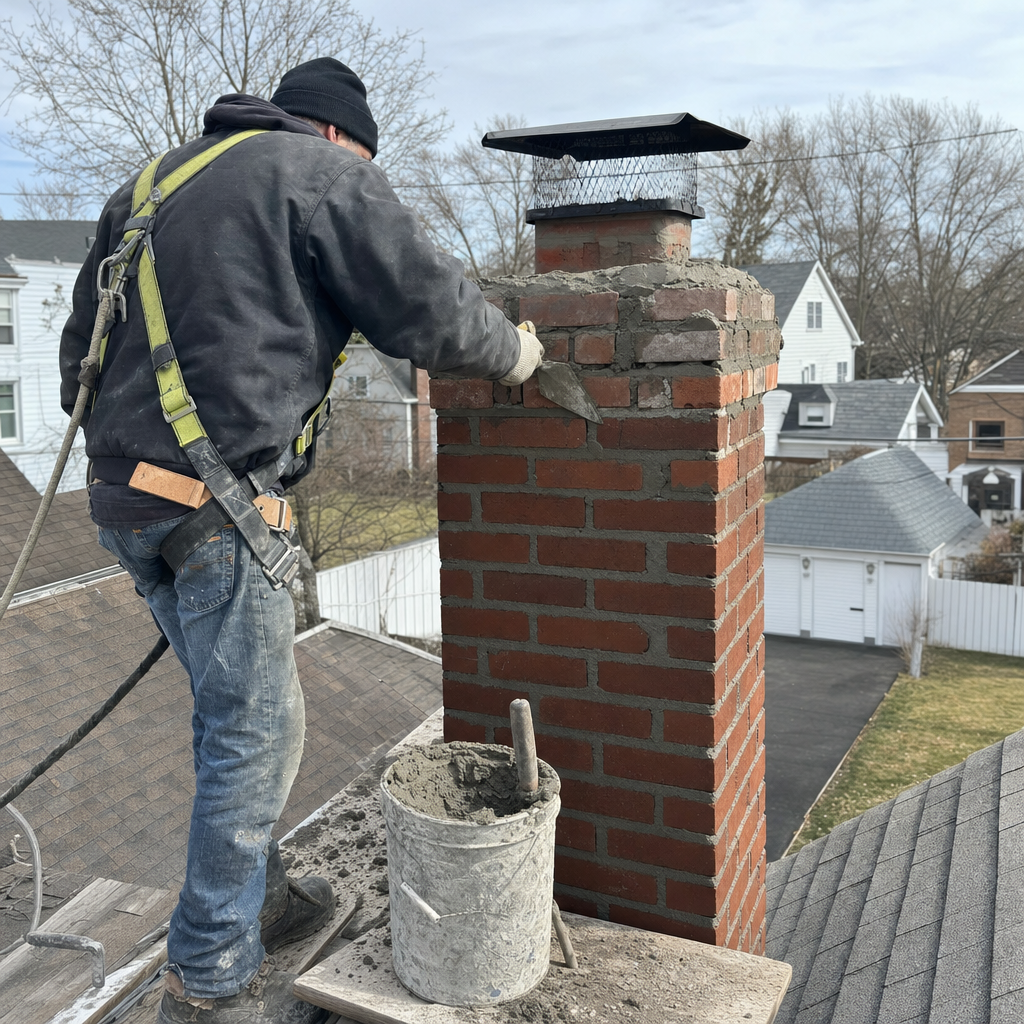
Fast, Reliable Chimney Repair Across Long Island City
Chimney repair in Long Island City typically costs $450–$2,800 depending on scope, and most jobs in the 11101 and 11109 ZIP codes are scheduled within 24–48 hours. We’re familiar with the specific repair patterns that hit Hunters Point rowhouses and Dutch Kills walk-ups — salt corrosion, multi-flue deterioration, and century-old mortar that finally gives way. Call (866) 884-9512 for a free estimate and honest timeline.
Long Island City’s chimney problems aren’t generic. The East River waterfront location, the concentration of pre-war brick housing in Hunters Point, and the layered history of fuel conversions in these buildings create repair needs you won’t find in Astoria’s newer stock or Greenpoint’s detached frame houses. We’ve spent 17 years working on chimneys across New York City, and the calls from 46th Avenue, Vernon Boulevard, and the side streets off Jackson Avenue follow distinct patterns. Our Chimney Repair team knows what to look for before we even set up the ladder.
Why Apex Chimney Cleaning Greater New York Is Long Island City’s Preferred Chimney Repair Company
Robert Garcia, our owner, handles the work himself — not a rotating crew of subcontractors. When you call for chimney repair in Long Island City, Robert is the technician who arrives, scopes the flue, and makes the call on whether you need repointing, a crown rebuild, or full stack reconstruction. That accountability matters in a neighborhood where a botched repair on a 120-year-old multi-flue chimney can cascade into permit violations, water damage across multiple units, or worse.
Our reputation here is built on documented outcomes, not promises. 1,096 verified customer reviews averaging 4.7 stars — many from Queens homeowners in the 11101, 11109, and 11120 ZIP codes — reflect 17 consecutive years of chimney-only focus. We don’t clean gutters. We don’t paint houses. We repair chimneys, and we’ve seen virtually every configuration and failure mode that exists in Long Island City’s housing stock.
Response time matters when water is coming through your flashing or spalling brick is shedding pieces onto the sidewalk below. We typically schedule Long Island City repairs within one to two business days, with same-day availability for active leaks or structural concerns that pose immediate safety risks. Robert knows the area — the narrow alley access behind Vernon Boulevard buildings, the shared-driveway logistics off Jackson Avenue, the DOB inspection triggers that accompany gut renovations in the historic district. That local fluency saves time and prevents surprises.
Our Chimney Repair Services in Long Island City
Mortar Repointing
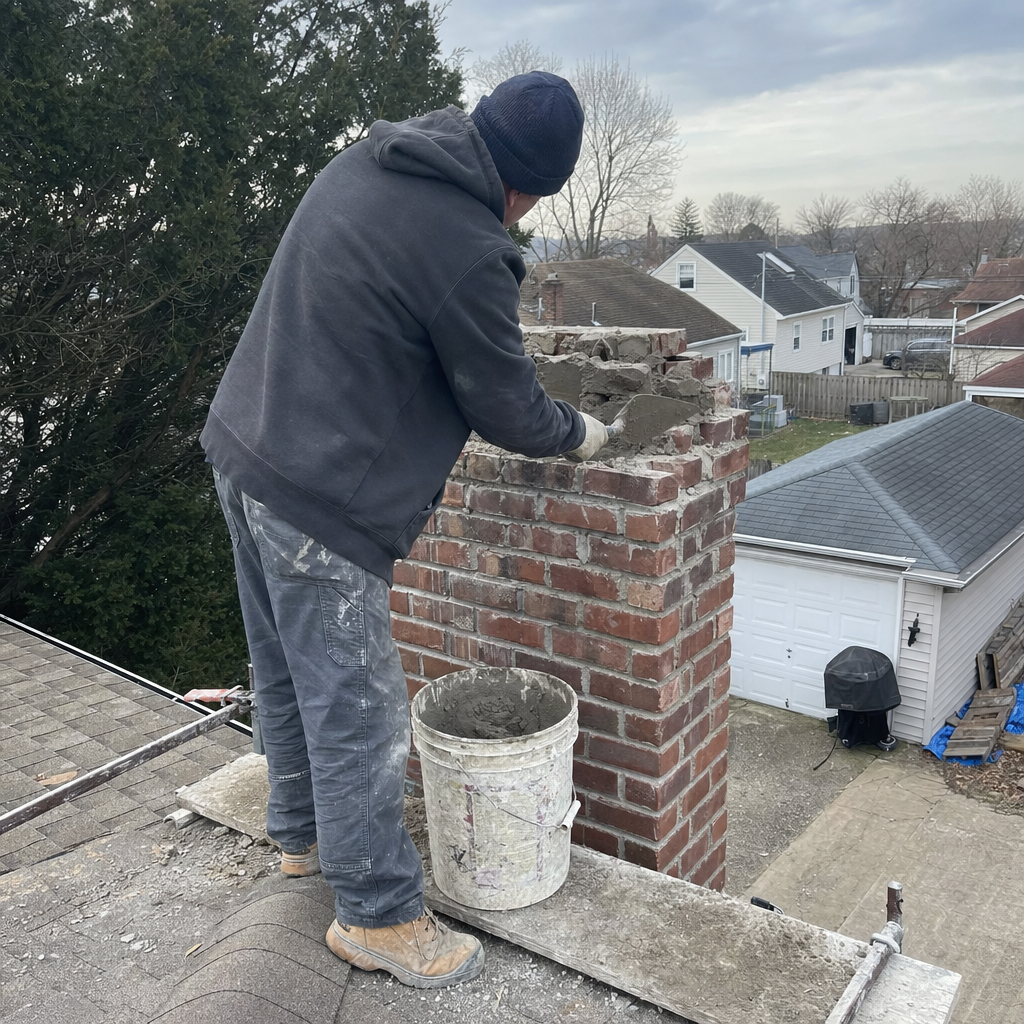
In Long Island City’s Hunters Point rowhouses, mortar joints between original brick courses take a beating. Salt-laden East River air accelerates the chemical breakdown of century-old lime-based mortar, and freeze-thaw cycles through Queens winters open gaps that let water penetrate the wall system. We grind out deteriorated joints to proper depth and repoint with Type N mortar formulated for historic masonry — matching the original compressive strength without trapping moisture the way modern Portland cement would. For Dutch Kills walk-ups with four- to six-story exposures, we repoint by elevation, working around tenant schedules and sidewalk egress requirements.
Spalling Brick Repair
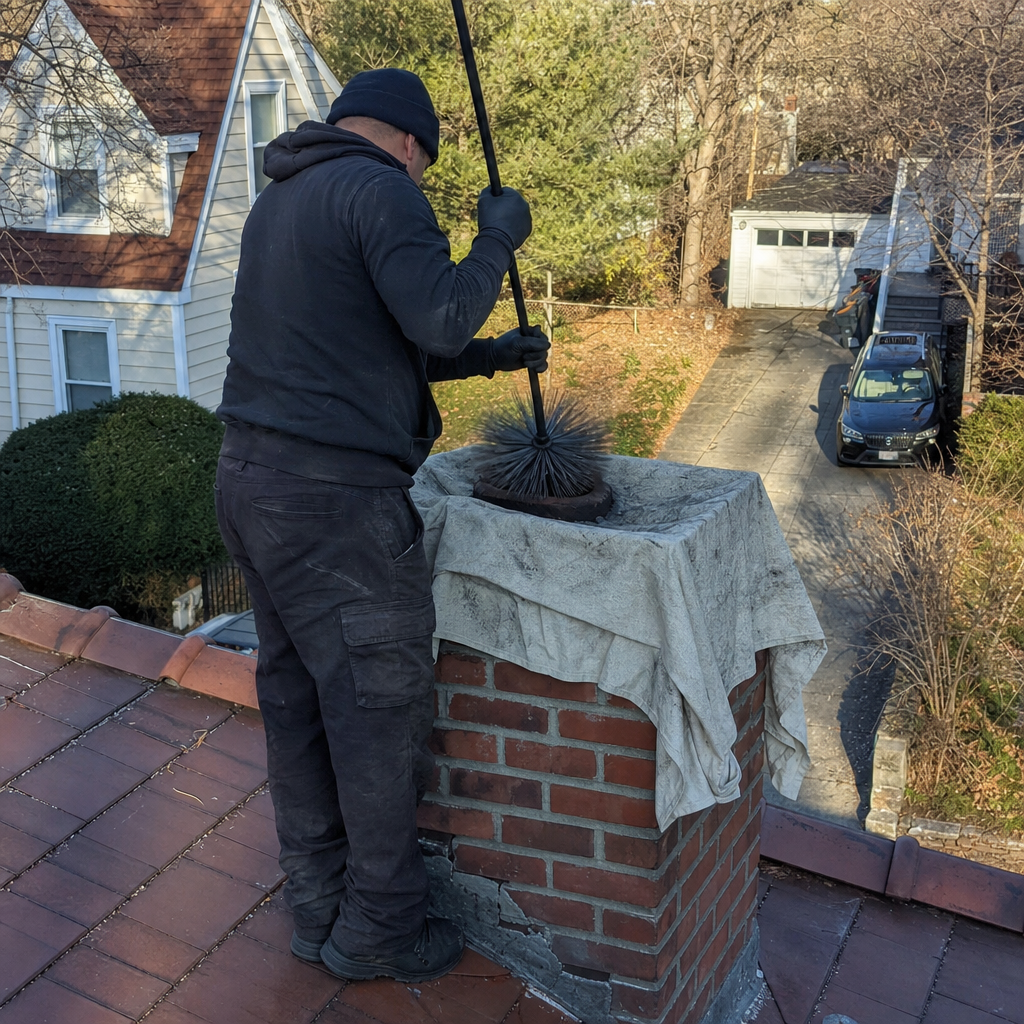
Spalling — the flaking and crumbling of brick faces — is epidemic on Long Island City chimney stacks. The combination of East River salt air, crown cracks that channel water directly into the wall, and original coal-tar deposits that hold moisture against interior brick surfaces causes face spalling you rarely see this severe in Sunnyside or Woodside. We remove damaged brick courses, source matching reclaimed or reproduction brick where necessary, and rebuild with proper bond patterns. In a recent repair on a 1904 Queen Anne rowhouse on 46th Avenue in Hunters Point, nor’easters had driven salt-laden moisture into the exposed crown, causing spalling brick and flashing failure. We stripped the crown, repointed with Type N mortar, installed a new copper custom crown cap from Copperfield, and scoped all four flues—finding a coal tar glaze in the original boiler flue and a pigeon nest in an abandoned fireplace flue that had blocked ventilation, which we cleaned and sealed.
Chimney Waterproofing
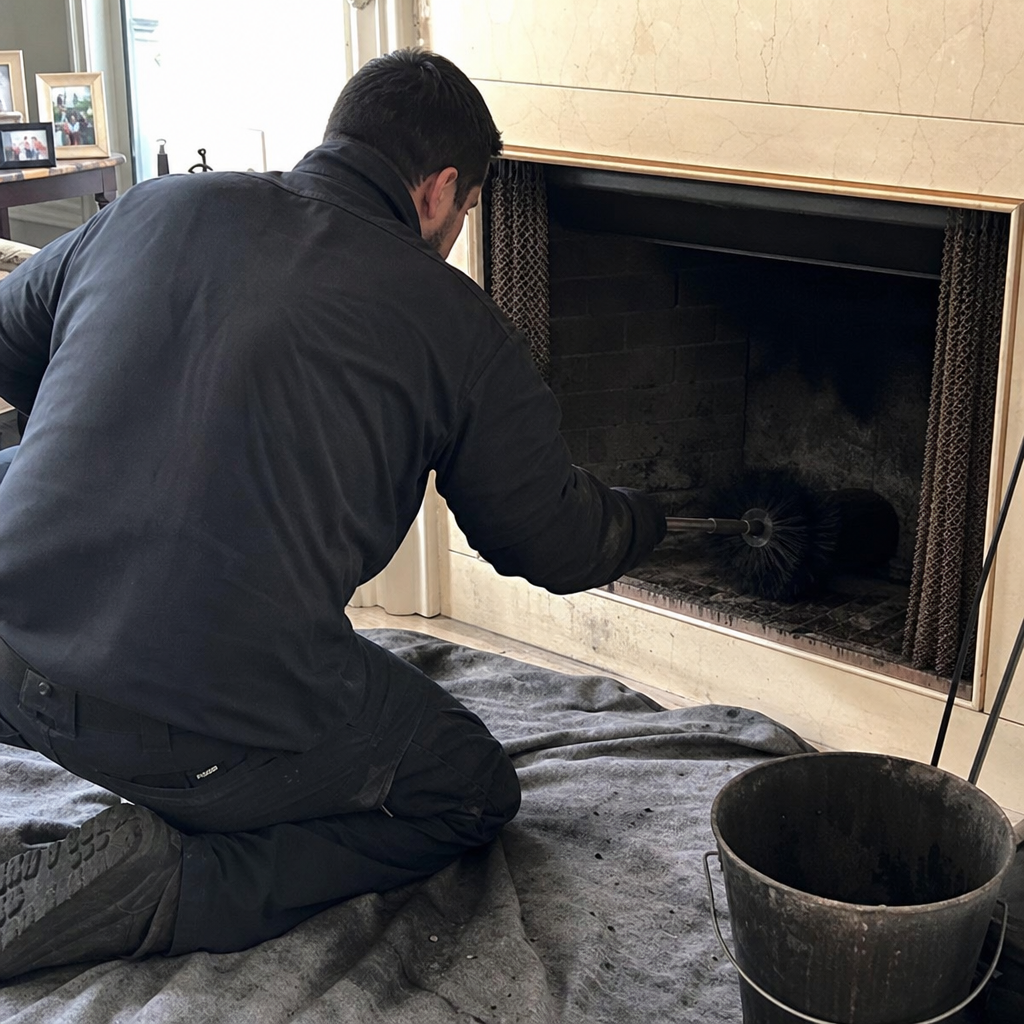
Waterproofing a Long Island City chimney requires more than a spray-on sealant from a hardware store. The masonry here is often porous from decades of thermal cycling, and the multi-flue stacks common in Hunters Point have complex crown geometries that pool water if not properly detailed. We apply vapor-permeable silane/siloxane treatments that let masonry breathe while repelling liquid water — critical in a climate where winter nor’easters channel up the East River corridor and drive moisture directly into chimney masonry. For buildings with active interior leaks, we diagnose the source first: failed flashing, crown cracks, or porous brick — then specify the right combination of repair and protective treatment.

Flashing Repair
Flashing failure is a recurring post-winter complaint in the Hunters Point rowhouse blocks, and for clear reason. The East River corridor funnels wind-driven rain and snow directly against roof penetrations, and the stepped counter-flashing on century-old chimneys was often installed without proper reglets or sealant backup. We remove deteriorated flashing, inspect the underlying roof deck and masonry for hidden water damage, and install new copper or lead flashing with proper overlap and sealant integration. For Long Island City’s flat-roofed walk-ups and the occasional sloped roof on converted industrial buildings, we adapt our flashing details to the actual roof assembly — not a one-size-fits-all approach.
What happens when you call
- 1
A real person answersNo phone trees — you reach a local pro.
- 2
You get an upfront price rangeHonest numbers before anyone is dispatched.
- 3
A background-checked tech heads outLicensed & insured, dispatched right away.
- 4
You approve before work beginsNothing starts until you say go.
Trusted Brands We Service in Long Island City
We install and work with professional-grade materials from DuraFlex, HeatShield, and Copperfield — the same lines specified by commercial chimney contractors across the five boroughs. For Long Island City’s multi-fuel chimney stacks, we keep common liner diameters and crown cap configurations in stock, which means faster turnaround on repairs that would otherwise wait for special orders. When we specify a Copperfield custom crown cap or a DuraFlex liner for a Hunters Point rowhouse, it’s because that product is rated for the actual conditions: thermal cycling, salt exposure, and the mechanical stresses of multi-flue configurations. We don’t upsell brand names — we use what works, installed right.
Common Chimney Repair Problems We See in Long Island City Homes
- Crown cracking from salt corrosion. The East River waterfront location exposes chimney crowns to salt-laden air that accelerates spalling and mortar joint erosion far faster than interior Queens neighborhoods just a mile east. We see crowns requiring rebuild or cap installation every 3–5 years on exposed stacks.
- Multi-flue blockage from abandoned fuel systems. In Hunters Point rowhouses, single chimney stacks often contain four or more flues—original coal, parlor fireplaces, and later-added gas appliances—with abandoned flues never capped, now packed with debris and pigeon nests. Any repair job must scope the full stack because the inactive flues are often the larger problem.
- Flashing failure after winter nor’easters. Wind-driven moisture channels up the East River corridor and exploits gaps in original flashing, causing interior water damage that homeowners often mistake for roof leaks. We inspect chimney-to-roof junctions as standard practice on every Long Island City service call.
- Spalling brick from compounded moisture sources. Decades of fuel conversions leave compacted soot, oil glaze, and coal tar deposits in multi-flue stacks that weren’t cleaned between transitions. These deposits hold moisture against interior brick, accelerating face spalling that starts at the top and works down.
Pricing for Chimney Repair in Long Island City, NY
Here’s what chimney repair typically runs in the Long Island City market, based on jobs we’ve completed in the 11101, 11109, and 11120 ZIP codes:
| Service | Typical Range |
|---|---|
| Mortar repointing (per elevation) | $450 – $1,200 |
| Spalling brick repair (localized) | $600 – $1,800 |
| Chimney waterproofing treatment | $350 – $750 |
| Flashing repair/replacement | $500 – $1,400 |
| Crown rebuild with cap | $800 – $2,200 |
| Partial chimney rebuild | $1,500 – $4,500 |
| Full stack rebuild (multi-flue) | $3,500 – $8,500+ |
Actual cost depends on access difficulty, scaffolding requirements, matching historic materials, and whether we find hidden damage during tear-out. We provide written, itemized estimates before any work begins — no verbal ballpark that changes once we’re on site. For Long Island City’s gut-renovation market, we also coordinate with your contractor’s schedule to avoid DOB inspection delays. Call (866) 884-9512 for a free estimate.
We Also Serve Cities Near Long Island City
Our repair crews work regularly in Greenpoint across the Pulaski Bridge, Sunnyside and Astoria to the east, and south to Gramercy Park and the Midtown Manhattan chimney stock. Each neighborhood has distinct housing ages and repair patterns, but the owner-lead-technician model stays the same. If you’re in one of these areas and your chimney shows spalling brick, crown cracks, or water infiltration, the same evaluation and repair process applies.
Serving Long Island City, NY — Our Local Coverage Area
We’re based in the Long Island City area and know this community well. Use the map below to see our service coverage — if you’re nearby, we can almost certainly help.
FAQs — Chimney Repair in Long Island City
Chimney crowns in Long Island City deteriorate faster because salt-laden East River air accelerates the chemical breakdown of mortar and concrete, and winter nor’easters channel wind-driven moisture directly into crown cracks that would stay drier in interior Queens. The exposed waterfront location creates a corrosion rate we don’t see in Sunnyside or Woodside, even on chimneys of similar age. If your crown is showing hairline cracks or surface spalling, call (866) 884-9512 — early crown repair prevents the full rebuild that follows water infiltration.
Yes — we always camera the full stack on Hunters Point rowhouses because abandoned flues are almost always the larger problem. In these buildings, it’s common to find a single chimney stack containing four or more flues with the abandoned coal and fireplace flues never decommissioned or capped, now packed with decades of debris and active pigeon nests. The active flue may vent fine while the abandoned neighbor flue is a blocked fire hazard or moisture source causing hidden damage. Call (866) 884-9512 to schedule a full-stack inspection.
Localized spalling can often be repaired by replacing individual brick courses and repointing, but the decision depends on how deep the deterioration extends and whether the underlying structure is compromised. In Dutch Kills buildings of that era, we frequently find that surface spalling masks deeper freeze-thaw damage or coal-tar moisture retention that has weakened multiple wythes. Robert Garcia evaluates each case in person — we’ll show you camera footage of the interior flue condition and give you a straight recommendation on repair versus rebuild. Call (866) 884-9512 for a free evaluation.
We install DuraFlex stainless liners and HeatShield cerfractory flue sealant systems, depending on the flue condition and fuel type. For Long Island City’s multi-fuel stacks — which may have cycled from coal to oil to gas without proper cleaning between conversions — we often find that a DuraFlex liner is the only way to safely vent modern gas appliances through a flue with compromised clay tile or heavy glaze deposits. We specify the product after scoping, not before. Call (866) 884-9512 to discuss your specific stack configuration.
A gut renovation permit doesn’t automatically require chimney repair, but NYC DOB permits on pre-war buildings routinely trigger mandatory chimney inspections under NYC Fire Code §604, and those inspections frequently reveal conditions that must be addressed before certificate of occupancy. In Long Island City’s historic rowhouse stock, the inspection often finds uncapped abandoned flues, deteriorated liners, or structural concerns that weren’t visible until walls were opened. We coordinate with contractors to complete required repairs on schedule. Call (866) 884-9512 if your permit inspection flagged chimney conditions.
Written by Robert Garcia, Owner at Apex Chimney Cleaning Greater New York, serving Long Island City since 2007.