
Fast, Reliable Chimney Repair Across Middle Village
Chimney repair in Middle Village typically runs $450–$2,800 depending on scope, and most jobs are inspected and quoted within 24 hours. If you’re seeing crumbling mortar, water stains on your ceiling near the stack, or your carbon monoxide detector’s been acting up since your boiler conversion, you’re dealing with problems we see weekly in the 11379 ZIP code. We’re Apex Chimney Cleaning Greater New York, and Robert Garcia, our owner and lead technician, has spent 17 years working on the exact brick semi-detached and attached homes that define Middle Village’s streets — from 75th Road down to Metropolitan Avenue. Call us at (866) 884-9512 for a free, on-site estimate. We know the parking constraints around Juniper Valley Park, the narrow alley access behind row homes on 79th Street, and the DOB permit complications that come with shared party-wall chimneys in this neighborhood. Our Chimney Repair team doesn’t guess at Middle Village conditions — we’ve documented them across more than a thousand customer visits.
Why Apex Chimney Cleaning Greater New York Is Middle Village’s Preferred Chimney Repair Company
We’ve built our reputation in Middle Village one brick stack at a time. Our 1,096 verified customer reviews averaging 4.7 stars include dozens from homeowners right here in the 11379 ZIP — many of them repeat customers who’ve had us back after an initial sweep revealed deeper masonry issues. Robert Garcia handles every job personally as lead technician, so when you call Apex, you’re getting the decision-maker on your roof, not a subcontractor learning your chimney on the fly.
Response time matters in a neighborhood where a failed crown or open mortar joint can funnel water straight into your living room during the next Queens freeze-thaw cycle. We typically schedule Middle Village inspections within a day, often same-day for active leaks or backdrafting concerns. That speed comes from knowing the area — we don’t waste time hunting for alley access behind your semi-detached or figuring out which side of the shared stack serves your unit.
Our local knowledge runs deeper than geography. We understand how Middle Village’s aggressive oil-to-gas conversion timeline has left hundreds of chimneys with mismatched flues, dormant oil-boiler stacks creating pressure sinks, and clay tile liners failing from acidic condensation that suburban markets dealt with a decade ago. That specific expertise protects your home in ways a generalist simply can’t match.
Our Chimney Repair Services in Middle Village
Mortar Repointing
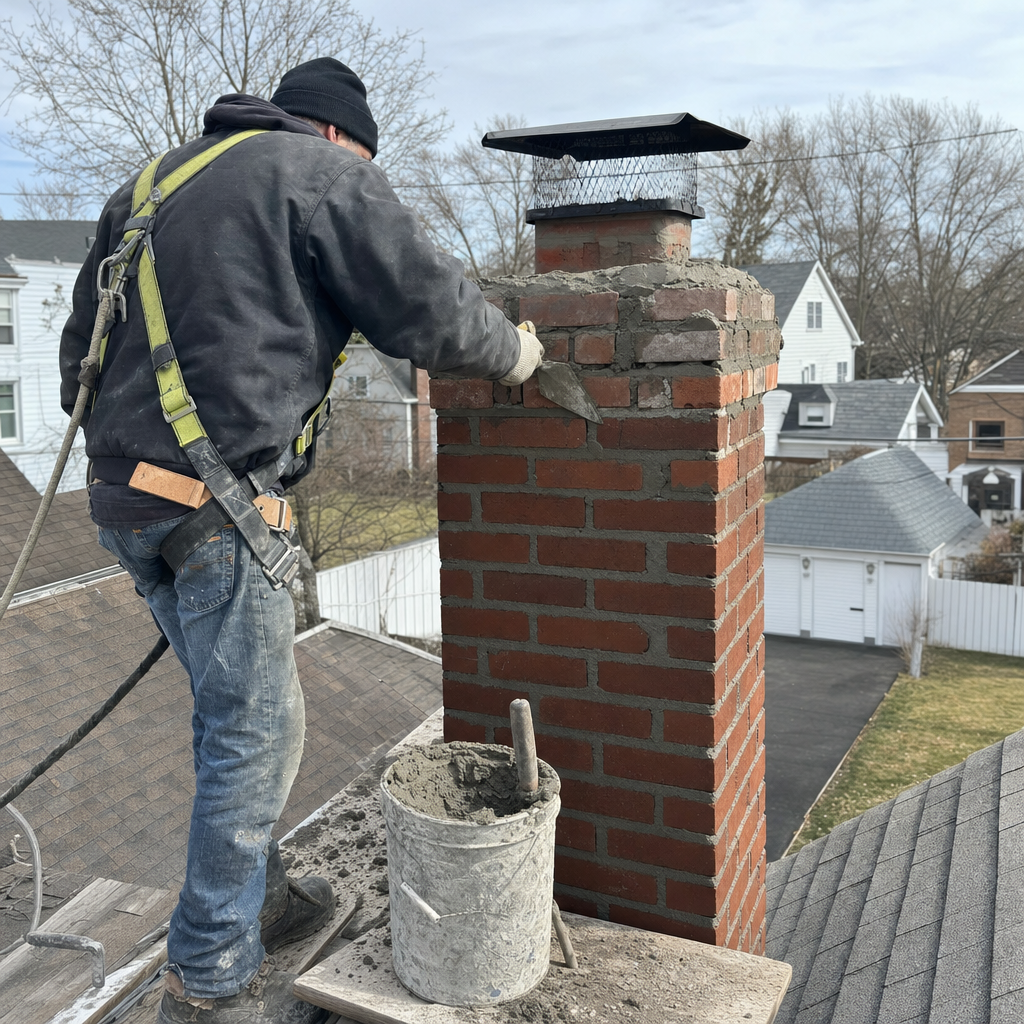
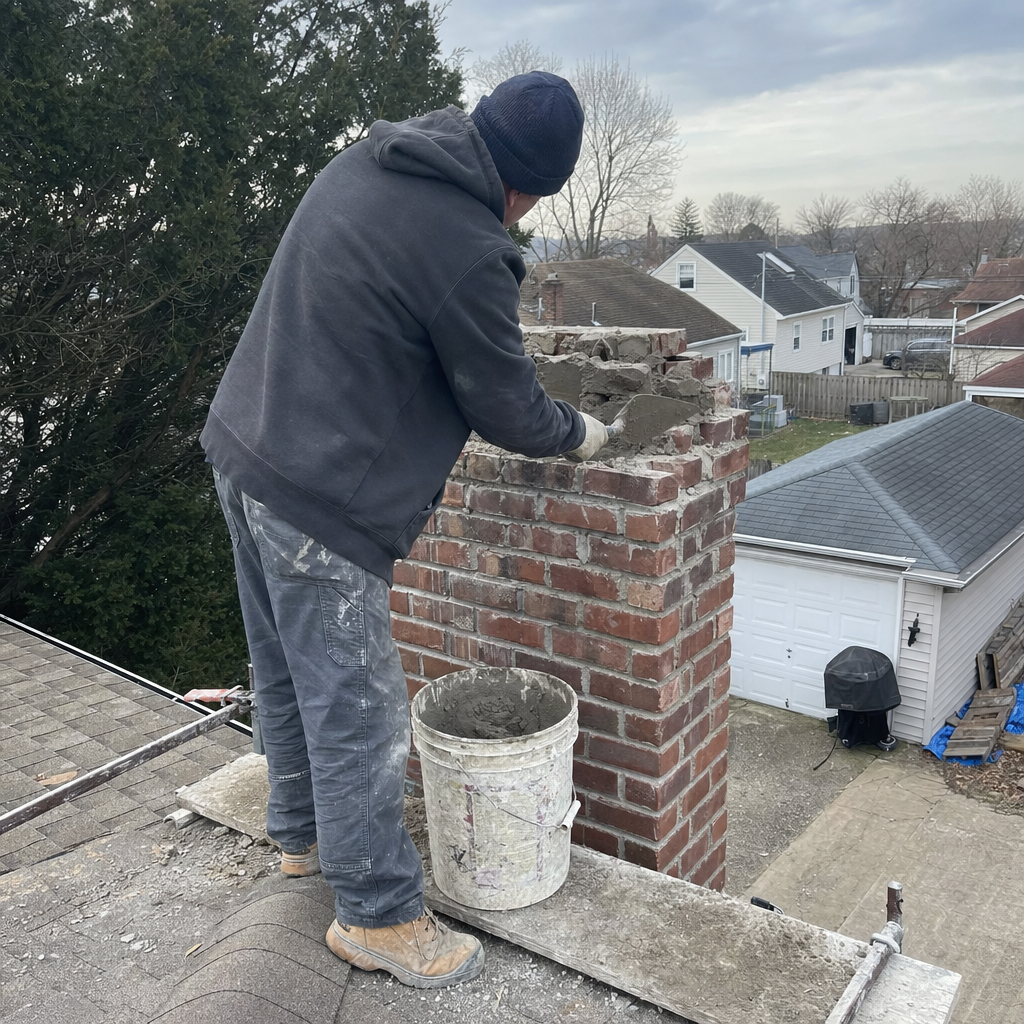
The lime-based mortar in Middle Village’s 1925–1955 brick chimneys wasn’t formulated for Queens’ modern freeze-thaw abuse. Every winter, water infiltrates open joints, expands on freezing, and grinds the mortar to powder — especially on north-facing stacks near Juniper Valley Park’s dense canopy where sunlight never fully dries the masonry. Our repointing removes failed mortar to proper depth and replaces it with color-matched, breathable mortar that moves with your original brick rather than trapping moisture. We’ve repointed dozens of shared party-wall stacks on 74th and 75th Streets where both owners needed coordinated access and careful staging in tight side yards.
Spalling Brick Repair
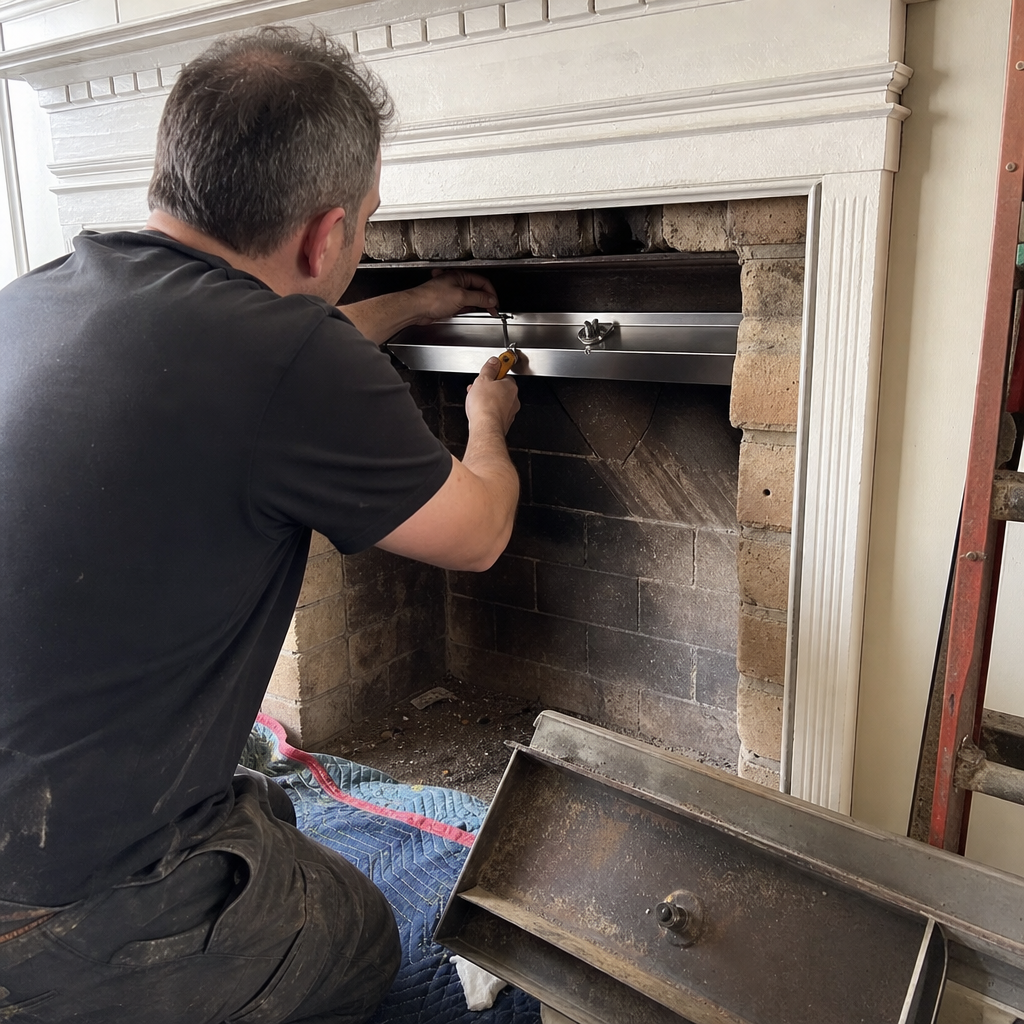
Spalling — the flaking and crumbling of brick faces — is epidemic in Middle Village after hard winters. The combination of aging lime mortar, saturated brick from failed crowns, and repeated freeze-thaw cycles destroys the protective fire-skin on your chimney’s exterior. We cut out spalled units, source matching brick where possible, and rebuild the affected courses with proper bond and weep details. On a recent job near 79th Street and Juniper Boulevard, we replaced three courses of spalled brick on a 1938 semi-detached where the original crown had cracked clean through, allowing two winters of saturation damage.
Chimney Waterproofing
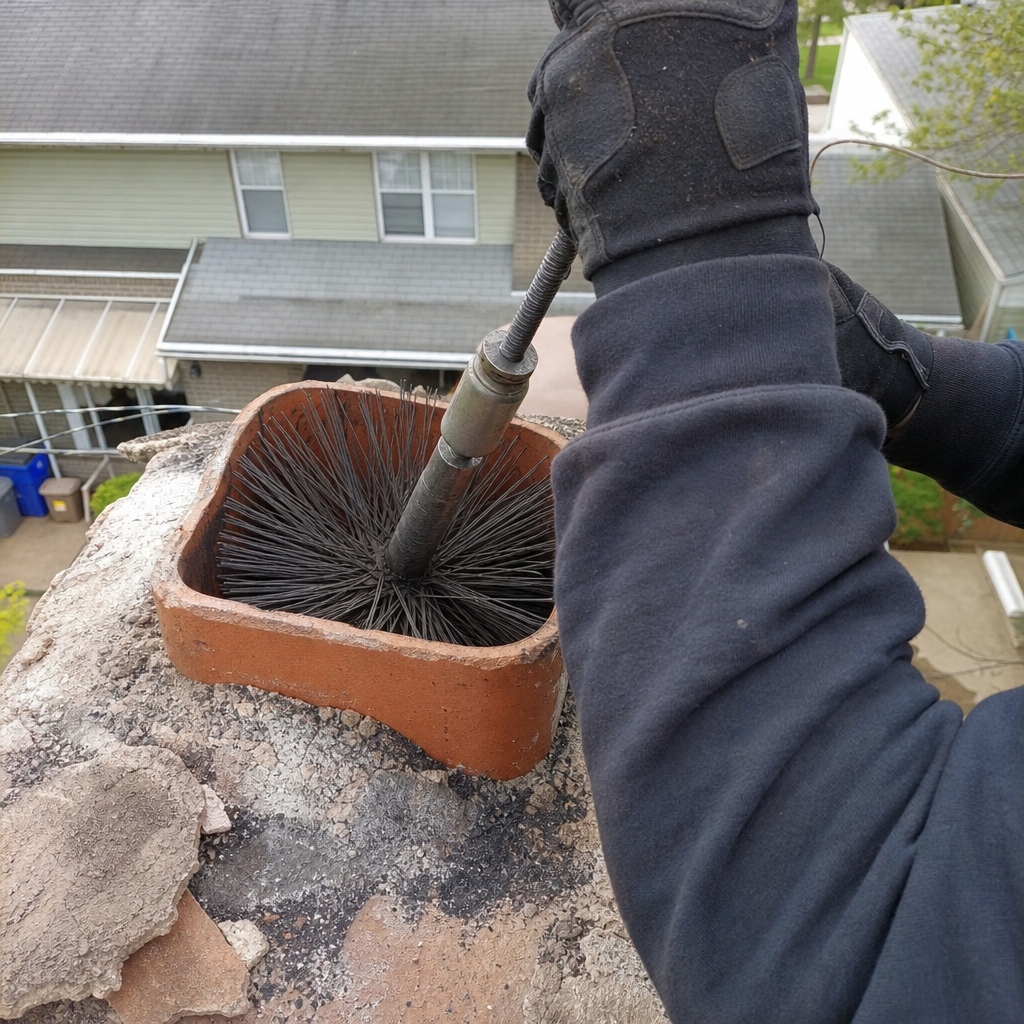
Waterproofing a Middle Village chimney requires more than a spray-and-pray treatment. The neighborhood’s multi-flue stacks, shared wall configurations, and the particular porosity of 90-year-old common brick demand breathable, silane-based sealers that repel liquid water without trapping vapor inside. We apply professional-grade waterproofing only after repairing all active mortar and brick failures — sealing over damage just hides the problem. For homes near Juniper Valley Park where leaf debris accelerates crown deterioration, we often pair waterproofing with a custom stainless cap to break the debris-moisture cycle.
Flashing Repair
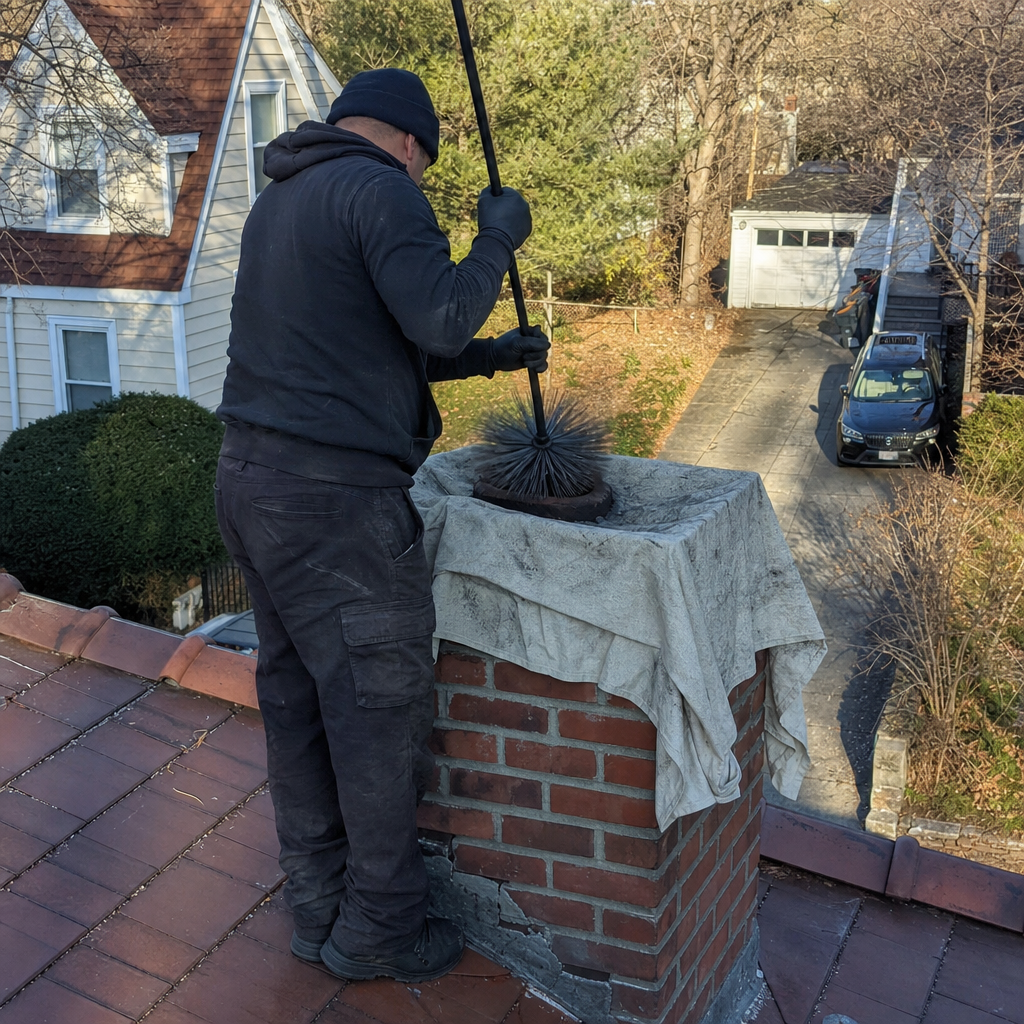
Step flashing and counterflashing on Middle Village’s older homes often consists of original galvanized steel that’s rusted through or was never properly integrated with the roofing membrane. The low-slope transitions common on attached homes in this neighborhood create particular vulnerability at the chimney-roof intersection. We fabricate and install custom flashing using professional-grade materials, integrating with your existing roof system without the “caulk it and hope” approach that fails inside two seasons. We’ve re-flashed shared stacks where the party wall complicates water diversion — a detail that requires understanding which neighbor’s roof drains where.
Chimney Rebuilding
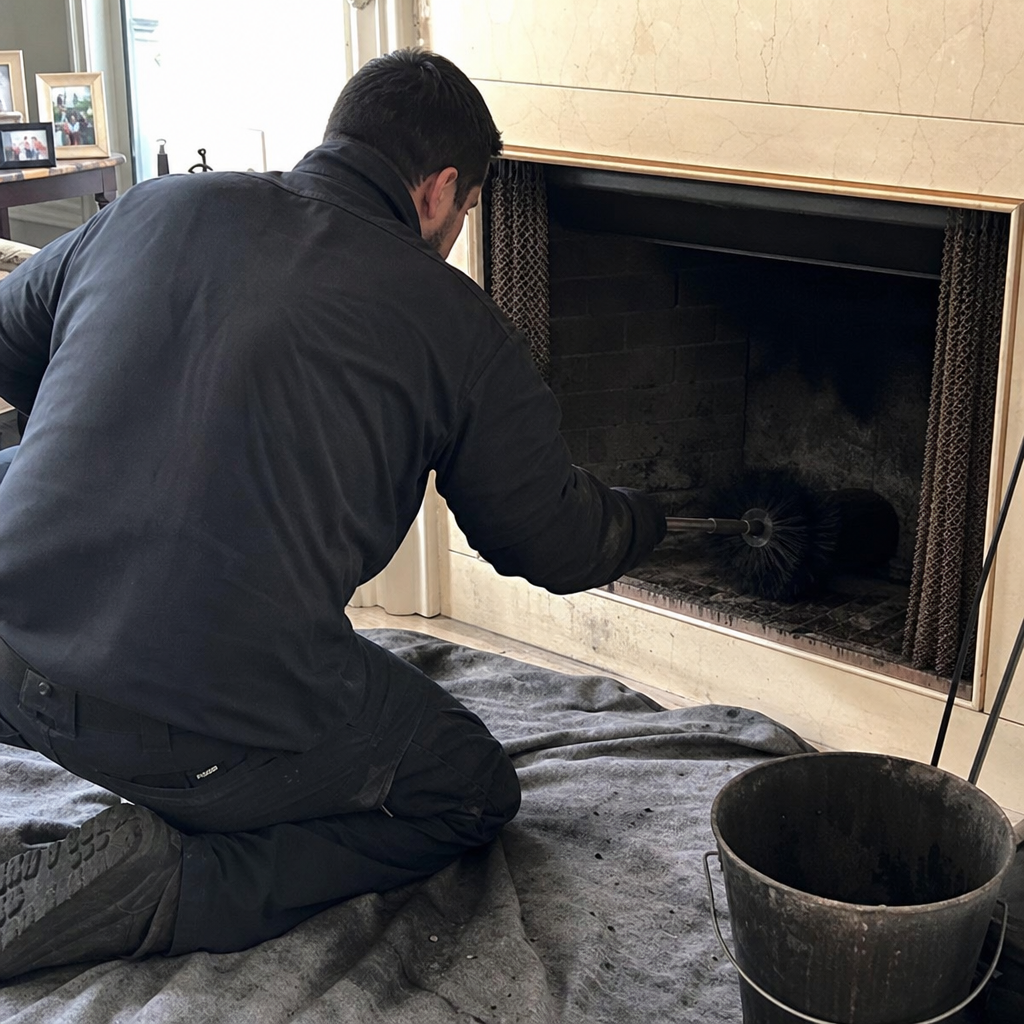
When spalling, mortar failure, and liner damage compound past the point of spot repair, partial or full rebuild becomes the only safe option. Middle Village’s shared-stack configurations make this especially complex — we’ve rebuilt party-wall chimneys where the stack serves two units with separate flues, requiring careful shoring, staged demolition, and coordinated scheduling with both owners. Robert Garcia oversees every rebuild personally, from structural assessment through final cap installation, using professional-grade materials including DuraFlex liner components and Copperfield masonry supplies matched to your home’s original character.

Tuckpointing
For chimneys where the mortar joints are weathered but the brick remains sound, tuckpointing offers targeted restoration without the scope of full repointing. We grind and refill only the failed joints, preserving original brick and minimizing disruption. This is often the right approach for Middle Village homeowners who’ve caught deterioration early — before freeze-thaw cycling destroys the brick itself.
What happens when you call
- 1
A real person answersNo phone trees — you reach a local pro.
- 2
You get an upfront price rangeHonest numbers before anyone is dispatched.
- 3
A background-checked tech heads outLicensed & insured, dispatched right away.
- 4
You approve before work beginsNothing starts until you say go.
Trusted Brands We Service in Middle Village
We don’t source from big-box inventory that fits “most” chimneys. For Middle Village’s specific repair demands — gas-conversion liner replacements, custom caps for multi-flue stacks, crown rebuilds in tight alley-access conditions — we stock and install professional-grade materials from DuraFlex, HeatShield, and Copperfield. These are the same product lines commercial masonry contractors specify, not consumer-grade alternatives. That means when we identify a failed liner on your 79th Street semi-detached, we’re not ordering parts and hoping they fit next week. We’re measuring, fabricating, and installing with components designed for the exact temperature, pressure, and condensation profile your converted gas system produces. Fast turnaround. Proper fit. No callbacks for material mismatches.
Common Chimney Repair Problems We See in Middle Village Homes
- Acidic condensation cracking clay tile liners within 3–5 years of oil-to-gas conversion. The cooler exhaust temperatures of high-efficiency gas appliances condense moisture inside flues originally sized for 500°F oil exhaust. That condensation mixes with combustion byproducts to form sulfuric acid that attacks clay tile from the inside out — a pattern we document regularly in post-conversion inspections along Metropolitan Avenue and the Maspeth border.
- Freeze-thaw spalling of lime-mortar joints on north-facing stacks near Juniper Valley Park. The park’s mature oak and maple canopy blocks winter sun on adjacent blocks, keeping masonry saturated through repeated freeze cycles. By March, the mortar on these stacks is often reduced to sand, and brick faces begin spalling. We’ve repointed entire north faces on 74th Street homes where this microclimate effect accelerated five years of normal wear into eighteen months.
- Two-flue backdraft after oil-to-gas conversion when the old oil flue is left uncapped and uninsulated. This is the Middle Village signature problem. The dormant oil-boiler flue — same stack, separate flue — becomes a cold column that pulls air downward, creating negative pressure that sucks combustion gases out of the active gas flue and into your living space. We’ve traced CO alarm incidents to this exact mechanism in more than a dozen homes within a half-mile of Juniper Valley Park.
- Party-wall access and permit complications for shared-stack repairs. Middle Village’s attached and semi-detached housing means your chimney stack likely serves two or more units with separate flues. Repair work on shared masonry requires NYC DOB permit coordination, neighbor notification, and careful liability management — not the straightforward single-family protocol suburban chimney companies assume.
Pricing for Chimney Repair in Middle Village, NY
Here’s what chimney repair costs in Middle Village’s market, based on jobs we’ve completed in the 11379 ZIP over the past three years:
| Service | Typical Range in Middle Village |
|---|---|
| Mortar repointing (spot) | $450–$850 |
| Full chimney repointing | $1,200–$2,400 |
| Spalled brick repair (localized) | $650–$1,400 |
| Crown repair or rebuild | $800–$1,600 |
| Flashing repair/replacement | $550–$1,200 |
| Chimney waterproofing | $400–$900 |
| Partial chimney rebuild | $2,200–$4,500 |
| Full chimney rebuild (shared stack, one side) | $3,800–$6,500 |
What moves you within these ranges? Height and access (three-story stacks cost more than two), extent of hidden damage revealed during demolition, shared-stack coordination with adjacent owners, and whether your liner needs replacement alongside masonry work. Oil-to-gas conversion jobs often bundle liner replacement with crown or mortar repair, which affects total scope. We provide exact, itemized quotes after hands-on inspection — never phone guesstimates that balloon on arrival. Estimates are free. Call (866) 884-9512 to schedule.
We Also Serve Cities Near Middle Village
Our service radius covers the central Queens chimney repair market without the scheduling delays of Manhattan-dispatch operations. We regularly work in Maspeth — where the industrial-residential mix creates similar conversion-era chimney issues — Rego Park, Elmhurst, and Glendale. If you’re in one of these neighborhoods and found this page searching Middle Village, the same response times and owner-led service apply. Robert Garcia coordinates routing daily to keep travel time minimal and arrival windows reliable.
Serving Middle Village, NY — Our Local Coverage Area
We’re based in the Middle Village area and know this community well. Use the map below to see our service coverage — if you’re nearby, we can almost certainly help.
FAQs — Chimney Repair in Middle Village
It fundamentally changes the thermal and moisture dynamics inside your flue. Gas exhaust is cooler and wetter than oil exhaust, so your original clay tile liner — sized for hot, dry oil combustion — now experiences chronic acidic condensation that cracks tile and erodes mortar joints from the inside. The dormant oil flue, if left uncapped, becomes a pressure sink that can backdraft your active gas flue. Call (866) 884-9512 for a post-conversion inspection — we check both flues and the liner condition that generic HVAC contractors often miss.
Queens’ freeze-thaw cycling destroys lime-based mortar that was never formulated for modern thermal stress. Water enters open joints, expands 9% on freezing, and mechanically grinds the mortar. North-facing stacks near Juniper Valley Park suffer worst because they never fully dry. Tuckpointing or full repointing with modern breathable mortar stops the cycle. Call (866) 884-9512 — we’ll assess whether your brick is still salvageable or if spalling has progressed past spot repair.
Yes. Any structural work on a shared party-wall chimney stack in NYC requires Department of Buildings permitting and proper neighbor notification. We handle this coordination as part of our standard process for Middle Village’s attached and semi-detached homes. The permit protects both owners and ensures the work meets current code for multi-flue configurations. Call (866) 884-9512 and we’ll walk you through the specific requirements for your stack arrangement.
We stage compact equipment and bucket trucks sized for Middle Village’s narrow side yards and alley-load conditions. Robert Garcia surveys access during your free estimate, so we’re not discovering clearance problems on work day. For jobs where even compact equipment won’t fit, we’ve developed manual hoisting protocols for brick, mortar, and liner materials that keep the job moving without property damage. Call (866) 884-9512 to schedule an access assessment.
It’s almost always condensation-saturated soot and creosote in a now-underperforming flue, sometimes compounded by minor backdrafting pulling household air down the stack. The cooler gas exhaust doesn’t dry the flue lining between cycles, so organic material stays wet and active. We see this in recently converted Middle Village homes where the original clay liner was never evaluated for gas service. A liner inspection with possible HeatShield resurfacing or DuraFlex liner replacement typically resolves it. Call (866) 884-9512 for diagnostic scheduling — that smell signals a real combustion safety issue.
On 75th Street near Juniper Valley Park, we repaired a 1930 brick semi-detached where an oil-to-gas conversion left a dormant oil flue causing intermittent backdrafting into the living room fireplace. Our crew installed a custom HeatShield liner in the active gas flue and sealed the cold flue with a stainless steel cap equipped with a vacuum breaker, eliminating the pressure imbalance that had triggered carbon monoxide alarms twice last winter.
In Middle Village, the two-flue backdraft pattern — where the capped, dormant oil-boiler flue in a shared stack pulls cold air down and causes combustion gases to spill from the active gas flue — is a common post-conversion issue our techs encounter weekly along the Maspeth border. Unlike generic chimney repair pages, this guide addresses the specific two-flue backdraft risks, freeze-thaw spalling patterns, and oil-to-gas conversion pitfalls unique to Middle Village’s 1920s–1950s attached homes. Robert Garcia has spent 17 years documenting these failure modes across more than a thousand customer outcomes, and he brings that focused expertise directly to your job site — not to a call center script.
Ready to stop guessing at what’s wrong with your chimney? Call (866) 884-9512 now for a free, no-obligation estimate. Robert Garcia will inspect your stack personally, explain exactly what we’re seeing, and give you an itemized quote with no pressure to commit on the spot. We’ve earned our 4.7-star average across 1,096 reviews by treating every Middle Village home like the long-term relationship it is.
Written by Robert Garcia, Owner at Apex Chimney Cleaning Greater New York, serving Middle Village and Queens since 2007.