
Fast, Reliable Chimney Cap & Crown Across Harlem
Chimney cap and crown repair in Harlem typically runs $280–$890 depending on whether you’re sealing a cracked crown or installing a custom multi-flue cap on a shared brownstone stack, and most jobs we can schedule within 48 hours. We’re familiar with the tight rear alleys off Lenox Avenue, the 3-foot clearances between buildings on blocks like West 132nd Street, and the permit complications that come with party-wall chimneys in ZIP 10037. If you’re seeing water stains around your fireplace, hearing birds in the flue, or noticing brick spalling on your chimney top, call us at (866) 884-9512 — Robert handles the inspection himself.
Why Apex Chimney Cleaning Greater New York Is Harlem’s Preferred Chimney Cap & Crown Company
We’ve worked on chimney caps and crowns in Harlem for 17 years, from the brownstone blocks of Strivers’ Row to the Romanesque Revival rowhouses near Marcus Garvey Park. Our Chimney Cap & Crown team knows that a cap that works in a suburban ranch house won’t cut it here — Harlem’s dense building canyons and shared party-wall stacks demand different solutions.
Our 1,096 verified reviews average 4.7 stars, and a significant share come from Harlem homeowners who’ve had us back for crown repairs, cap replacements, and full relining jobs after initial inspections. Robert Garcia, our owner, serves as lead technician on every job — you’ll get the decision-maker on your roof, not a subcontractor learning Harlem’s quirks for the first time.
Response time to Harlem is typically same-day or next-day for urgent water intrusion or animal entry, and we schedule around the parking realities of your block — whether that’s alternate-side street cleaning on Malcolm X Boulevard or coordinating with your building’s super for alley access off a rear courtyard.
Our Chimney Cap & Crown Services in Harlem
Multi-Flue Cap Installation
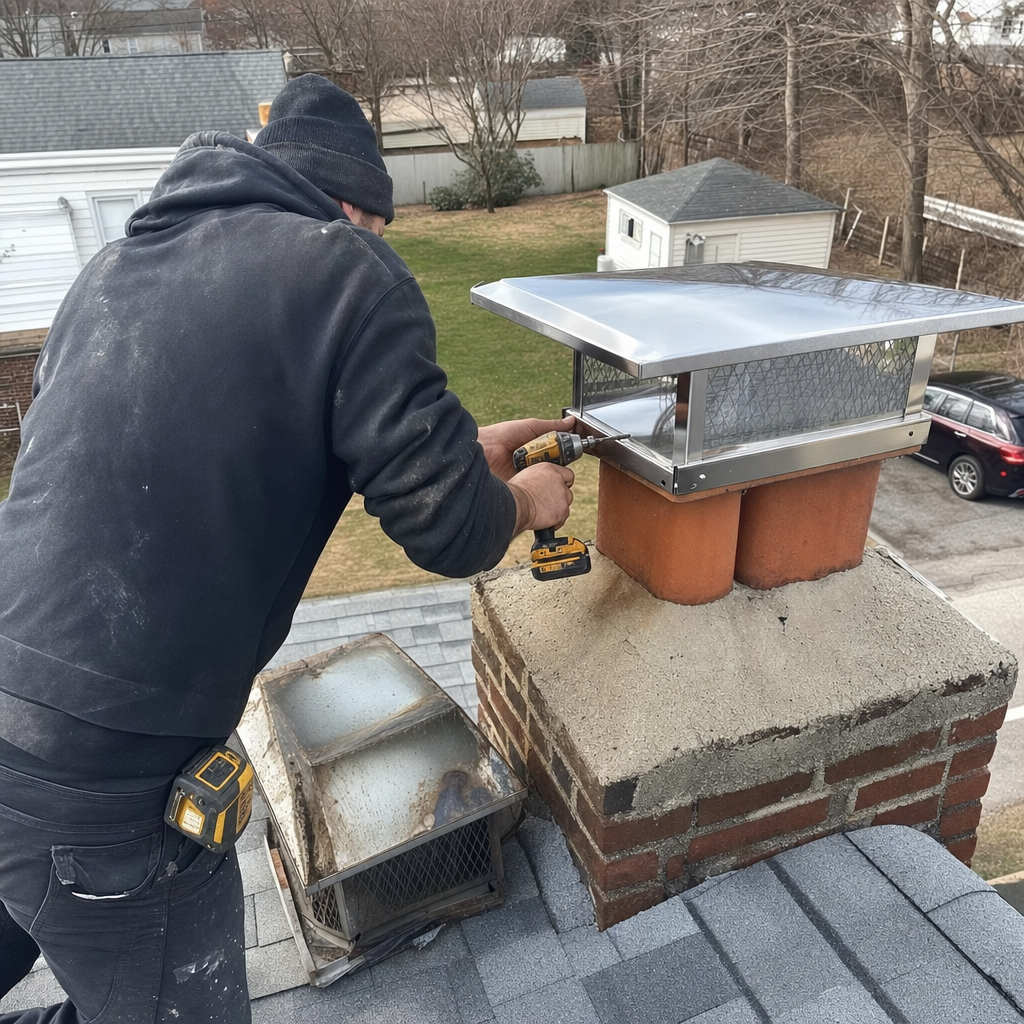
Harlem’s brownstones were built with one chimney stack serving multiple fireplaces — typically one per floor, sometimes plus a separate flue for the original coal boiler. A single-flue cap leaves the others exposed. We install multi-flue caps from Copperfield and Famco sized to cover every flue on your stack, with screened sides that keep out pigeons and squirrels without restricting draft. On a recent job near West 132nd Street, we fitted a custom copper multi-flue cap that solved downdraft problems caused by surrounding five-story buildings — the kind of persistent negative pressure you don’t see in lower-density neighborhoods.
Custom Cap Fabrication
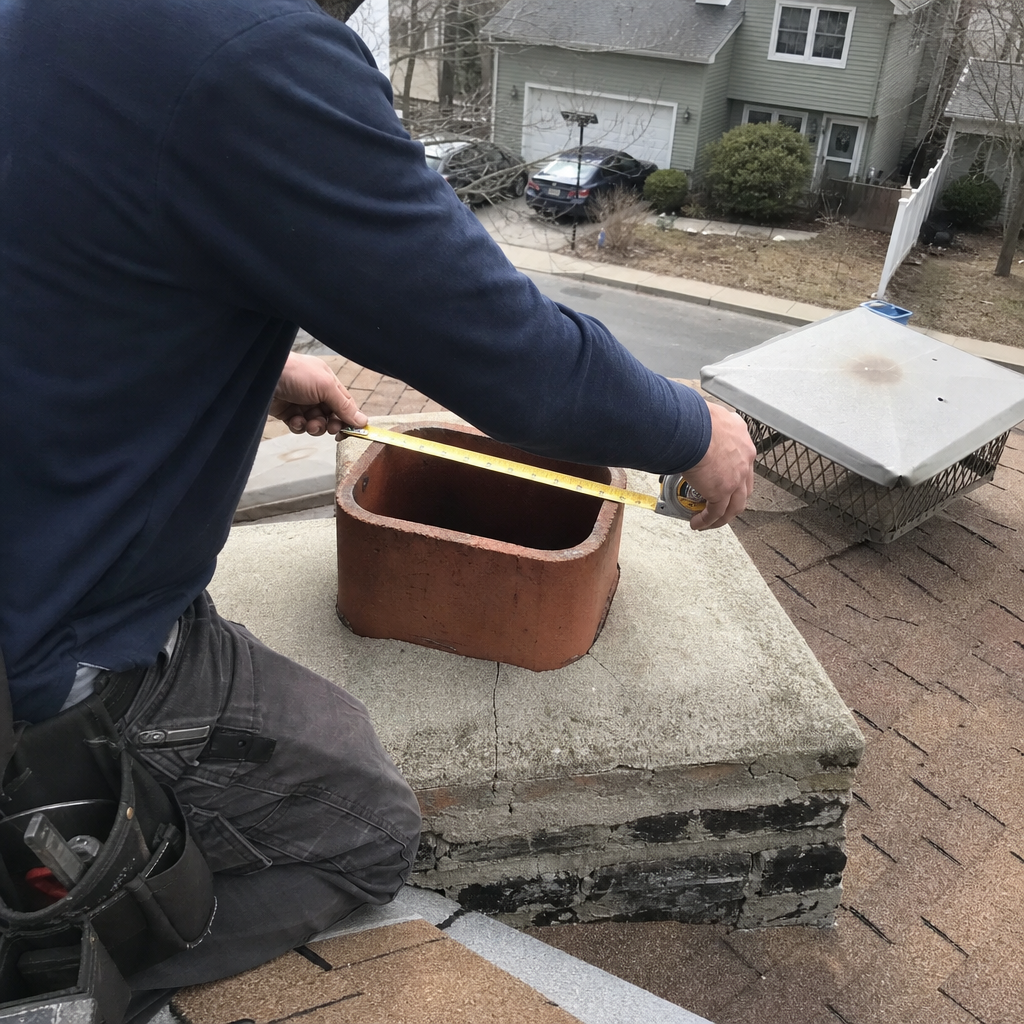
Standard caps don’t fit Harlem’s irregular flue spacing, oversized terra cotta pots, or the steep crown slopes common on pre-war masonry. We measure on-site and specify custom caps in galvanized steel, stainless steel, or copper — whatever matches your building’s exposure and your preference. Custom work runs higher than off-the-shelf, but it’s the only way to get full coverage on a stack that’s been modified, partially rebuilt, or sits at an odd angle on a party wall.
Crown Repair & Rebuilding
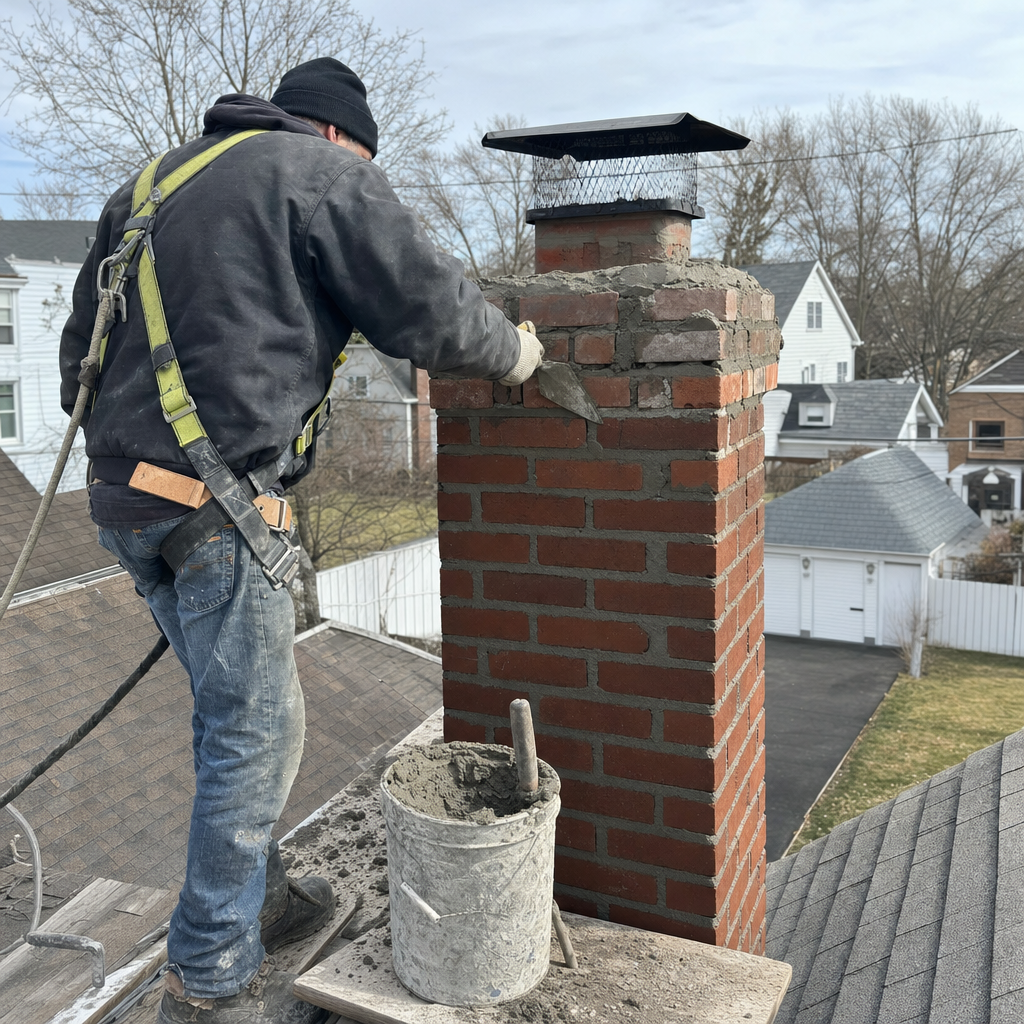
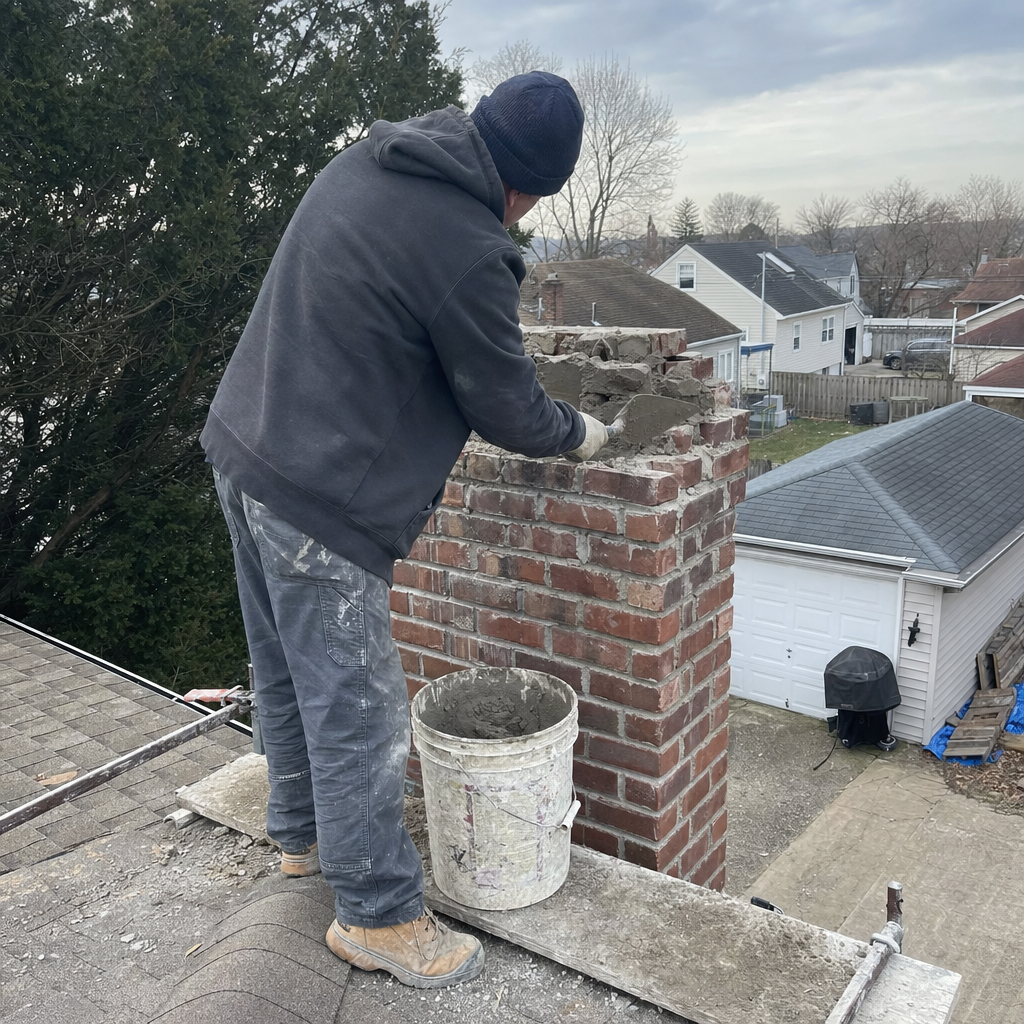
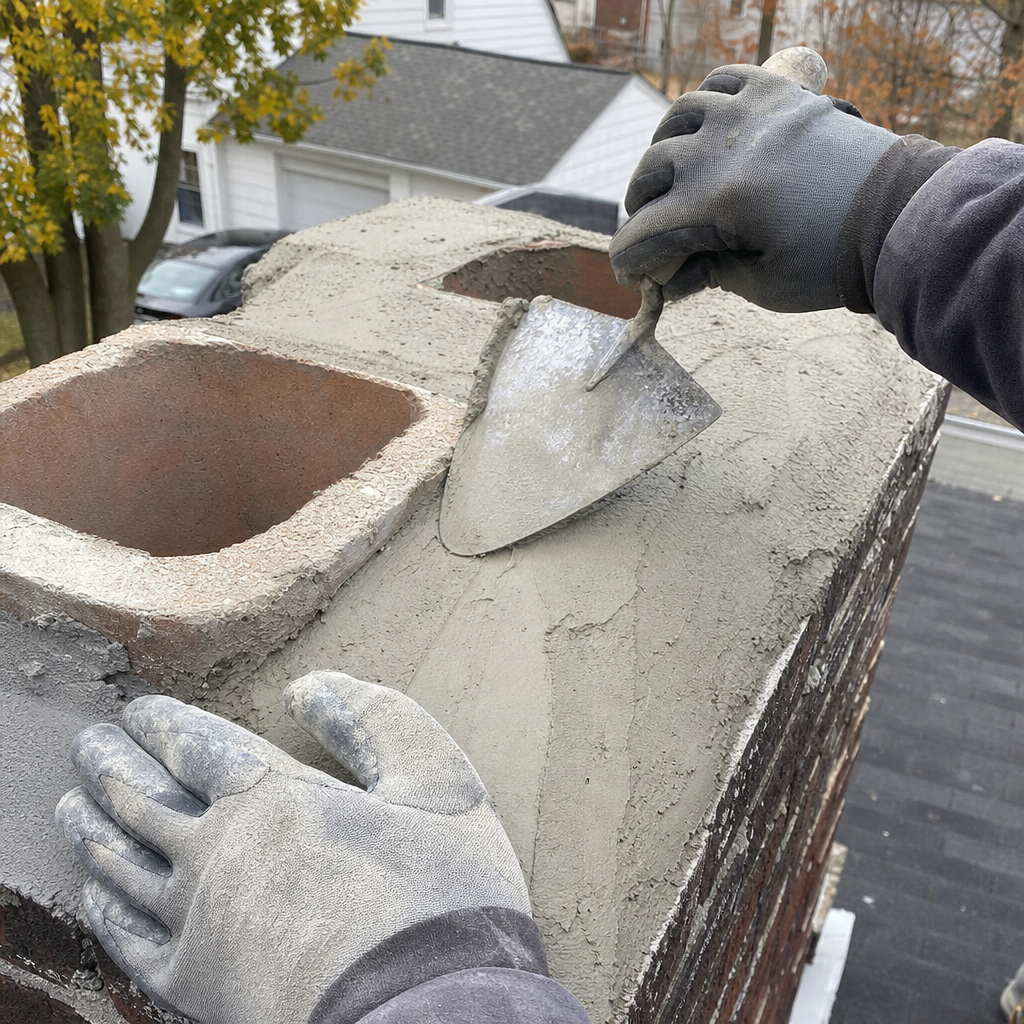
The concrete crown at your chimney’s top takes the worst of Harlem’s weather — freeze-thaw cycles from October through March, plus the moisture-trapping effect of dense surrounding buildings that never lets the masonry fully dry. We see severe spalling and cracking on crowns that haven’t been maintained since the 1970s. Our crown repairs use professional-grade crown coat materials, or full tear-and-pour reconstruction when the concrete has failed structurally. We recently replaced a disintegrated terra cotta crown on an 1890s brownstone on West 132nd Street where rain had been channeling down three flues — the whole job accessed from a rear alley with 3-foot clearance.

Crown Coating & Sealing
If your crown has hairline cracks but sound structure, a crown coat application buys you 5–10 years of protection at roughly half the cost of rebuild. We use elastomeric coatings formulated for chimney exposure, not generic masonry sealers that can’t handle the thermal cycling of a working flue. In Harlem’s microclimate — where surrounding buildings trap moisture and accelerate freeze-thaw damage — this preventative step pays for itself quickly.
What happens when you call
- 1
A real person answersNo phone trees — you reach a local pro.
- 2
You get an upfront price rangeHonest numbers before anyone is dispatched.
- 3
A background-checked tech heads outLicensed & insured, dispatched right away.
- 4
You approve before work beginsNothing starts until you say go.
Trusted Brands We Service in Harlem
We install caps and apply crown materials from the same professional lines commercial contractors use: Copperfield for custom-fabricated copper and stainless caps, Famco for multi-flue and draft-inducing models, and DuraFlex for integrated cap-damper combinations on relined flues. We don’t order from a catalog and hope it fits — Robert carries common sizes in stock and can fabricate custom orders with fast turnaround, so you’re not waiting weeks while water keeps getting in. HeatShield’s cerfractory foam comes into play when crown damage has exposed the flue liner underneath, letting us seal and resurface without a full tear-out.
Common Chimney Cap & Crown Problems We See in Harlem Homes
- Crown failure from decades of freeze-thaw in Harlem’s canyon microclimate. Surrounding tall buildings trap moisture against chimney masonry and block wind-driven drying. The result is accelerated brick spalling and concrete crown deterioration that outpaces what you’d see on an equivalent chimney in a more open setting.
- Improper cap sizing on multi-flue brownstone stacks. A single cap slapped over one active flue leaves the others open to rain and animal entry. Water enters unused flues, freezes, and eventually leaks through plaster ceilings two floors down — we’ve traced interior water damage back to this exact scenario on multiple Harlem jobs.
- Unpermitted cap installations that violate party-wall ownership. On attached rowhouses, the neighbor legally owns half the stack. Installing a cap that modifies or covers the shared structure without addressing co-owner responsibility creates disputes and can force costly rework. We walk clients through NYC property-line rules before pulling permits.
- Downdraft and negative-pressure issues from dense building height. Harlem’s 4–6 story blocks create persistent airflow problems at rooftop level. A standard cap often makes draft worse. We specify draft-inducing caps or specialized designs that work with, not against, the local pressure dynamics.
Pricing for Chimney Cap & Crown in Harlem, NY
Here’s what we typically see for Harlem’s market:
- Crown coating/sealing: $280–$450
- Crown repair (partial rebuild): $480–$720
- Full crown replacement: $890–$1,400
- Standard single-flue cap installed: $220–$380
- Multi-flue cap (2–3 flues): $520–$780
- Custom cap (copper or irregular fit): $780–$1,200+
Party-wall complications, rear-alley access requiring specialized rigging, or discovery of hidden liner damage can push costs toward the higher end. We don’t guess — Robert inspects in person, explains what you’re seeing, and gives you a written estimate before any work starts. Estimates are free. Call (866) 884-9512 to schedule.
We Also Serve Cities Near Harlem
Our service radius covers Mott Haven just across the Harlem River, Morningside Heights to the west, East Harlem to the north, and Morrisania in the Bronx. Same owner-led service, same familiarity with pre-war housing stock and tight urban access constraints.
Serving Harlem, NY — Our Local Coverage Area
We’re based in the Harlem area and know this community well. Use the map below to see our service coverage — if you’re nearby, we can almost certainly help.
FAQs — Chimney Cap & Crown in Harlem
Yes, if your chimney sits on a party wall — which is standard for Harlem’s attached rowhouses — your neighbor legally owns half the stack, so crown work affecting the shared structure requires their acknowledgment.
We walk every client through this before filing permits. NYC property-line rules are specific, and we’ve seen unpermitted work forced into costly rework when neighbors dispute access after the fact. Robert flags this during initial inspection and can recommend approaches that minimize conflict — sometimes splitting the job into clearly demarcated halves, sometimes coordinating a joint repair that shares cost. Call (866) 884-9512 and we’ll assess your stack’s configuration.
You’ll likely find a collapsed or missing cap, a deteriorated crown with exposed flue liner, and possibly active bird or rodent nests in the flue — plus creosote deposits that have hardened over decades.
Harlem’s brownstone renovation boom is reopening fireplaces sealed during the mid-20th century decline. We routinely discover terra cotta liner sections that have fallen, flues cross-connected during earlier subdivisions, and blockages that make the fireplace unsafe to use without full remediation. The cap and crown are just the visible top — what we find underneath determines whether you’re looking at a $400 seal or a $3,000 relining job. We document everything with photos and explain your options without pressure.
Persistent caps failures in Harlem usually trace to three causes: improper sizing for multi-flue stacks, inadequate anchoring into deteriorated crown concrete, or wind uplift amplified by the turbulence of surrounding tall buildings.
We see a lot of “universal” caps that were never right for the flue configuration — they loosen, tilt, and eventually blow off. Our solution is site-measured fitting and proper mechanical anchoring into sound substrate, sometimes with crown repair as prerequisite. In Harlem’s building canyons, we also specify heavier-gauge materials and lower profiles that resist wind shear better than lightweight universal caps. Call (866) 884-9512 for an inspection — estimates are free.
Yes — we regularly access Harlem brownstones through rear alleys with as little as 3 feet of clearance, using compact ladders and rigging that fits tight courtyards.
The field vignette: We recently replaced a multi-flue cap on an 1890s brownstone on West 132nd Street where the only access was a rear alley with 3-foot clearance. No roof hatch, no front scaffold permit. We rigged through the alley, completed the install, and the client never had street scaffolding blocking their entrance. If you’ve been told your access is too tight, get a second opinion from someone who’s actually done it in Harlem.
A rolling-code remote is a security feature for integrated cap-damper systems that changes the access code with each use, preventing signal interception — useful in dense urban environments where multiple remotes operate in close proximity.
In Harlem’s tight rowhouse blocks, where your signal might reach neighboring buildings, rolling-code technology prevents accidental or unauthorized damper operation. We specify these on cap-damper combinations for clients who want the convenience of remote operation without the security risk of fixed-code systems. It’s not mandatory for every installation, but we recommend it for multi-unit buildings or where cap access is shared. Call (866) 884-9512 to discuss whether it fits your setup — estimates are free.
Written by Robert Garcia, Owner at Apex Chimney Cleaning Greater New York, serving Harlem and New York City since 2007.