
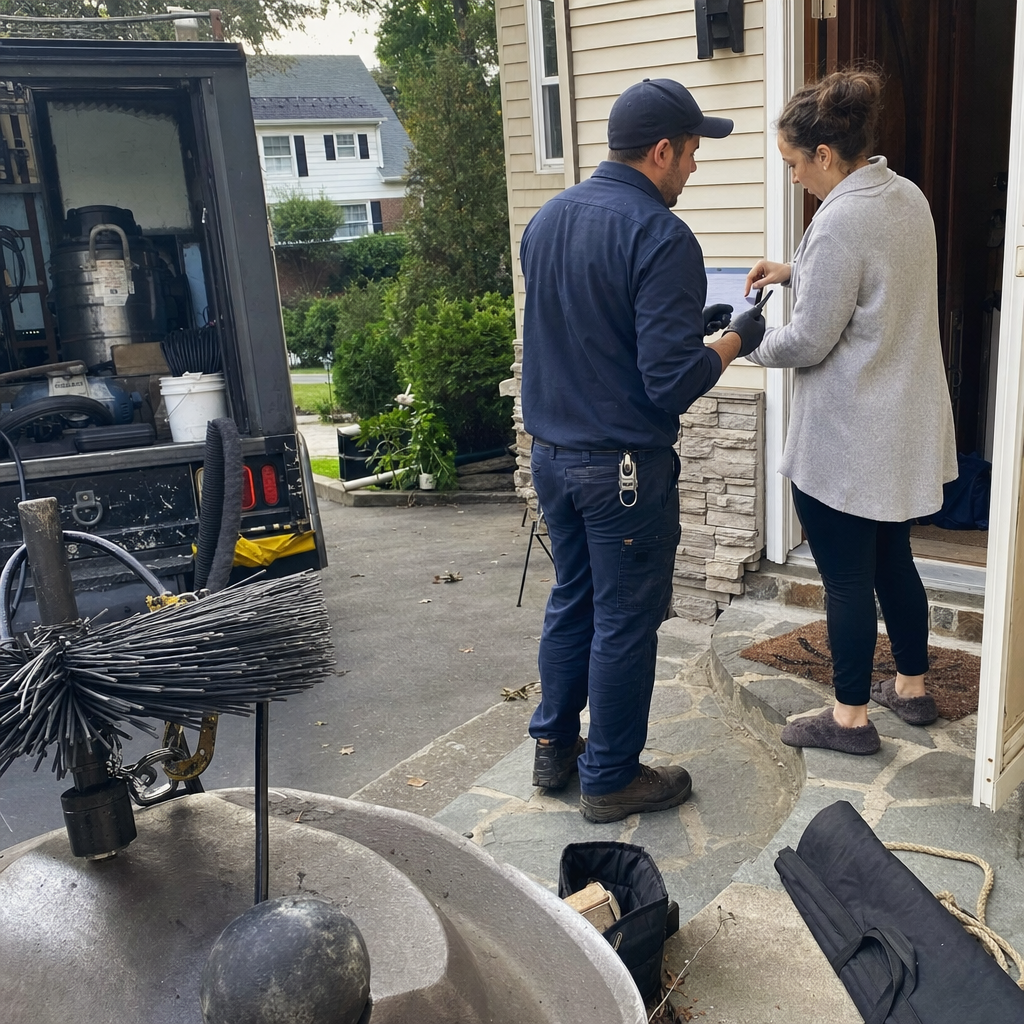
Chimney Liner Installation Cost in Greater New York: What We Actually Charge and Why
Chimney liner installation in Greater New York typically runs $2,800–$6,500 for most residential jobs, with the final price determined by whether we’re relining an existing flue, lining an unlined pre-war chimney for the first time, or downsizing for a gas conversion. Most of our Greater New York customers fall in the $3,400–$4,800 range once we account for the non-standard flue paths, offset construction, and code documentation that New York buildings require. Call (866) 884-9512 for a free estimate — Robert handles every inspection himself.
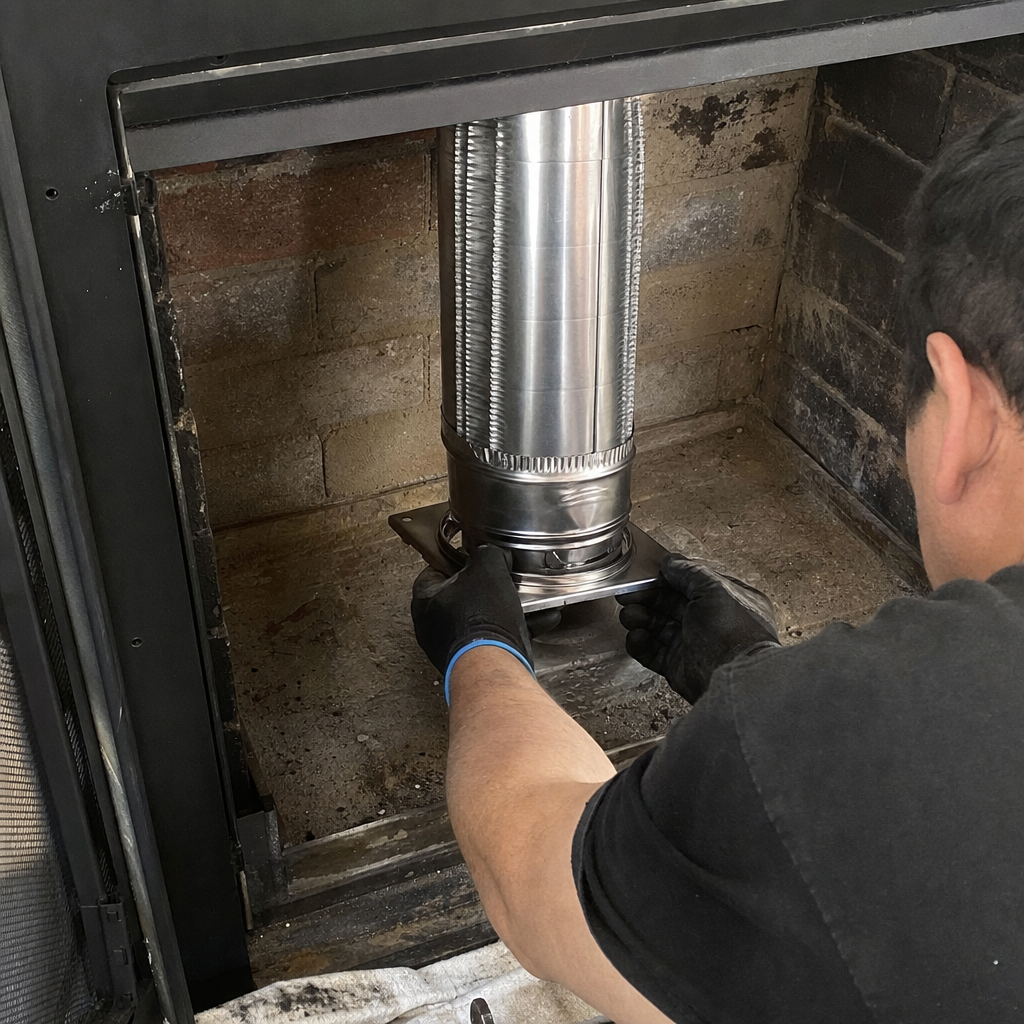
Here’s a number that surprises most New York homeowners: approximately 40% of the pre-1940 masonry chimneys Robert has inspected in the five boroughs were never lined to begin with. Not “the liner failed.” Never lined. That changes what relining actually costs.
Robert Garcia grew up in the Bronx, not far from Yankee Stadium, and has spent the last 17 years cleaning, inspecting, and repairing chimneys across the five boroughs and surrounding counties. He learned the fundamentals of building systems and HVAC at Bronx Community College before apprenticing under a veteran sweep who taught him that a clean flue isn’t a luxury — it’s what keeps a family safe through a New York winter. Robert runs every job himself or alongside his small crew, which is why customers know exactly who to call when something looks off.
Three Liner Scenarios, Three Different Price Realities
National cost guides for chimney liner installation are almost always low for Greater New York, and the gap isn’t just labor rates. It’s that most New York homes requiring a liner fall into one of three scenarios, each demanding a different system and total cost. We’ve priced enough of these to know where the money actually goes.
Scenario 1: Relining a Cracked Tile-Lined Flue
This is the “standard” relining job — existing clay tile that has cracked from thermal shock or settled with the building. We remove the damaged tile, measure the flue path, and pull a flexible stainless liner through the existing cavity. In Greater New York’s pre-war housing stock, even these “straightforward” jobs often involve offsets where the chimney shifts between floors. We regularly see this in Astoria brownstones and Washington Heights pre-wars where the flue jogged around a structural beam in 1927 and nobody documented it.
Cost range: $2,800–$4,200
What drives the upper end: multiple offsets requiring a more flexible liner grade, extended height on four-story buildings common in Upper Manhattan and parts of the Bronx, and the occasional need to rebuild the top course of brick to get a proper termination.
Scenario 2: Lining an Originally Unlined Masonry Flue
This is where that 40% figure hits your wallet. An unlined chimney has no existing flue cavity sized for a liner — just brick and mortar, often parged with deteriorated lime wash that’s now crumbling into the flue. We must first determine if the chimney structure can accept a liner at all, then often remove loose material, smooth the passage, and in some cases pour a refractory base before the liner ever goes in.
Cost range: $4,200–$6,500
We’ve done more of these in Crown Heights, Flatbush, and the South Bronx than anywhere else — neighborhoods with heavy concentrations of 1910–1930 construction where original liners were skipped to save cost during rapid development. The freeze-thaw cycles in Greater New York accelerate the deterioration of that original parging, so by the time we see it, the chimney is often actively shedding material into the flue.
Scenario 3: Downsizing for Gas Appliance Conversion
Con Edison and National Grid gas appliance installations increasingly require documented liner adequacy — the liner job is often the unlock for appliance installation, making it a financial prerequisite, not just a safety upgrade. Gas appliances need smaller flue diameters than the original fireplace or oil boiler required, and the mismatch causes condensation, corrosion, and eventually carbon monoxide hazards.
Cost range: $3,200–$5,400
The variable here is whether we’re adapting an existing liner with a proper connector or installing a new correctly-sized system. We’ve seen too many Greater New York conversions where a gas boiler was shoehorned into an old oil flue with a reducer and a prayer — three winters later, the condensation has destroyed the chimney interior. Con Edison’s inspectors are catching up to this, and we’re getting calls where the gas activation is held up pending liner documentation.
| Liner Scenario | Typical Cost Range | Most Common in Greater New York |
|---|---|---|
| Relining cracked tile flue | $2,800 – $4,200 | Post-war homes, maintained pre-war |
| First-time lining (unlined masonry) | $4,200 – $6,500 | Pre-1940 construction, rapid-development areas |
| Gas conversion downsizing | $3,200 – $5,400 | Boiler/furnace upgrades, Con Edison holds |
| HeatShield resurfacing (alternative) | $1,800 – $3,000 | Stage 1–2 deterioration, structurally sound flue |
Why Flexible Stainless Costs More — and Why It’s Usually the Only Realistic Option
You’ll see poured or cast-in-place liner systems advertised at lower prices. In a straight, modern chimney with standard dimensions, they can work. We’ve inspected maybe a dozen Greater New York chimneys where that description applied.
The rest — the bent, offset, non-standard flue paths common in New York’s pre-war building stock — need flexible stainless steel liner. We install DuraFlex for these applications because it’s the only material that navigates the jog-around-a-beam, the settle-crack offset, the three-degree lean that developed over ninety years. Rigid or semi-rigid liners simply won’t make these turns without creating gaps that defeat the purpose.
The upfront cost is higher because:
- The material itself — 316Ti stainless, properly insulated — runs more than poured refractory
- Installation requires two technicians on the roof and one at the base for proper pull and connection
- Insulation wrapping and proper termination with a Gelco or Olympia Chimney cap assembly adds material and labor
- Documentation for gas utility compliance takes additional inspection and photography time
What we’ve pulled out of chimneys after cut-rate installations tells the rest of the story. Three winters in a Greater New York freeze-thaw cycle separates proper work from shortcuts: uninsulated liners that crack at the first hard cold snap, termination caps that blow off in a Nor’easter because they were pop-riveted instead of properly flashed, connections that corroded because someone used aluminum where stainless was required. Robert has a collection of failed liners he’s removed — some with less than two seasons on them — that he shows customers who ask why our quote runs higher than the coupon offer they found online.
When HeatShield Resurfacing Is the Smarter Spend
Not every deteriorating flue needs full relining. For Stage 1–2 deterioration — minor cracking, some surface spalling, but the flue structure is sound — we offer HeatShield resurfacing as a cost-effective alternative. This is a ceramic resurfacing system that restores the flue’s integrity without the full liner installation.
HeatShield runs $1,800–$3,000 in most Greater New York applications, roughly half to two-thirds of full relining. The catch: it only works when the existing flue is structurally sound and accessible. If there are missing tiles, significant gaps, or the chimney has already settled out of plumb, resurfacing is a Band-Aid that’ll cost more in the long run.
Robert makes this call on inspection, not over the phone. We’ve had customers in Park Slope and Jackson Heights who were quoted full relining elsewhere and turned out to be HeatShield candidates — saving them $1,500–$2,000. We’ve also had the reverse, where someone hoped for HeatShield and the camera showed us a flue that was past saving. The inspection is free, and it’s the only way to know which category you’re in.
What Cut-Rate Liner Installation Looks Like After Three New York Winters
We don’t compete on the lowest advertised price because we’ve spent 17 years removing the results. The specific failures we see:
- Uninsulated liners in exterior chimneys — required by code in our climate zone, skipped to save $400–$600, cracked by January of year two
- Wrong alloy for the application — 304 stainless in a wood-burning application where 316Ti is required for the acid environment
- Improper termination height — below code minimum, causing downdraft and smoke spillage, or worse, water infiltration that destroys the new liner from the top down
- No documentation for gas utilities — the customer pays for a liner, then pays again when Con Edison or National Grid won’t sign off without engineered specs they don’t have
Robert handles every installation himself using the same DuraFlex and HeatShield lines used by commercial contractors. The material quality isn’t compromised to hit a low advertised price. When we’re on a roof in the Bronx at 7 AM in February because a competitor’s liner failed and the customer is heating their house with space heaters, the original “savings” don’t look so good.
What’s Included in Our Liner Installation Quote
Every Chimney Liner & Rebuild quote from Apex includes:
- Camera inspection before work begins — we document the condition, no surprises
- Removal of existing damaged material
- Properly sized and insulated flexible stainless liner (DuraFlex) or HeatShield resurfacing
- Professional termination with code-compliant cap assembly
- Smoke and draft testing after installation
- Written documentation suitable for gas utility compliance, insurance, or resale
- Robert’s direct cell for any follow-up questions — not a dispatch desk
We don’t charge separately for the inspection if you proceed with the work. If you don’t, you pay nothing for the assessment. That’s how we’ve earned 1,096 verified reviews with a 4.7-star average — by not playing pricing games.
Greater New York’s Climate and Your Liner Timeline
The freeze-thaw cycle here is brutal on chimney infrastructure. Water penetrates at a crack, expands by 9% when it freezes, and widens that crack incrementally. A liner that might last 20 years in a milder climate can fail in 12–15 here if the installation quality is marginal. The combination of coastal moisture, temperature swings, and the thermal stress of heating season means we see more liner failures in February and March than any other months — right when you need the system most.
Neighborhoods with heavier tree canopy — Riverdale, Forest Hills, parts of Staten Island — add another variable: organic debris that accelerates moisture retention in the flue. A proper termination cap from Famco or Olympia Chimney isn’t cosmetic; it’s what keeps that debris out and airflow correct.
FAQs
Most chimney liner installations in Greater New York cost between $3,400 and $4,800, with the full range running $2,800–$6,500 depending on whether we’re relining an existing flue, lining an unlined chimney for the first time, or downsizing for a gas conversion. The 40% of pre-1940 chimneys that were never lined originally fall at the higher end because they require more preparation work. Call (866) 884-9512 for a free inspection and exact quote — estimates are free.
Repair through HeatShield resurfacing costs $1,800–$3,000 and is the cheaper option for Stage 1–2 deterioration in a structurally sound flue, but full replacement is necessary when tiles are missing, gaps exceed code limits, or the chimney has settled out of plumb. We determine which applies through camera inspection — we’ve saved Park Slope and Jackson Heights customers $1,500+ when HeatShield was viable, and we’ve prevented costly callbacks by recommending full relining when resurfacing would have failed. Call (866) 884-9512 to schedule an inspection.
Same-day installation is possible for straightforward relining jobs when we have the correct diameter liner in stock, but most Greater New York jobs require a return visit because we need to measure offsets, verify gas utility documentation requirements, or order specific materials for non-standard flue paths. Robert conducts every inspection personally and will give you a realistic timeline — typically 3–7 days for standard jobs, longer for complex pre-war linings or when Con Edison compliance documentation is required. Call (866) 884-9512 to schedule.
National averages don’t account for Greater New York’s pre-war construction with unlined flues, non-standard offsets, and stricter gas utility documentation requirements — the three factors that drive most of our jobs above generic pricing. The freeze-thaw climate also demands proper insulation and higher-grade alloys that cheaper quotes often omit. We’ve removed too many failed liners after 2–3 winters to believe the lowest bid saves money. Call (866) 884-9512 and Robert will walk through exactly what’s included in our quote versus what we found missing in competitors’ failed installations.
Ready for an Exact Quote? Robert Handles Every Inspection
A chimney problem doesn’t get smaller by waiting — I’ve seen 17 years of proof. If you’re researching chimney liner installation cost because you’ve received a concerning inspection report, you’re dealing with a gas utility hold, or you simply want to know what your chimney actually needs, call (866) 884-9512 for a free estimate. Robert Garcia, Owner & Lead Technician at Apex Chimney Cleaning Greater New York, conducts every inspection personally — no dispatched crews, no bait-and-switch pricing, just straight answers about what your flue requires and what it will cost.
Written by Robert Garcia, Owner & Lead Technician at Apex Chimney Cleaning Greater New York, serving Greater New York, NY.