
How Often Should You Clean Your Chimney in Greater New York? It Depends on What You’re Burning and How
Most chimneys in Greater New York need cleaning once per year if you burn wood regularly, but the honest answer is: after we inspect it, we’ll tell you exactly. The NFPA 211 standard says annual inspection and cleaning as needed—that “as needed” is where 17 years of looking inside flues across the five boroughs has taught us the real story. Call (866) 884-9512 if you want Robert to check yours and give you a schedule that matches your actual burn habits, not a calendar date.
Why the “Once a Year” Rule Is a Starting Point, Not the Answer
Robert Garcia, Owner & Lead Technician at Apex Chimney Cleaning Greater New York, grew up not far from Yankee Stadium and learned early that New York winters don’t forgive a dirty flue. After 17 years of cleaning, inspecting, and repairing chimneys across the Bronx, Brooklyn, Queens, Manhattan, and surrounding counties, he’s found that the homeowners who follow a rigid annual schedule are often either wasting money or missing real danger.
Here’s what we’ve documented from more than a thousand customer visits: a family in Park Slope burning 40 hot fires with properly seasoned oak might have Stage 1 powdery creosote that’s barely worth brushing. Meanwhile, a homeowner in Washington Heights burning 15 smoldering fires with “seasoned” wood that’s actually 28% moisture can have glazed Stage 2 creosote by February—and that’s the stuff that causes chimney fires.
The difference isn’t time. It’s chemistry, draft behavior, and the specific wood supply circulating through Greater New York.
The Greater New York Hardwood Problem Nobody Talks About
Most firewood sold in the New York metro area comes from suppliers in New Jersey, Pennsylvania, or Long Island. It’s marketed as “seasoned,” but we’ve tested it on job sites for years. Much of it arrives at 25–30% moisture content—well above the 20% threshold where creosote production jumps significantly.
Wet wood doesn’t just burn inefficiently. It burns incompletely, sending unburned hydrocarbons up the flue where they condense as liquid creosote. In the cold outer walls of a chimney common in pre-war Brooklyn brownstones or Queens colonials, that liquid layers and hardens into Stage 2 glaze faster than most homeowners realize.
We’ve pulled thick, tarry deposits from Flushing chimneys in January that the owner had swept the previous October—because they were burning damp wood low and slow to stretch the supply. That homeowner needed cleaning twice in one season, not because the calendar said so, but because the fuel dictated it.
Key indicators your wood might be part of the problem:
- Sizzling or hissing sounds from the firebox instead of crisp crackling
- Blackened glass on fireplace doors after just a few fires
- Visible moisture bubbling from log ends when split
- A fire that struggles to maintain temperature without constant tending
If you’re buying wood by the face cord from a roadside stand in Westchester or Nassau County without a moisture meter check, you’re likely getting fuel that accelerates creosote buildup by 40–60% compared to properly dried hardwood.
A Frequency Matrix That Actually Matches How You Burn
After inspecting thousands of systems, we’ve developed a practical framework. This isn’t theoretical—it’s what Robert documents on every visit, and it determines whether we recommend the next cleaning in 6 months, 12 months, or 18.
| Usage Profile | Typical Greater New York Home | Recommended Interval | What We Usually Find |
|---|---|---|---|
| Seasonal Occasional 3–5 fires per year, holidays and special occasions |
Apartment with working fireplace, weekend house in the Hudson Valley | Inspection every 12 months; cleaning every 18–24 months if fuel is good | Light Stage 1 powder, often more debris from animal entry than creosote |
| Regular Weekend Use 1–2 fires per week October–March |
Queens colonial, Brooklyn rowhouse with original fireplace | Annual inspection; cleaning every 12 months | Moderate Stage 1, occasional Stage 2 if wood quality is poor |
| Primary or Significant Heat Source Daily fires during heating season |
Pre-war Manhattan apartment with coal-converted fireplace, Staten Island home with insert | Inspection and cleaning every 6–12 months | Consistent Stage 2 risk; glazed deposits common by mid-season without proper wood |
| Gas Fireplace Decorative or supplemental heat, no wood burning |
Modern condo, renovated townhouse with gas log set | Inspection every 12 months; no creosote cleaning needed | Debris, moisture damage, or venting issues; different failure modes entirely |
The gas fireplace row surprises some people, but it’s critical: gas doesn’t produce creosote, but deteriorating liners, blocked vents, and moisture intrusion create their own hazards. We’ve replaced DuraFlex liners in gas systems where the homeowner skipped five years of “cleaning” they assumed unnecessary—only to find the liner had degraded from condensation cycling.
How Creosote Stages Progress—and Why Timing Matters for New York’s Heating Season
Creosote doesn’t accumulate on a linear schedule. It progresses through stages based on how you burn, not just how often.
Stage 1 is flaky, sooty, and brushes off easily. It’s what you get with hot, fast fires, dry wood, and strong draft. We see this in well-maintained systems in newer construction with good chimney height and proper lining.
Stage 2 is shiny, hard, and tar-like. It requires mechanical removal—rotary chains, specialized whips, sometimes chemical treatment. This is where most Greater New York homeowners end up when burning marginal wood with restricted air. The glazed surface actually accelerates further buildup by trapping combustion gases.
Stage 3 is the hardened, ceramic-like deposit that can only be removed with aggressive mechanical methods or complete liner replacement. We’ve encountered this in chimneys that went three or four years without inspection, often in inherited properties where the new owner didn’t know the maintenance history.
Robert’s assessment on every visit: document the stage, photograph the condition, and recommend the next interval based on trajectory, not convention. A chimney problem doesn’t get smaller by waiting — I’ve seen 17 years of proof.
Why September Is the Right Window in Greater New York—Not Spring
There’s persistent advice to “clean your chimney in spring.” For our climate, that’s backwards.
A spring cleaning leaves your flue empty and warm-weather idle from April through September. In that span, we’ve found squirrel nests in Bronx chimneys, starling colonies in Queens flues, and leaf debris packed into crowns across Staten Island. Every opening is an invitation, and a clean chimney with no recent activity signal is prime real estate.
September cleaning in Greater New York means:
- The flue is clear when you light the first fall fire—typically October or November when temperatures drop
- Any damage from the previous season is documented before it’s buried under new deposits
- Robert can spot and address crown cracks or cap failures before freeze-thaw cycles worsen them
- You’re not competing with the October rush when every sweep in the metro area is booked two weeks out
We start booking September appointments in July. The homeowners who plan ahead get the thorough inspection that sets their schedule for the year. The ones who wait until they smell smoke in the living room are often looking at emergency rates and deferred maintenance that’s become real damage.
What Robert Checks to Determine Your Actual Cleaning Schedule
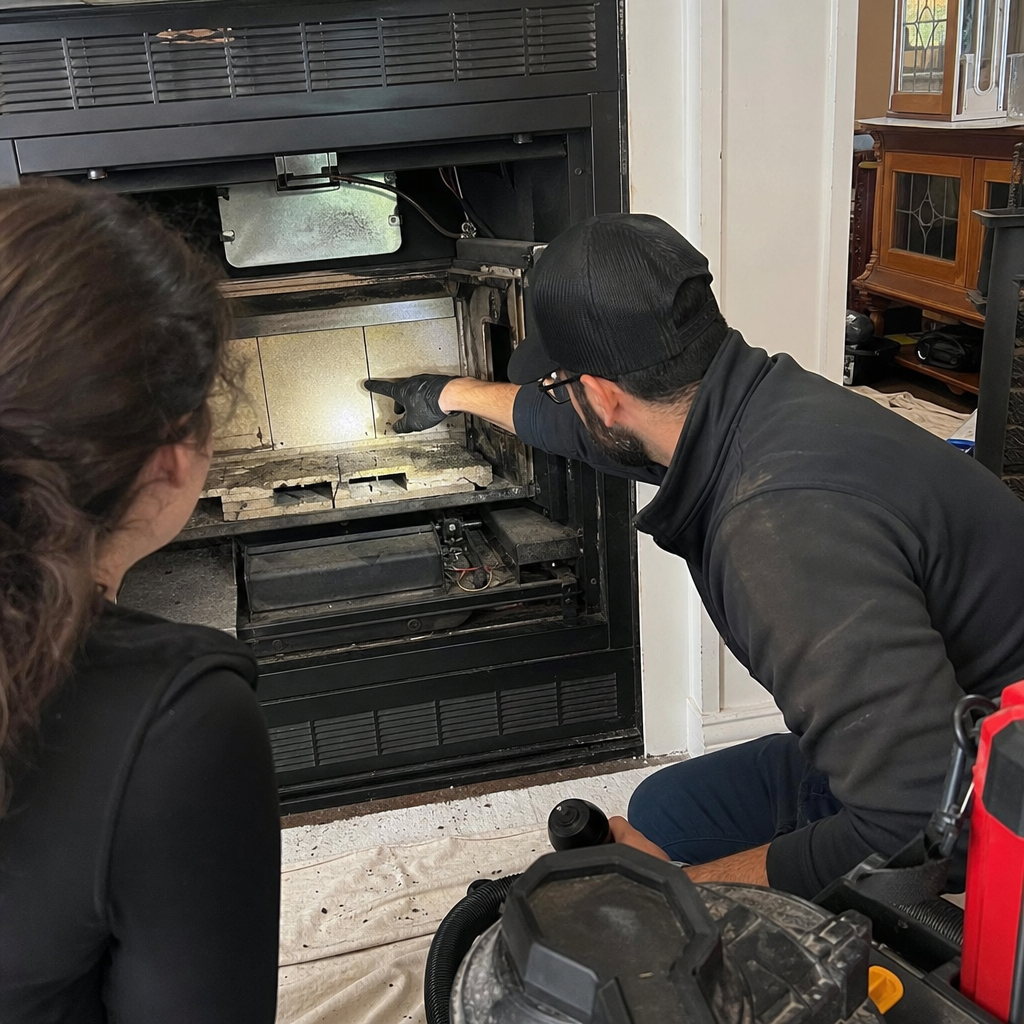
Every visit from Apex Chimney Cleaning Greater New York includes a documented inspection that becomes the basis for your personalized frequency recommendation. This isn’t a quick flashlight glance. Robert runs every job himself or alongside his small crew, and the inspection covers:
- Flue condition and deposit stage — photographed and noted for year-over-year comparison
- Draft performance — measured and evaluated against the appliance and chimney height
- Liner integrity — checking for gaps, deterioration, or incompatible materials; we install HeatShield, Gelco, and Olympia Chimney products when replacement is needed
- Crown, cap, and exterior masonry — the weather shell that keeps Greater New York’s freeze-thaw cycles from destroying the structure
- Wood quality assessment — if you’re storing fuel, we’ll tell you whether it’s helping or hurting your system
From this evidence, we recommend the next interval. Some customers in high-use scenarios with excellent wood quality settle into a comfortable 14-month rhythm. Others with problematic fuel or draft issues need us back in 6 months. The point is: it’s specific to your chimney, your habits, and your fuel.
This is what owner-on-site expertise produces. When the person making the recommendation is the same one who’ll be on your roof if something’s wrong, there’s no incentive to oversell or underserve.
When “Wait and See” Becomes a Real Problem
We’re straightforward about when cleaning can wait and when it can’t. But there are conditions where delay is genuinely dangerous:
- Any previous chimney fire, even minor — the flue liner may be compromised in ways visual inspection alone won’t reveal
- Visible creosote flakes in the firebox — this means deposits are already heavy enough to shed
- Smoke entering the room during normal operation — draft failure or partial blockage
- A “roaring” sound from the chimney during use — this can indicate active creosote ignition
- More than 18 months since any professional inspection, regardless of use level
If you’re experiencing any of these, don’t wait for a scheduled maintenance window. Call (866) 884-9512 and we’ll prioritize the visit.
What Apex Chimney Cleaning Greater New York Costs for Inspection and Cleaning
Pricing reflects the actual condition we find, not a flat rate that incentivizes rushing. Our typical service range in Greater New York:
| Service | Typical Range | What’s Included |
|---|---|---|
| Standard chimney inspection and Level I evaluation | $149–$219 | Full visual inspection, condition documentation, frequency recommendation |
| Chimney cleaning with Stage 1 creosote | $189–$279 | Brush and vacuum cleaning, debris removal, final inspection |
| Heavy cleaning with Stage 2 glazed creosote | $289–$449 | Mechanical removal with rotary equipment, chemical treatment if needed, extended labor |
| Gas fireplace inspection (no creosote cleaning) | $129–$189 | Venting evaluation, liner check, burner and log set assessment |
We don’t quote Stage 3 removal without inspection — at that point, liner replacement with professional-grade materials often becomes the more cost-effective path, and we’ll show you exactly why.
Every estimate is free, every recommendation is photographed and explained, and there’s no pressure to schedule additional services. Our 1,096 verified reviews averaging 4.7 stars reflect that approach — homeowners in Greater New York know exactly who they’re getting and what they’re paying for.
FAQs
For 3–5 fires per year, schedule an inspection annually but cleaning only every 18–24 months if the flue stays clear. Many occasional users in Greater New York actually need us more for animal debris removal than creosote — we’ve pulled squirrel nests from Park Slope chimneys that hadn’t seen a fire in two years. Call (866) 884-9512 for a free inspection and we’ll set the right interval for your actual use.
More frequent light cleanings cost less per visit and prevent the expensive mechanical removal or liner replacement that Stage 2 or 3 creosote requires. A standard cleaning at $189–$279 every 12 months beats a $400+ heavy cleaning plus potential liner work. We document the progression so you know exactly where you stand — call (866) 884-9512 for an upfront estimate.
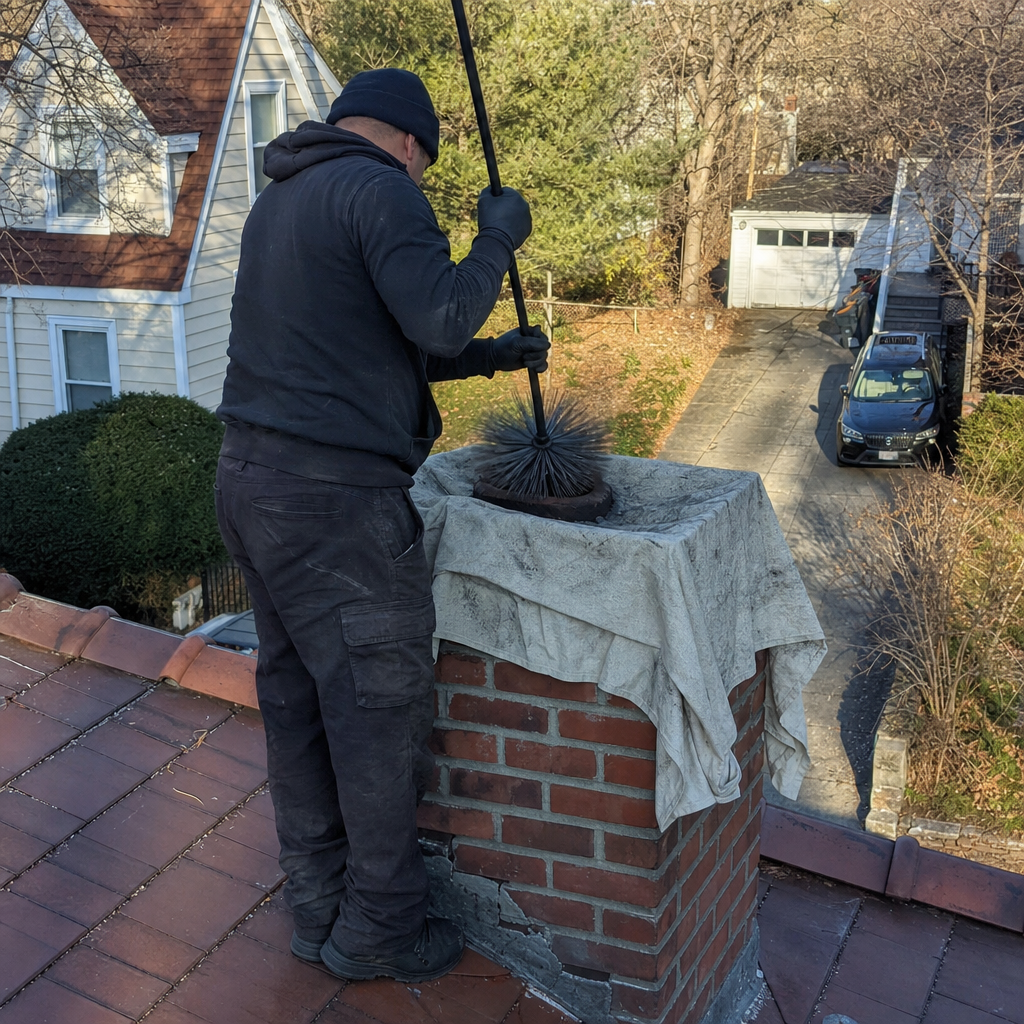
You can brush superficial soot from a fireplace floor, but professional cleaning requires roof access, proper venting containment, and the training to recognize liner damage or structural issues that DIY methods miss. In Greater New York’s multi-story housing stock, roof work carries real fall risk, and we’ve found critical defects on 30% of inspections that a homeowner wouldn’t have identified. For safety and thoroughness, hire a state-licensed, insured specialist — call (866) 884-9512 to have Robert handle it himself.
Gas fireplaces don’t produce creosote, so they don’t need “cleaning” in the traditional sense, but they do need annual inspection for venting integrity, moisture damage, and liner deterioration. We’ve replaced deteriorated liners in gas systems where deferred “cleaning” led to dangerous venting failures. Schedule a gas fireplace inspection for $129–$189 — call (866) 884-9512 to book.
Get Your Actual Answer: Schedule an Inspection With Robert
The real answer to “how often should you clean your chimney” lives inside your flue, not in a generic guideline. Robert Garcia will inspect your system, document what he finds, and tell you exactly when to schedule the next visit based on your fuel, your usage, and Greater New York’s specific conditions. No calendar guessing. No unnecessary visits. Just the schedule your chimney actually needs.
If you’d rather have it looked at, Apex Chimney Cleaning Greater New York offers a no-pressure assessment in Greater New York — call (866) 884-9512 for a free estimate.
Written by Robert Garcia, Owner & Lead Technician at Apex Chimney Cleaning Greater New York, serving Greater New York, NY.