
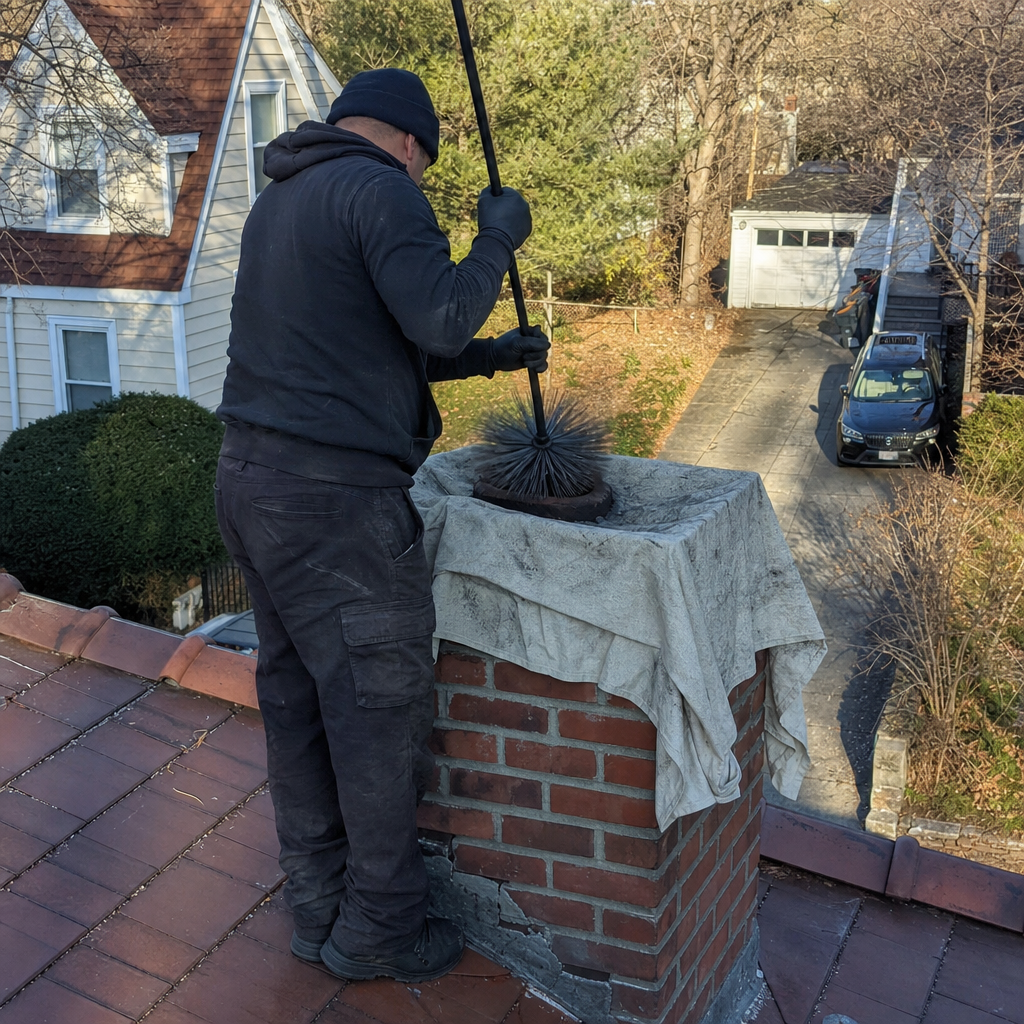
Fast, Reliable Chimney Cleaning & Sweep Across New Hyde Park
Chimney cleaning and sweeping in New Hyde Park typically costs $180–$320 for a standard Level 1 sweep with inspection, and most appointments are completed within 90 minutes on your property. Our Chimney Cleaning & Sweep team serves the 11040, 11041, and 11042 ZIP codes with same-week scheduling, often reaching homes near Hillside Avenue or the Long Island Rail Road station within 24 hours of your call. We’re familiar with the tight driveways, alley-loaded garages, and narrow property lines that define New Hyde Park’s postwar neighborhoods — and we bring equipment sized for those constraints, not oversized rigs meant for suburban estates.
Robert Garcia, our owner and lead technician, has spent 17 years working on chimneys built exactly like yours: the Cape Cods along Jericho Turnpike, the ranches south of Union Turnpike, the small colonials clustered near New Hyde Park Road. These homes share a common DNA — centrally located masonry chimneys, original clay-tile flues, and a heating history that shifted from oil or coal to natural gas, often without updating the flue itself. That specific sequence — oil-to-gas conversion on an oversized flue — is the single most common hidden hazard we find in New Hyde Park, and it’s why we approach every sweep here with inspection protocols stricter than a generic seasonal cleaning.
Call (866) 884-9512 to schedule. Estimates are free, and Robert handles the work himself.
Why Apex Chimney Cleaning Greater New York Is New Hyde Park’s Preferred Chimney Cleaning & Sweep Company
Documented local reputation. We’ve earned 1,096 verified customer reviews averaging 4.7 stars — many from homeowners right here in Nassau County who found us after a neighbor’s recommendation or a search for chimney cleaning near New Hyde Park. That volume matters: it means consistency across hundreds of jobs, not a handful of lucky outcomes.
The owner is your technician. Robert Garcia doesn’t dispatch anonymous crews. When you book in New Hyde Park, Robert arrives with the brushes, the camera, and the authority to make on-site decisions about whether your flue needs more than a sweep. Customers on Elm Street and Lakeville Road have told us this directly: they want the person accountable for the work to be the person on the ladder.
Response time built for your schedule. From our base in New York City, we route to New Hyde Park efficiently — typically same-week availability, with emergency response for blocked flues or suspected chimney fires. We know the parking realities near the New Hyde Park LIRR station, the loading constraints on townhome rows, and how to stage equipment without blocking your neighbor’s driveway.
Material quality you can verify. We install and work with professional-grade brands including DuraFlex, HeatShield, and Gelco — the same lines specified by commercial chimney contractors. When a New Hyde Park sweep reveals liner damage (and on 60-year-old clay tile, it often does), we can specify and install the correct replacement without bringing in a second specialist.
Our Chimney Cleaning & Sweep Services in New Hyde Park
Level 1 Inspection
A Level 1 inspection is the baseline for every chimney cleaning we perform in New Hyde Park — and given the age of your housing stock, it’s rarely enough on its own. We examine readily accessible portions of the chimney exterior, interior, and connecting appliance for basic soundness, structural integrity, and obstruction. In a 1950s ranch near Denton Avenue, that means checking for creosote buildup in the flue, verifying the damper operates freely, and noting any obvious mortar deterioration on the crown. But here’s the reality: with original clay-tile flues now 60–75 years old, we frequently find conditions that warrant escalating to Level 2. We document everything with photos, explain what we’re seeing, and never treat Level 1 as a checkbox exercise.
Level 2 Inspection
Level 2 is where we do our most important work in New Hyde Park. This inspection includes everything in Level 1 plus video scanning of the flue interior, attic and basement access to examine concealed portions of the chimney structure, and assessment of clearances to combustibles. For homes that have converted from oil to gas — which describes most of New Hyde Park — this is critical. The video scan reveals what visual inspection cannot: cracked or missing clay tiles, acidic condensate etching, and gaps between tile joints that allow exhaust gases to leak into chimney walls. We’ve performed Level 2 inspections on Hillside Avenue, on Jericho Turnpike, and on quiet streets like Hemlock Street where the hidden damage was extensive. The National Fire Protection Association recommends Level 2 upon any change of appliance fuel type — meaning your oil-to-gas conversion should have triggered one. If it didn’t, we strongly recommend scheduling now.
Creosote Removal
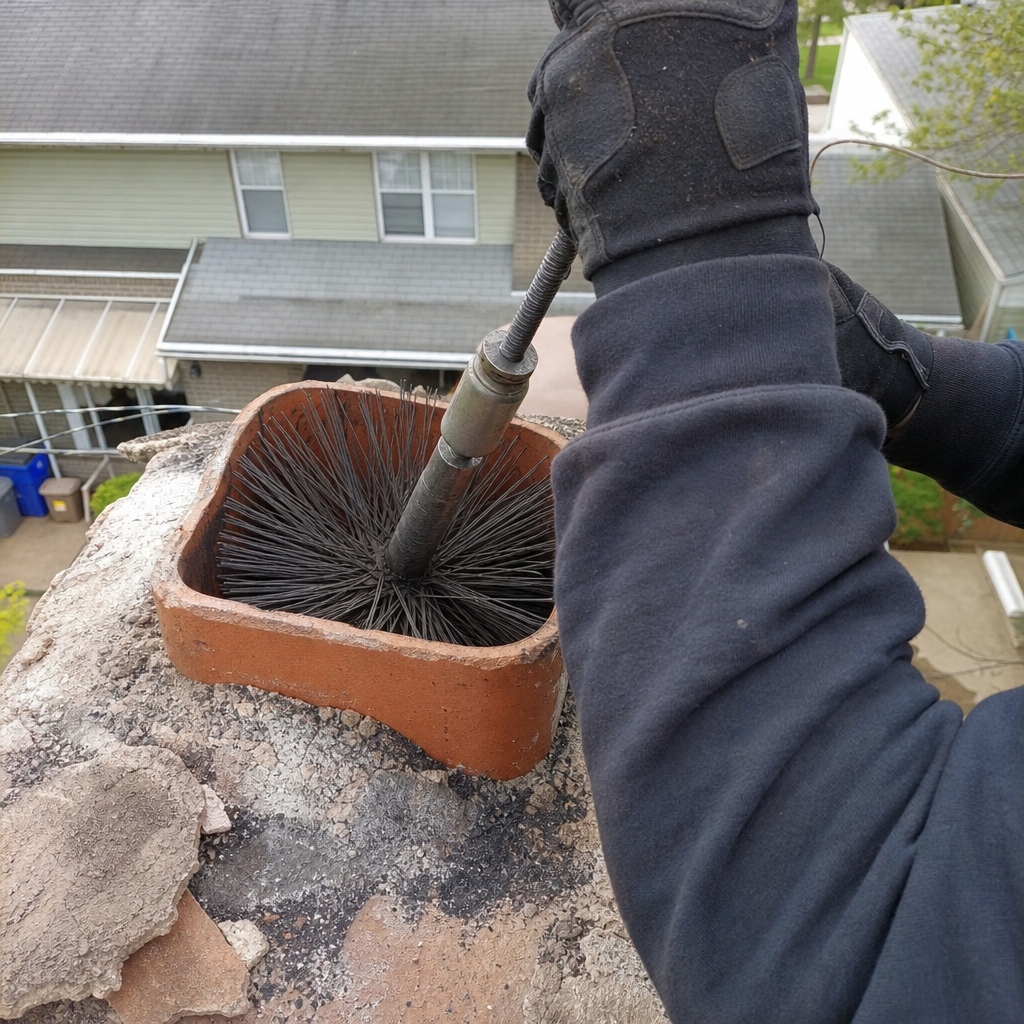
Creosote accumulates in any wood-burning system, but in New Hyde Park we see a secondary pattern: homeowners who converted to gas but kept a fireplace for occasional wood use, often without understanding that the altered flue dynamics change creosote deposition. An oversized flue (sized for a coal or oil boiler) runs cooler when serving a small fireplace insert or occasional wood fire. Cooler flue gas means more creosote condenses on tile walls. We use rotary power sweeping with polypropylene brushes sized to your flue diameter — not the one-size-fits-all approach that leaves glazed creosote untouched. For heavy third-degree creosote, we apply ACS Anti-Creo-Soot treatment before mechanical removal. The goal is zero remaining buildup, verified by post-sweep camera inspection.
Soot Removal
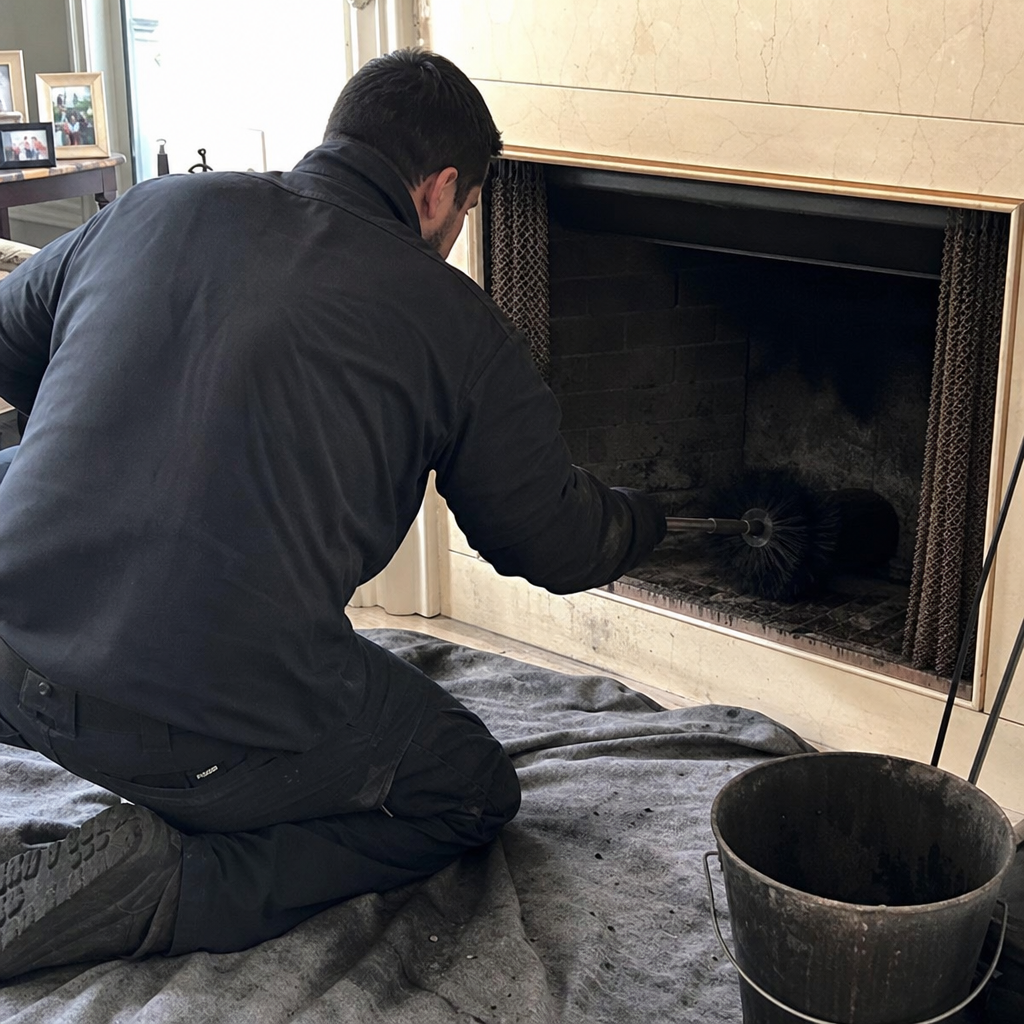
Gas appliances produce different deposits than wood: fine particulate soot, sulfur compounds, and acidic condensate that coats flue walls in a wet, corrosive film. In New Hyde Park’s oil-to-gas conversions, this is the hidden damage we find most often. The original 8×8 or 8×12 clay-tile flue was engineered for 400–600°F oil exhaust; natural gas exhaust runs 100–150°F cooler. The flue never reaches operating temperature. Moisture condenses. Sulfuric acid forms. The liner deteriorates from the inside out. Our soot removal process for gas systems uses specialized brushes and HEPA vacuum capture — we don’t simply push debris down into your basement. And we always inspect for the telltale white or gray condensate staining that signals your flue is dangerously oversized for current use.
Annual Sweep & Fireplace Cleaning
Annual sweeping is the minimum maintenance interval for any actively used chimney, and for New Hyde Park’s aging housing stock, we’d argue it’s the maximum interval you should consider. Our annual service includes full debris removal, firebox and smoke chamber cleaning, damper lubrication and adjustment, and written condition documentation. For fireplace cleaning specifically, we remove ash deposits, clean andirons and grates, and inspect the hearth extension for compliance with current clearances. Many New Hyde Park homeowners are surprised to learn their 1960s-built hearth no longer meets code — we flag this without pressure, because informed decisions require accurate information.
What happens when you call
- 1
A real person answersNo phone trees — you reach a local pro.
- 2
You get an upfront price rangeHonest numbers before anyone is dispatched.
- 3
A background-checked tech heads outLicensed & insured, dispatched right away.
- 4
You approve before work beginsNothing starts until you say go.
Trusted Brands We Service in New Hyde Park
We work with and install professional-grade materials from DuraFlex, HeatShield, and Gelco — brands specified by commercial contractors for their documented performance in demanding applications. For New Hyde Park homeowners facing liner replacement after an oil-to-gas conversion, we typically specify DuraFlex stainless steel liners with proper gas appliance sizing, or HeatShield cerfractory resurfacing where the existing clay tile is structurally sound but surface-deteriorated. We maintain relationships with regional distributors, which means faster turnaround on specialty components and no extended waits for materials. When we find damage during your sweep, we can quote and schedule repair without the “we’ll call you when parts come in” delay that frustrates so many homeowners.
Common Chimney Cleaning & Sweep Problems We See in New Hyde Park Homes
- Acidic condensate rotting oversized clay-tile flues after oil-to-gas conversion. The defining chimney hazard in New Hyde Park. Homeowners convert to natural gas for efficiency but leave the original 8×12 flue in place. The low-temperature gas exhaust never warms the mass of clay tile, condensation forms sulfuric acid, and the liner fails from the inside — often with no external symptoms until a Level 2 video scan reveals the damage.
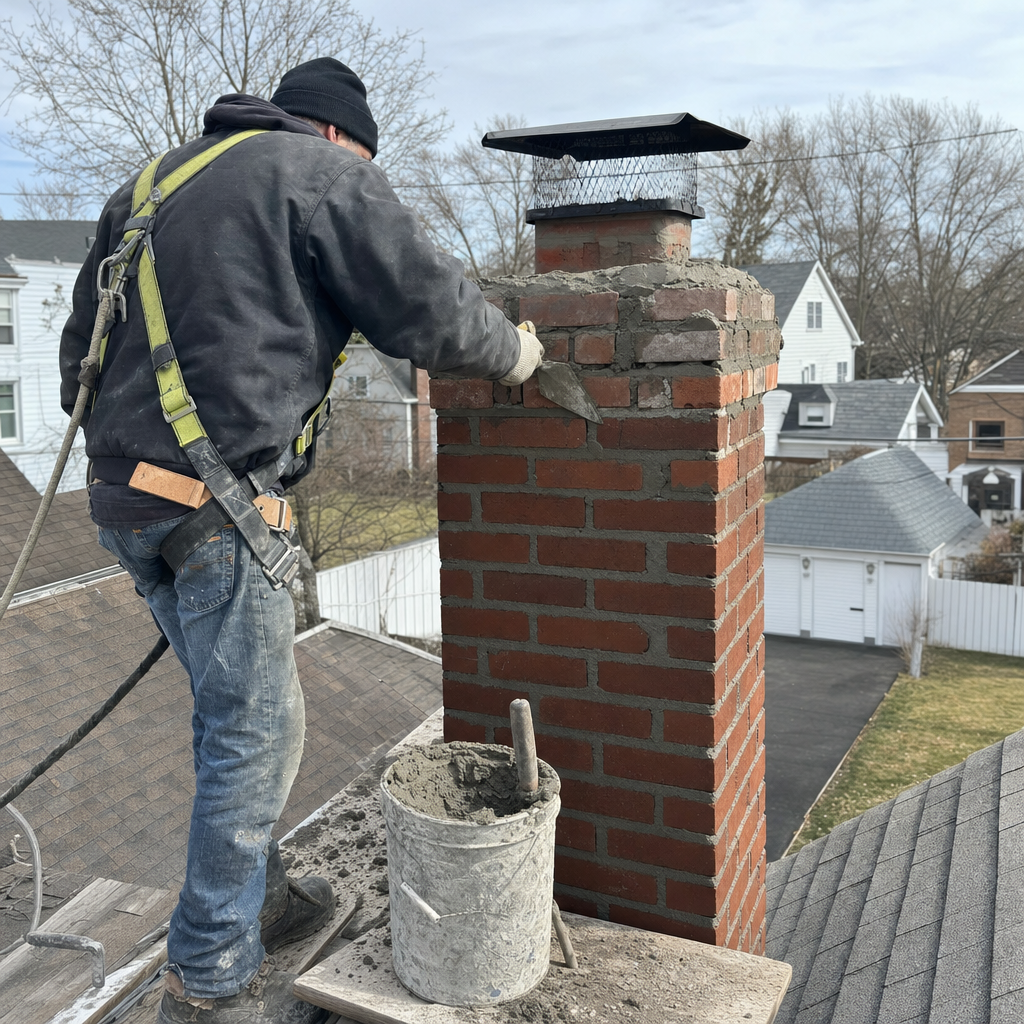
- Freeze-thaw spalling on soft, period-correct brick. New Hyde Park’s mid-century chimneys were built with brick formulated for that era’s firing techniques — softer and more porous than modern equivalents. Dozens of freeze-thaw cycles each winter, combined with moisture driven by easterly winds from Long Island Sound, cause surface spalling and mortar joint deterioration that accelerates dramatically once started.
- Creosote accumulation in improperly sized fireplace flues. Homeowners who kept wood-burning capability after converting the main heating system to gas often find their fireplace flue performs poorly. The oversized flue runs cold, creosote deposits heavily, and draft problems push smoke into the living space during use.
- Access challenges on tight townhome rows and alley-loaded properties. New Hyde Park’s dense postwar grid means many chimneys are accessed through narrow passages or from cramped side yards. Standard sweeping equipment doesn’t fit; we bring compact rotary systems and sectional rods designed for these constraints, ensuring complete cleaning where bulkier approaches would leave deposits untouched.
Pricing for Chimney Cleaning & Sweep in New Hyde Park, NY
Our pricing reflects the actual scope of work required for New Hyde Park’s specific housing stock — not a generic rate padded to cover unknowns.
| Service | Typical Range in New Hyde Park |
|---|---|
| Level 1 Inspection with Standard Sweep | $180 – $260 |
| Level 2 Inspection with Video Scan | $320 – $450 |
| Heavy Creosote Removal (3rd degree) | $280 – $380 |
| Gas System Soot Removal with Inspection | $200 – $290 |
| Annual Sweep & Fireplace Cleaning Package | $240 – $340 |
Several factors affect where you fall in these ranges: flue height and accessibility, the degree of buildup present, whether your system has been properly maintained or neglected, and whether we discover conditions requiring immediate repair. Homes with original clay-tile flues in poor condition — common in New Hyde Park’s 1945–1965 construction — may need additional evaluation beyond the base sweep price. We discuss any findings before proceeding with additional work. Call (866) 884-9512 for a free estimate specific to your chimney.
We Also Serve Cities Near New Hyde Park
Our service radius covers the full chimney cleaning and sweep needs of Garden City Park, Floral Park, Glen Oaks, and North New Hyde Park — neighborhoods sharing similar postwar housing stock and conversion histories. Whether you’re near the Queens border in Glen Oaks or in the village center of Floral Park, we bring the same owner-led service and New Hyde Park-area expertise to your job.
Serving New Hyde Park, NY — Our Local Coverage Area
We’re based in the New Hyde Park area and know this community well. Use the map below to see our service coverage — if you’re nearby, we can almost certainly help.
FAQs — Chimney Cleaning & Sweep in New Hyde Park
Your gas fireplace produces more soot because natural gas burns cooler and cleaner than oil, but your flue was sized for oil’s hotter, more voluminous exhaust. The oversized flue runs too cold, causing incomplete combustion products to condense as soot rather than drafting fully outside. In New Hyde Park, we see this pattern constantly in homes that converted heating systems without resizing the chimney. Call (866) 884-9512 — a Level 2 inspection will show whether your flue needs a properly sized liner.
Yes, almost certainly. Original clay-tile flues in 1949 Cape Cods were engineered for coal or oil exhaust temperatures far higher than natural gas produces. The mismatch causes chronic acidic condensate that destroys the liner and risks carbon monoxide leakage into your home. On Hemlock Street, we cleaned a 1954 Cape Cod where the owner had converted to gas five years ago but left the original 8×12 clay-tile flue unlined. We removed a thick crust of acidic condensate and found three cracked tiles at the crown. Using HeatShield, we installed a stainless steel liner sized for the gas boiler, preventing future structural damage. Call (866) 884-9512 for a free evaluation of your specific system.
You can burn wood if your fireplace and flue are inspected, cleaned, and properly configured for wood combustion — but the gas conversion often complicates this. Many New Hyde Park homeowners find their fireplace flue was never independently evaluated after the main heating system changed. Wood fires require higher flue temperatures and different draft characteristics than gas; an oversized, deteriorated flue may perform poorly and dangerously for wood use. We assess this during Level 2 inspection and can specify appropriate modifications if wood burning remains your goal.
Gas log systems should be inspected annually and swept as needed — typically every one to two years depending on use level and flue condition. In New Hyde Park, we recommend annual inspection because the oil-to-gas conversion legacy means many gas systems operate in flues with hidden deterioration. The soot and acidic condensate produced by gas may not create the dramatic buildup of wood creosote, but it causes insidious liner damage that only camera inspection reveals. Call (866) 884-9512 to schedule — estimates are free.
A Level 2 inspection includes complete visual examination, video scanning of the flue interior, and access to attics, basements, or crawl spaces to evaluate concealed chimney structure and clearances to combustibles. For New Hyde Park’s mid-century homes, this means we specifically assess whether your original clay-tile flue has survived the oil-to-gas conversion intact, checking for cracked tiles, missing mortar, and acidic condensate damage invisible from the firebox. The inspection typically takes 60–90 minutes and produces documented findings with video evidence. Call (866) 884-9512 to book — we recommend Level 2 for any New Hyde Park home that has changed heating fuel type or gone more than five years without comprehensive evaluation.
Written by Robert Garcia, Owner at Apex Chimney Cleaning Greater New York, serving New Hyde Park and the greater New York City area since 2007.