
Fast, Reliable Chimney Liner & Rebuild Across Long Island City
Chimney liner installation and full rebuilds in Long Island City typically run $2,800–$8,500 depending on flue count and stack condition, and most Hunters Point rowhouse projects take two to three days from scope to completion. We’re at 11101, 11109, and 11120 within the hour when you call (866) 884-9512.
Seventeen years of chimney-only work has taught us that Long Island City’s problems aren’t generic. The Italianate and Queen Anne brick rowhouses packed along the Hunters Point blocks carry original multi-flue stacks that cycled through coal, fuel oil, and gas over a century and a half—never properly cleaned between conversions, rarely decommissioned when abandoned. Meanwhile, salt-laden East River air eats exposed crowns and mortar joints faster than anything you’ll find a mile inland. We know these buildings because Robert Garcia, our owner and lead technician, has scoped, lined, and rebuilt them personally. Not dispatched crews. Not subcontractors. The same person who answers your call climbs your roof and signs off on the work.
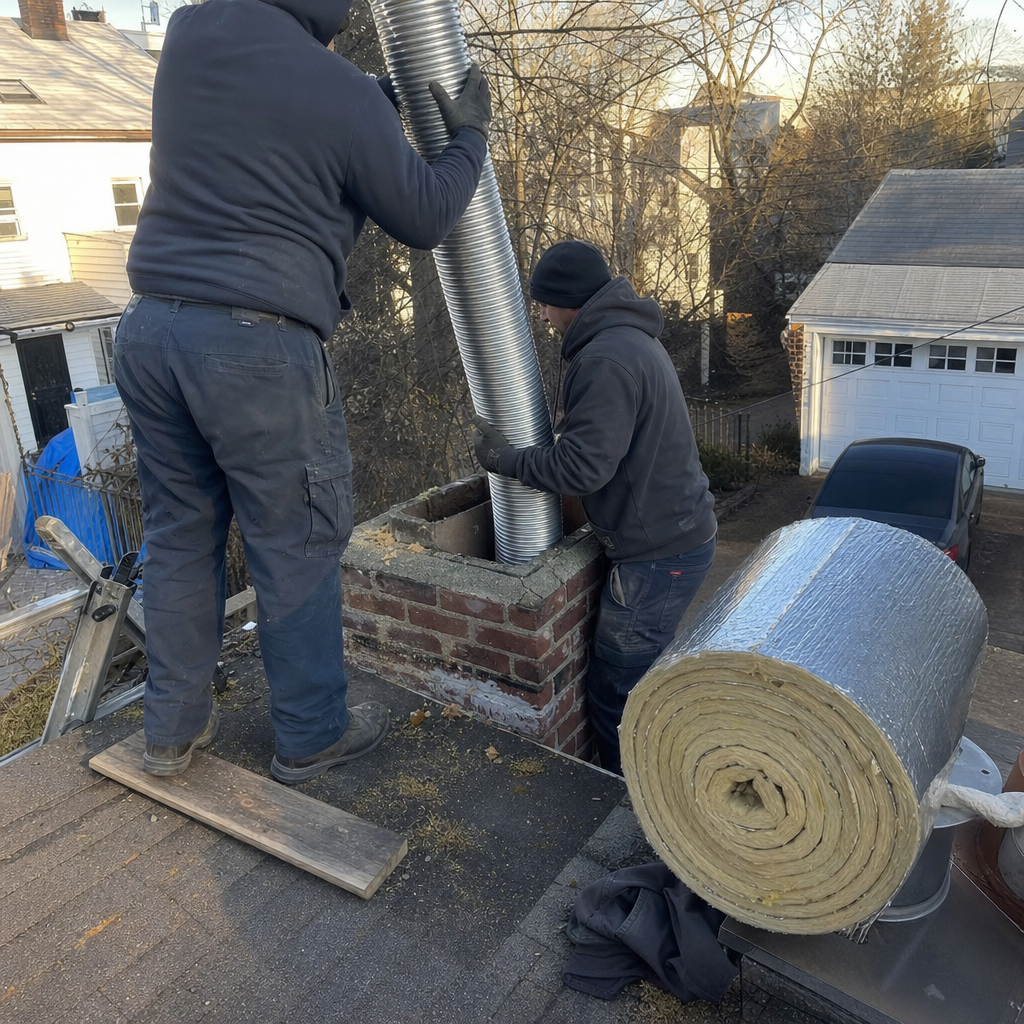
Our Chimney Liner & Rebuild team handles everything from single-flue stainless steel inserts to full four-flue stack rebuilds on the historic blocks. When a Dutch Kills walk-up or a Vernon Boulevard condo needs a liner that won’t corrode in riverfront conditions, we spec materials and install them ourselves.
Why Apex Chimney Cleaning Greater New York Is Long Island City’s Preferred Chimney Liner & Rebuild Company
Long Island City homeowners have left us 1,096 verified reviews averaging 4.7 stars, and a disproportionate share come from the Hunters Point rowhouse blocks where we’ve rebuilt dozens of multi-flue stacks. Those customers aren’t comparing us to handymen—they’ve usually already hired one who scoped a single flue and missed the three abandoned flues venting into their walls.
Robert handles every job site himself. That means when you’re staring at a DOB permit violation triggered by NYC Fire Code §604—common as gut renovations sweep through these 1870s-through-1910s conversions—you’re talking to the decision-maker who can authorize the full-stack scope, price the rebuild, and start work the same week. No corporate escalation. No “let me check with the office.”
We carry DuraFlex, HeatShield, and Gelco materials on our trucks, so most Long Island City projects don’t wait on parts. From a cracked clay liner in a 11101 tenement to a full crown-and-stack rebuild on 44th Drive, we stock what these buildings need.
Our Chimney Liner & Rebuild Services in Long Island City
Stainless Steel Liner Installation
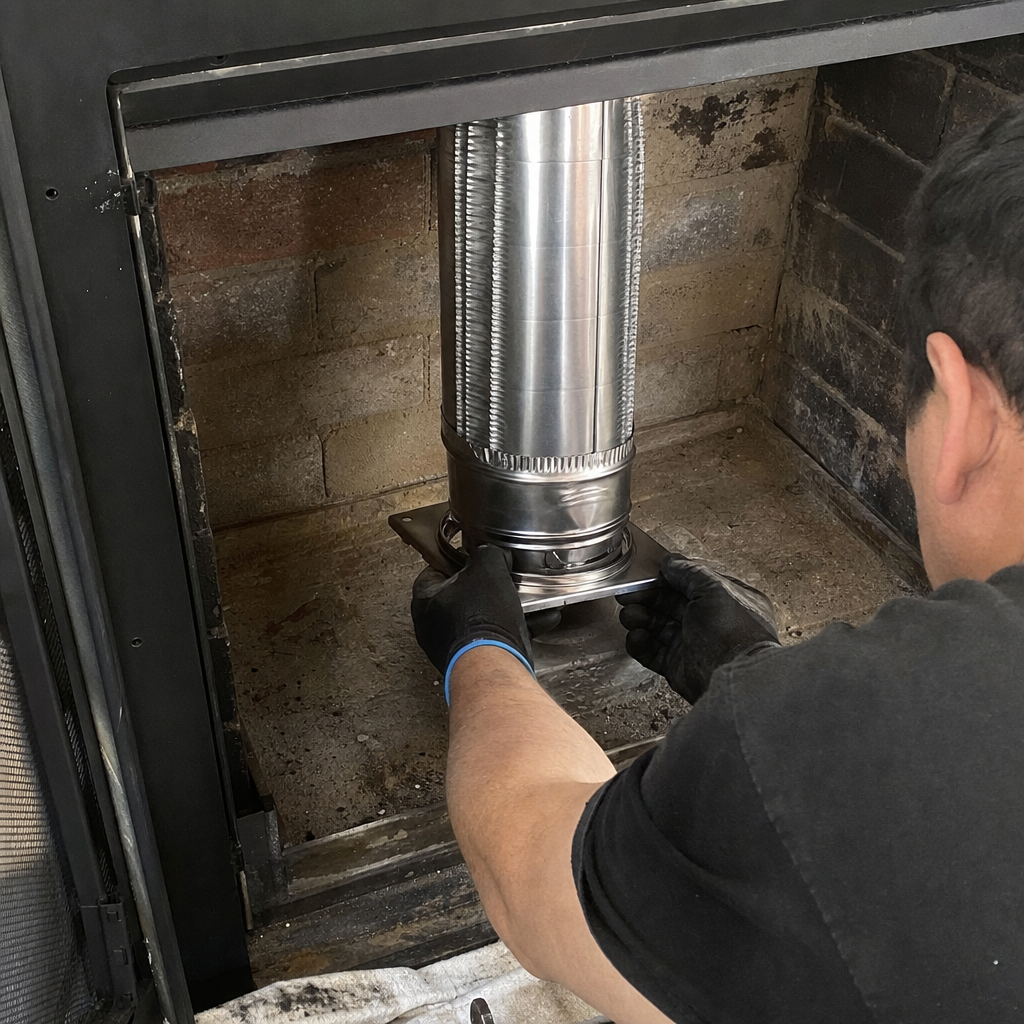
Stainless steel liners are our default spec for active gas flues in Long Island City’s multi-flue stacks. The 316Ti alloy we install resists the acid condensation that forms when high-efficiency boilers vent into old, oversized flues—exactly the mismatch common in Hunters Point conversions where a 90,000 BTU modern boiler connects to a coal-era chimney. A properly sized DuraFlex or Olympia Chimney stainless liner drops flue temperature fast enough to stop condensation, but not so fast that moisture pools and corrodes. We see this failure mode constantly in 11120 walk-ups where an unlined gas flue has rotted the adjacent abandoned coal flue from the inside out.

Flexible Liner Systems
Some Long Island City stacks offset at the smoke chamber or squeeze between floor joists in four-story tenements where a rigid liner simply won’t thread. Flexible DuraFlex liners handle these geometric nightmares without breaking the flue’s continuous draft path. We installed one last winter in a Dutch Kills building where the chimney jogged eighteen inches at the second floor—no rigid pipe could navigate it, and the previous contractor had given up and left the flue unlined. Flexible isn’t a compromise when it’s the only solution that fits.
Liner Replacement
Clay tile liners in Long Island City fail predictably: thermal shock from decades of fuel-switching cracks the tiles, freeze-thaw cycles from nor’easter moisture intrusion shatters them further, and the resulting gaps vent carbon monoxide into wall cavities and neighboring units. We pull the old tiles with specialized extraction rods—never just drop new pipe inside and hope—then inspect the surrounding masonry for spalling before installing the replacement. In a Hunters Point rowhouse with four flues, liner replacement on the active gas flue often reveals that the abandoned fireplace flue next to it has already collapsed. We camera the full stack before we quote. Every time.
Partial and Full Chimney Rebuild
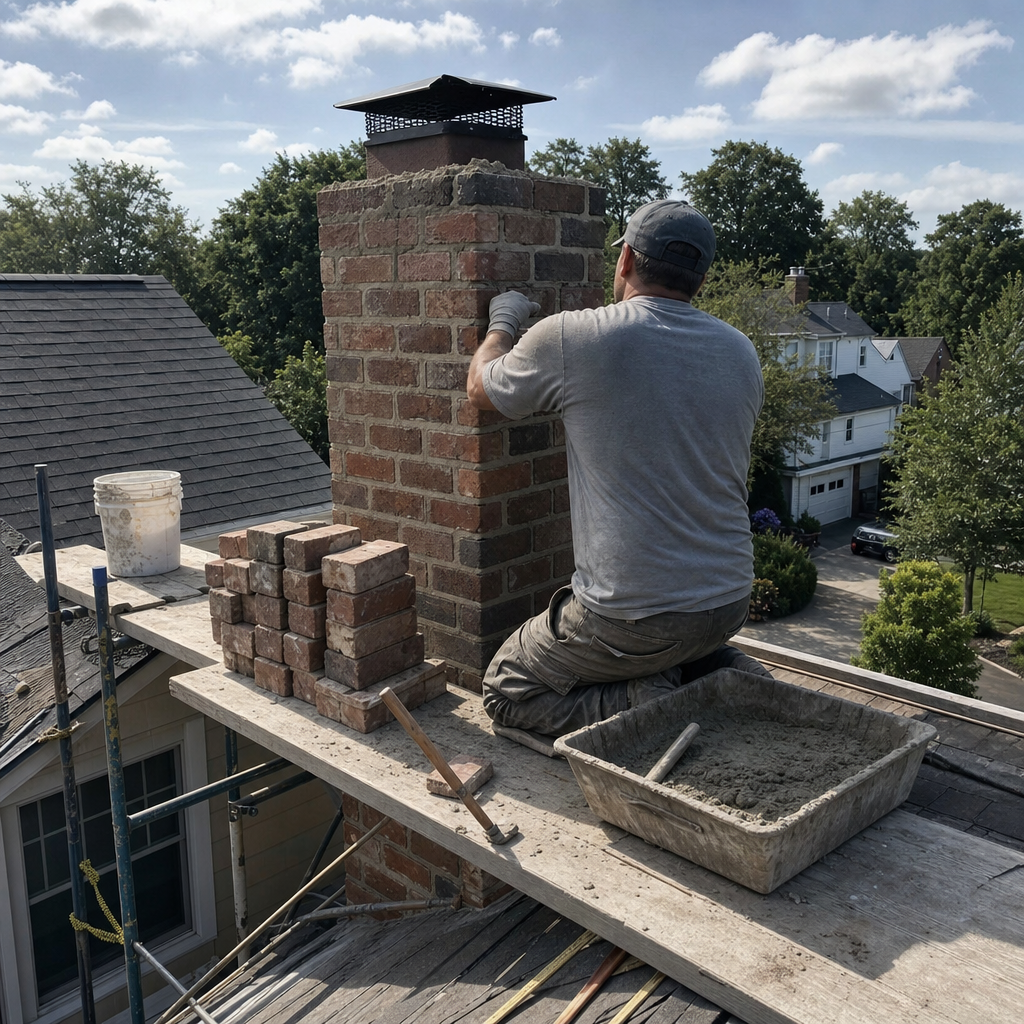
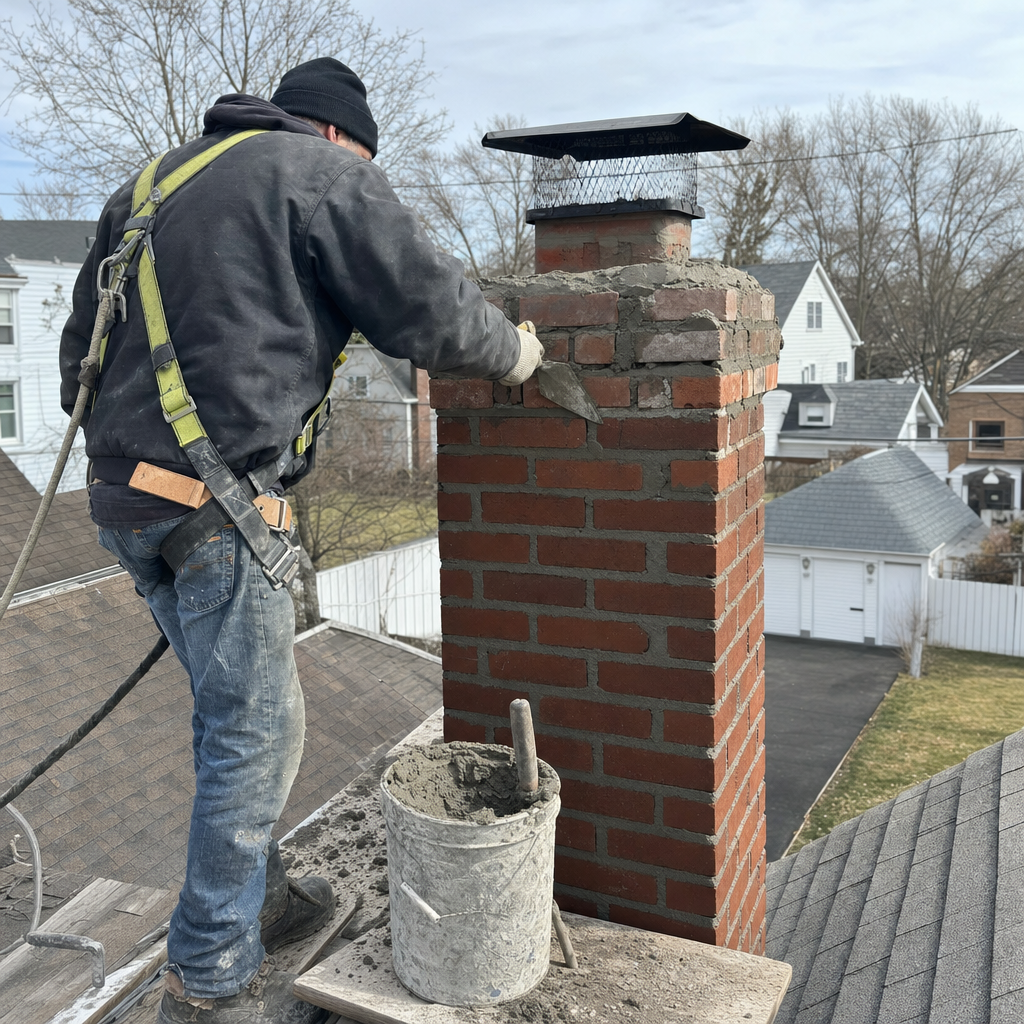
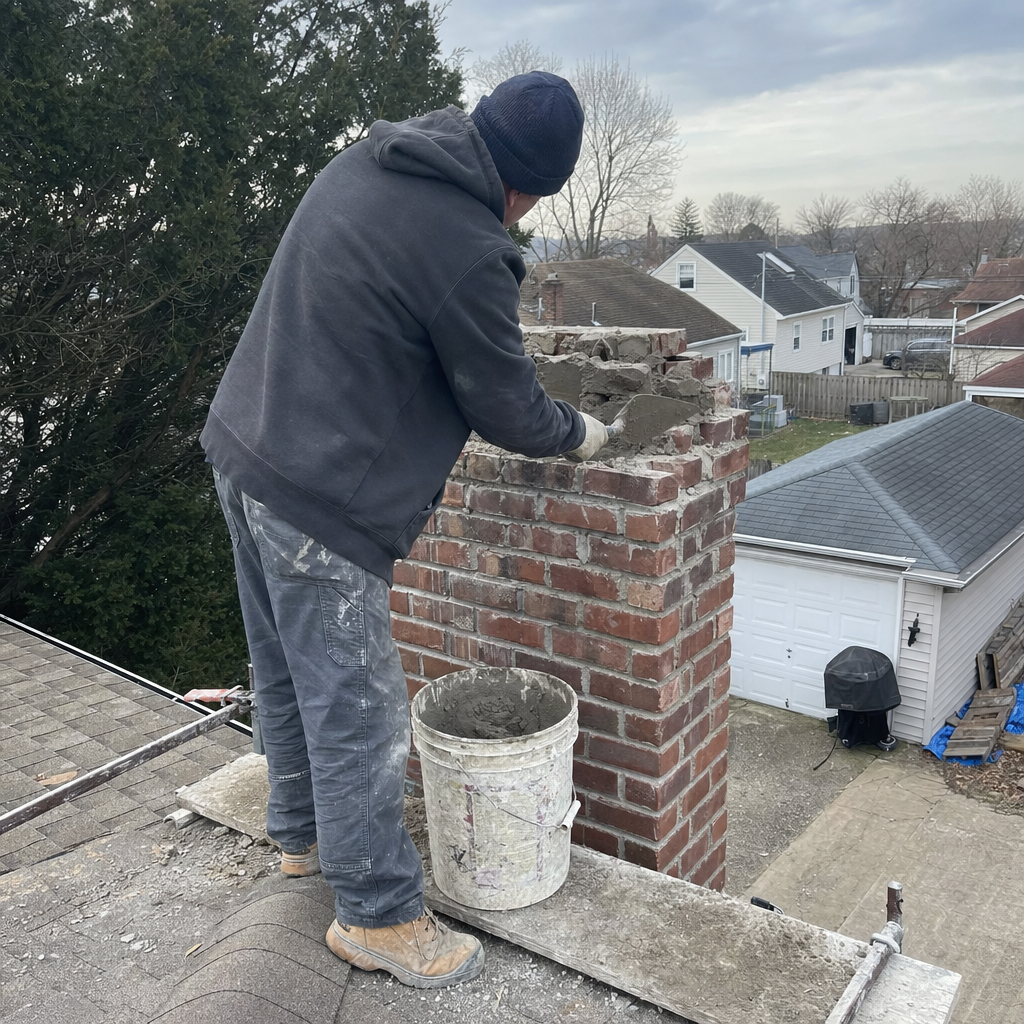
When East River salt air has spalled brick faces off the crown and dissolved mortar joints to powder, spot tuckpointing becomes false economy. We rebuild chimney crowns, shoulders, and above-roof stacks using matching brick and Type S mortar rated for freeze-thaw exposure. Full rebuilds on Long Island City’s historic rowhouses require scaffolding that respects narrow side yards and party-wall easements—we’ve worked on 44th Drive, 45th Avenue, and the blocks between Vernon Boulevard and the waterfront enough to know the access constraints before we arrive. Robert measures, specs, and builds these himself.
What happens when you call
- 1
A real person answersNo phone trees — you reach a local pro.
- 2
You get an upfront price rangeHonest numbers before anyone is dispatched.
- 3
A background-checked tech heads outLicensed & insured, dispatched right away.
- 4
You approve before work beginsNothing starts until you say go.
Trusted Brands We Service in Long Island City
We install professional-grade materials from DuraFlex, HeatShield, Gelco, and Copperfield—the same lines commercial masonry contractors use on institutional jobs, sized and spec’d for residential chimney systems. For Long Island City’s salt-air environment, we default to 316Ti stainless over 304 alloy, and we stock HeatShield resurfacing mix for crown repairs that need to cure in variable waterfront humidity. Because we carry inventory rather than ordering per job, a liner replacement in 11101 or a crown rebuild on the Hunters Point waterfront doesn’t wait two weeks for shipping. Most Long Island City customers get their project scheduled within three to five days of approval.
Common Chimney Liner & Rebuild Problems We See in Long Island City Homes
- Abandoned flues packed with combustible debris. In Hunters Point rowhouses, the coal flue and parlor fireplace flues were never decommissioned when gas was added. Decades of soot, oil glaze, and pigeon nesting material sit inches from an active gas liner running at 400°F. We’ve pulled twenty-pound nests from stacks that the homeowner didn’t know existed.
- Salt-air spalling on exposed crowns and caps. LIC’s East River waterfront location means chloride-laden air accelerates brick face loss and mortar erosion on chimney crowns. A crown that might last twenty years in Sunnyside needs rebuild-level attention in fifteen here. We spec harder brick and denser mortar mixes for these exposures.
- Freeze-thaw liner cracking after nor’easter moisture intrusion. Winter storms channel up the river corridor and drive water past cracked crowns and failed flashing. That moisture freezes in clay liner joints, expands, and spalls the tile from the inside. We find this damage most often in March and April, when Dutch Kills and Hunters Point homeowners call after their first post-storm heating cycle triggers CO alarms.
- Multi-flue heat transfer causing adjacent flue ignition. When a new stainless liner is installed in one flue of a four-flue stack, the abandoned flues beside it become unintentional heat sinks. If those flues contain creosote, oil glaze, or nesting material, conducted heat can raise them to ignition temperature without direct flame contact. Full-stack camera inspection and proper decommissioning—sealing, capping, venting—prevents this.
Pricing for Chimney Liner & Rebuild in Long Island City, NY
Here’s what chimney liner and rebuild work actually costs in the Long Island City market:
| Single-flue stainless steel liner (installed) | $2,800 – $4,200 |
| Two-flue stainless steel liner system | $4,500 – $6,800 |
| Full liner replacement with masonry repair (crown, flashing) | $5,200 – $7,900 |
| Partial chimney rebuild (crown to roofline) | $6,500 – $9,500 |
| Full stack rebuild, multi-flue (Hunters Point rowhouse) | $12,000 – $18,000 |
| Abandoned flue decommissioning (per flue) | $800 – $1,400 |
| Full-stack camera inspection with report | $350 – $550 |
Four factors push Long Island City projects toward the higher end: multi-flue stacks requiring full-scope inspection, DOB permit-triggered work that needs documentation and code compliance, salt-air damage requiring harder materials, and access constraints on narrow rowhouse lots. We don’t guess. Robert scopes every stack personally, delivers a written estimate with line-item pricing, and starts work when you approve. Estimates are free. Call (866) 884-9512.
We Also Serve Cities Near Long Island City
Our chimney liner and rebuild crews work regularly in Greenpoint across Newtown Creek, Sunnyside and Astoria to the east, and Gramercy Park and Manhattan neighborhoods to the south. Each area carries different housing stock and failure patterns—Greenpoint’s Polish Greenpoint rowhouses share some DNA with Hunters Point, while Astoria’s detached frame houses present entirely different chimney geometry. Wherever you’re located, Robert handles the scope and build personally.
Serving Long Island City, NY — Our Local Coverage Area
We’re based in the Long Island City area and know this community well. Use the map below to see our service coverage — if you’re nearby, we can almost certainly help.
FAQs — Chimney Liner & Rebuild in Long Island City
Because the abandoned flues in these century-old multi-flue stacks are almost always the larger problem. On 44th Drive in Hunters Point, we scoped a single stack that appeared to serve just one gas boiler, but our camera revealed three abandoned flues: a coal flue lined with inch-thick tar glaze, a fireplace flue packed with nesting material, and a capped gas flue with a cracked clay liner. We installed a DuraFlex stainless steel liner in the active gas flue, sealed the abandoned flues with a HeatShield lid-and-cement crown, and fire-caulked the flashing against East River salt spray—a four-flue fix that a single-flue scope would have missed. Call (866) 884-9512 to schedule your full-stack inspection.
Yes. LIC’s direct East River exposure means chloride-laden air accelerates spalling on exposed brick crowns and corrodes metal caps and flashing at rates we don’t see in Astoria’s more sheltered interior blocks. The difference shows up in crown condition after ten to twelve years versus fifteen to twenty inland. We spec harder brick and 316Ti stainless for Long Island City installations specifically. For a salt-air assessment of your stack, call (866) 884-9512—estimates are free.
Inspect within two to four weeks of any significant winter storm. Dutch Kills sits in the East River corridor where nor’easters drive wind-driven rain and sleet directly into chimney masonry; freeze-thaw damage to crowns and flashing typically reveals itself in the first heating cycles after the storm, when expanded ice cracks clay liners and compromised flashing leaks into wall cavities. We offer post-storm priority inspections for Long Island City homeowners. Call (866) 884-9512 to get on the schedule.
Stainless steel liners outlast clay tiles in Long Island City’s conditions, but the comparison isn’t straightforward. Clay fails from thermal shock and freeze-thaw; 316Ti stainless resists both, plus the acid condensation from modern gas appliances. However, stainless in a multi-flue stack must be properly sized and insulated, or the adjacent abandoned flues can overheat and transfer ignition risk. We install DuraFlex and Olympia Chimney stainless systems with proper clearances and decommission adjacent flues. For a spec tailored to your stack, call (866) 884-9512.
You’re leaving a concealed fire hazard in your wall cavity. Abandoned flues in Long Island City’s rowhouses contain decades of combustible debris—coal tar, oil glaze, creosote, nesting material—and an active gas liner in the next flue can conduct enough heat to raise that debris to ignition temperature without direct flame contact. NYC Fire Code §604 and standard NFPA 211 practice require decommissioning: sealing the bottom, capping the top, and venting appropriately. We include this in every multi-flue rebuild quote. Skipping it isn’t an option we offer. Call (866) 884-9512 to discuss your stack.
Ready to get your Long Island City chimney liner or rebuild scoped, priced, and scheduled? Robert Garcia handles every job personally—from the first camera inspection to the final fire-caulk detail. We’ve rebuilt stacks on 44th Drive, lined flues in Dutch Kills walk-ups, and decommissioned abandoned coal flues throughout the 11101 and 11109 ZIPs. Call (866) 884-9512 for a free estimate. We’ll scope your full stack, show you what the camera sees, and quote line-item pricing before any work begins.
Written by Robert Garcia, Owner at Apex Chimney Cleaning Greater New York, serving Long Island City since 2007.