
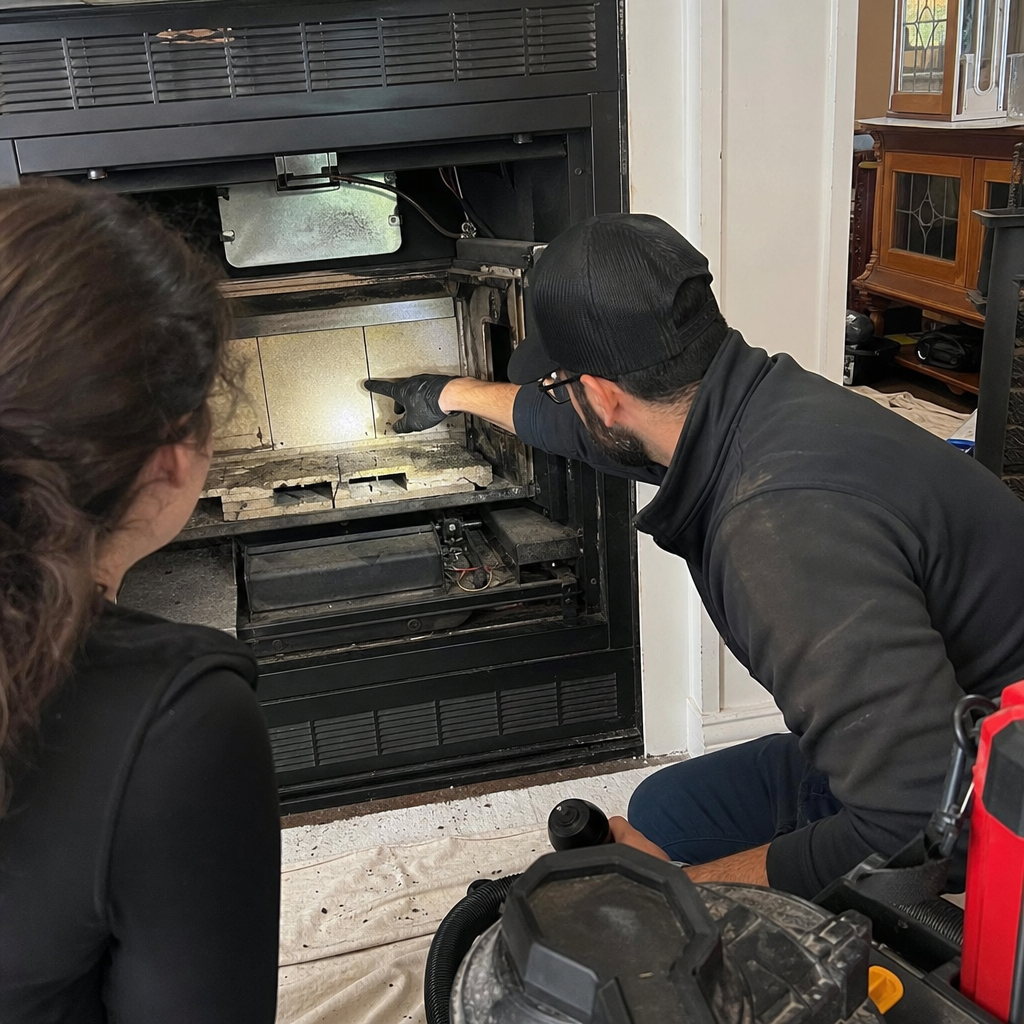
Signs Your Chimney Needs Cleaning in Greater New York — The Ones Most Homeowners Miss Until It’s Risky
If your chimney hasn’t been professionally swept in the past 12 months and you burned fires last winter, it needs cleaning regardless of what you can smell or see. The dangerous buildup — Stage 2 glazed creosote — produces almost no odor at room temperature, yet ignites at 451°F, a temperature normal flue gases exceed on any cold evening in Greater New York. Waiting for smoke smells or a sluggish draft means you’ve already passed the early warning window. Call Apex Chimney Cleaning Greater New York at (866) 884-9512 for a free assessment, or read on to learn the structural and thermal signs that actually appear first.
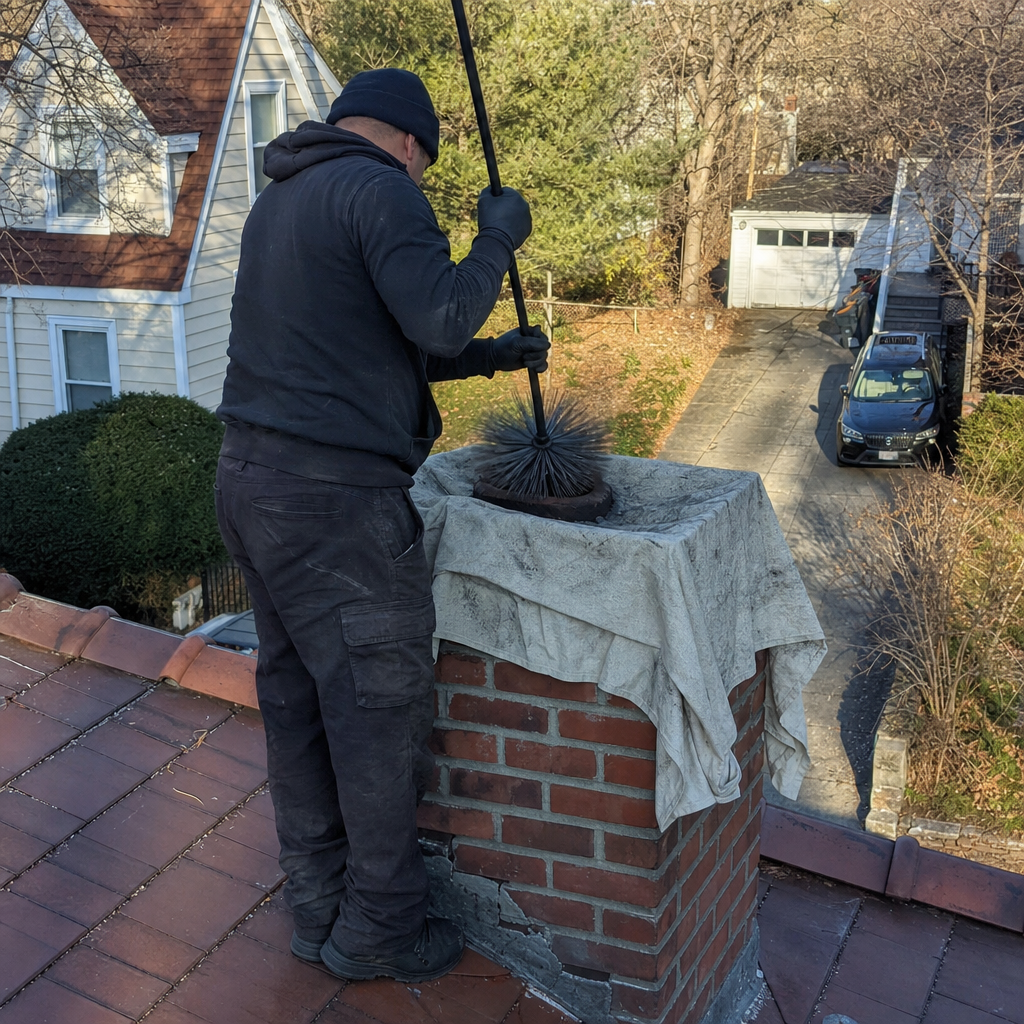
The Chimneys That Worry Robert Garcia Most Smell Completely Fine
Robert Garcia, Owner & Lead Technician at Apex Chimney Cleaning Greater New York, grew up not far from Yankee Stadium in the Bronx and has spent 17 years climbing roofs across the five boroughs and surrounding counties. The chimneys that keep him up at night aren’t the ones with obvious smoke problems — they’re the ones that draw perfectly, smell neutral, and hide glazed creosote so hard it needs power tools to remove.
Stage 2 creosote forms when Stage 1 soot repeatedly partially burns and re-condenses on cooler flue surfaces. In Greater New York’s housing stock — especially the pre-war brick row houses in Queens, the 1920s colonials in Westchester, and the converted oil-to-gas systems common throughout the Bronx and Brooklyn — this happens faster than most owners realize. The glaze is nearly glass-smooth, black-brown to shiny black, and has that 451°F ignition point. Your flue gases on a normal winter burn run 300°F to 600°F at the top of the firebox, spiking higher with hardwood loads. You don’t need an unusual condition to hit ignition temperature — you just need enough glaze built up, which takes roughly one to two seasons of regular use without sweeping in typical Greater New York burn patterns.
The problem is sensory blindness. Stage 1 sooty creosote has a mild tar smell when disturbed, but Stage 2 glaze at rest is chemically stable and nearly odorless. By the time most homeowners notice a smoky odor, they’re often smelling Stage 3 — the powdery, highly combustible residue that forms after glaze has partially degraded, or the result of active drafting problems pushing exhaust into living spaces. At that point, the risk profile has escalated significantly. A chimney problem doesn’t get smaller by waiting — I’ve seen 17 years of proof.
Three Early Warning Signs That Show Up Before Your Nose Knows
These are the indicators Robert checks for on every inspection in Greater New York — the ones that precede any smell or draft complaint by months or even full burning seasons.
Black Oily Residue on the Damper Plate
Open your fireplace and look at the damper — the metal plate that opens and closes the flue throat. If you see a wet-looking, black, slightly tacky film that smears when touched with a paper towel, that’s Stage 2 creosote that has sloughed off the flue walls and collected on the first horizontal surface below. It’s not fireplace soot; soot is dry and powdery. This residue indicates glazed buildup above that’s heavy enough to shed material. In our Chimney Cleaning & Sweep in Greater New York work, we find this on roughly 40% of first-time client inspections, and almost none of those homeowners reported any smell or performance issue.
White Efflorescence on the Exterior Chimney Stack
That chalky white staining on your brickwork — especially common after Greater New York’s freeze-thaw cycles — signals water moving through the masonry. Water infiltration and interior soot accumulation are correlated problems: compromised mortar joints let moisture in, which condenses on flue walls and accelerates creosote formation by cooling the surfaces where exhaust gases travel. The efflorescence itself is mineral salts left behind as water evaporates. If you see it above the roofline, you likely have both a water problem and accelerated creosote buildup that standard visual inspection from below won’t reveal. Robert uses a chimney camera on every inspection to verify what the exterior suggests.
A Damper That Won’t Seat Fully Closed
If your damper plate won’t close completely or sits slightly crooked, debris accumulation on the smoke chamber floor is the likely cause. This debris can be mortar fragments from deteriorating parging, broken flue tile pieces, or compacted soot and creosote that has fallen from above. In any case, it indicates active material degradation and buildup that reduces flue capacity and creates physical obstructions. The smoke chamber — the inverted funnel area above the damper — is where many Greater New York chimneys show their age, especially in homes with original construction from the 1920s through 1950s when parging standards were inconsistent.
The Greater New York Oil-to-Gas Conversion Problem Nobody Talks About
Here’s a local specificity that generic “signs your chimney needs cleaning” articles never address: thousands of Greater New York homes converted from oil to gas heating between the 1980s and early 2000s, and many never had their chimneys professionally cleaned afterward. Oil combustion produces significantly more soot and sulfur residue than cleaner-burning natural gas. When the appliance changes but the flue doesn’t get swept, that oil-combustion layer remains — hard, sulfur-impregnated, and not burned off by the cooler, cleaner gas exhaust.
Robert encounters this regularly in older Bronx and Brooklyn multi-family buildings, and in Westchester and Nassau County homes with basement furnaces venting into original masonry chimneys. The signs are subtle: a faint oil-dust smell when the heating system first cycles on in fall, or a furnace technician’s note about “flue gas spillage” that gets patched with a vent adjustment rather than addressing the underlying restriction. The correct fix is mechanical removal of the legacy buildup, often followed by evaluation of whether the now-undersized flue needs relining for proper gas appliance draft. Apex handles this full scope — from cleaning to liner installation with HeatShield or Gelco systems — without bringing in outside contractors.
When “Noisy Chimney” Means Hidden Fire Hazard
In spring, after the last Greater New York cold snap, Robert’s phone rings with a specific complaint: “I think there’s an animal in my chimney.” What homeowners describe as scratching, chirping, or fluttering sounds often turns out to be active bird or squirrel nests in uncapped flues. These aren’t just nuisance wildlife calls — they’re documented ignition hazards independent of creosote.
Dry nesting material (twigs, leaves, shredded paper, often with added insulation from attic debris) has extremely low ignition temperatures and can be ignited by a single spark or by the radiant heat from a fire below. The National Fire Protection Association tracks chimney fires initiated by nesting material, and in our 17 years of service, Apex has pulled nests from flues that homeowners swore they’d “just had checked.” The reality is that most visual inspections from below don’t reveal upper flue obstructions, and many Greater New York chimneys lack proper Famco or Olympia Chimney caps that would prevent entry in the first place.
If you heard noises this spring and they stopped — that’s often worse than ongoing noise. It may mean young have fledged and left, but the nest remains. Before you light the first fall fire, the flue needs visual verification with a camera and physical removal of any material.
Why Smell Is a Late Indicator — The Chemistry Most Articles Skip
The conventional advice to “wait until you smell smoke” gets the chemistry backward. Here’s what actually happens:
- Stage 1 (Sooty Creosote): Soft, flaky, black or brown. Mild tar odor when actively disturbed, but essentially odorless at rest in a cool flue. This stage is easily removed with standard brushing.
- Stage 2 (Glazed Creosote): Hard, shiny, condensed layers. Nearly odorless at room temperature due to chemical stability. Requires power tools or chemical treatment for removal. This is the 451°F ignition risk.
- Stage 3 (Puffy/Cellular Creosote): Expanded, honeycombed, highly combustible. Often has a distinct smoky or ashy odor because it’s actively degrading or because draft problems are pushing exhaust into the home. Removal is labor-intensive and may require multiple treatments.
When you smell something wrong, you’re typically at Stage 3 or experiencing active exhaust spillage — both elevated-risk conditions. The absence of smell, especially after a full burning season, should not reassure you. It should prompt documentation: when was this chimney last swept by a certified professional who ran a camera and provided photos?
The Documentation Sign: No Record From Last Winter
This is the simplest and most reliable indicator, and it’s the one Robert emphasizes with every homeowner consultation in Greater New York. If you cannot produce a dated invoice or inspection report from a chimney sweep for work performed within the past 12 months, and you used your fireplace or heating appliance last winter, your chimney needs cleaning. Full stop.
Among Apex’s 1,096+ verified customer reviews averaging 4.7 stars, a significant portion come from first-time clients who had no prior service record and were surprised by what inspection revealed. The “it was working fine” assumption is understandable — chimneys are passive systems that don’t alert you to gradual degradation. But gradual is how catastrophic failures begin. Our home consultation includes photo documentation of every finding, because Robert learned during his apprenticeship that a homeowner who sees the inside of their flue makes better decisions than one who’s just told to trust the expert.
What Professional Chimney Cleaning Actually Involves in Greater New York
Understanding the service helps clarify why DIY assessment has limits. A proper sweep by Apex Chimney Cleaning Greater New York includes:
- Interior and exterior visual inspection of accessible chimney components
- Video camera inspection of the full flue length, from firebox to crown
- Mechanical brushing of the flue with appropriately sized brushes for your liner type (clay tile, stainless steel, or cast-in-place)
- Smoke chamber and firebox cleaning with hand tools
- Debris removal and HEPA containment to protect your home’s interior
- Written condition report with photo documentation
For chimneys with glazed creosote or legacy oil soot, we may recommend a chemical pretreatment to soften deposits before mechanical removal. For uncapped flues, we’ll propose a Gelco or Olympia Chimney cap installation to prevent future nesting. For deteriorated flue liners, we offer full relining with HeatShield cerfractory systems or stainless steel — installed by Robert himself, not subcontracted.
When to Schedule — Greater New York’s Real Calendar
The conventional “schedule in fall” advice creates a bottleneck that disadvantages homeowners. Apex’s busiest call volume runs September through November, with appointment lead times stretching to 3-4 weeks. The smarter window is late spring through early summer, when:
- Post-winter buildup is fresh and hasn’t hardened through summer heat cycles
- Any needed repairs (crown work, cap installation, liner repair) can be completed before fall demand peaks
- Greater New York’s spring nesting season has ended, so animal-related obstructions are identifiable and removable
- Scheduling is flexible, and Robert can spend unhurried time on thorough inspection
If you’re reading this in September and haven’t scheduled, call anyway — but expect that same-day or same-week service may not be available. Emergency service for active hazards (detected chimney fire, blocked flue with appliance in use) gets priority, but routine cleaning in peak season requires planning.
FAQs
A standard chimney sweep and inspection in Greater New York typically runs $200–$350 for a single flue with standard buildup, with glazed creosote removal adding $150–$300 depending on severity and flue length. Multi-flue chimneys, fireplace insert removals, or chemical pretreatments for hardened deposits increase the range. Call (866) 884-9512 for an exact quote — estimates are free, and Robert provides itemized pricing before any work begins.
DIY chimney cleaning kits cost $50–$100 but lack the inspection component that actually identifies hazards — you cannot see glazed creosote or flue tile cracks from below without a camera. More critically, improper brushing can damage clay tile liners or push debris into hidden smoke chamber ledges where it becomes a future obstruction. Given that professional cleaning with full inspection runs $200–$350 and includes documented condition assessment, the cost difference doesn’t justify the risk of missing a genuine hazard. Call (866) 884-9512 to discuss what’s actually involved for your specific chimney type.
Apex Chimney Cleaning Greater New York prioritizes suspected active hazards and can often accommodate same-day or next-day emergency assessments in the five boroughs and immediate surrounding counties. If you smell smoke when the fireplace isn’t lit, see visible sparks or flame from the chimney top, or have a heating appliance shutting down on safety lockout, call (866) 884-9512 immediately and describe the symptoms. Robert will advise whether to discontinue use pending inspection and schedule the earliest possible visit.
Check your home’s service records for any chimney-specific cleaning invoice dated after your conversion — not furnace maintenance, but actual flue sweeping with chimney professional documentation. If the conversion occurred during the 1980s–2000s Greater New York oil-to-gas wave and you find no chimney service records, assume the flue contains legacy oil soot. This requires professional camera inspection to confirm and mechanical removal to resolve. Call (866) 884-9512 to schedule — this is a common finding in our inspections, and Robert can assess whether additional liner work is needed for safe gas appliance venting.
What to Do If You Recognize These Signs
The structural signs — damper residue, exterior efflorescence, incomplete damper closure — don’t resolve with time. The oil-to-gas conversion risk doesn’t self-correct. The spring nest you heard and then forgot about is still up there until verified otherwise. And the absence of smell is not the absence of hazard; in glazed creosote conditions, it’s the opposite.
If you’d rather have it looked at, Apex Chimney Cleaning Greater New York offers a no-pressure assessment in Greater New York — call (866) 884-9512. Robert Garcia handles every inspection personally, runs the camera himself, and explains what he’s seeing before any service decision. Seventeen years of chimney-only focus and more than a thousand documented customer outcomes mean you’ll get a straight answer about what your flue actually needs.
Written by Robert Garcia, Owner & Lead Technician at Apex Chimney Cleaning Greater New York, serving Greater New York, NY.